Gujarati comedy runs in one unbroken line from Bhavai folk theatre to the proscenium stage to television to the internet. Siddharth Randeria holds the documented record for most live performances by an Indian actor at over 12,000, built on the Gujjubhai franchise. Shahabuddin Rathod, Tarak Mehta, Paresh Rawal, Dinyar Contractor and Jagdish Trivedi have all been awarded the Padma Shri for work that was, at its root, making Gujaratis laugh.
Most lists of Gujarati comedians are follower-count rankings with a Bhavai footnote. That gets the story backwards. Gujarati comedy is one of the oldest continuously working comic traditions in India, and the internet is the fourth room it has walked into, not the first. Bhavai troupes were touring village grounds with the vesha, the sketch, centuries before anyone shot a reel. The proscenium companies of Bombay absorbed those actors and their timing. Television absorbed the stage. The internet absorbed television. Nothing was replaced. Everything stacked.
This page is organised along that lineage instead of by audience size. First the stage, where the dayro humorist and the commercial Gujarati play still sell more tickets than any other regional theatre in India. Then the screen, where a Gujarati humour column became India's longest-running sitcom and a Gujarati play became its first television-to-film franchise. Then the internet, where a generation that learned timing in Vadodara open mics now sells out auditoriums in New Jersey. Twenty two people, every one of them verified against a public record or a scraped account, every one of them here for the comedy rather than the numbers.
The list at a glance
| Name | Where the comedy lives | Era | Signature credit |
|---|---|---|---|
| Shahabuddin Rathod | Dayro stage, books, television | 1958 to present | Padma Shri 2020 for literature and education |
| Sairam Dave | Dayro stage, folk literature | 1997 to present | Youngest recipient of the Gujarat Gaurav Puraskar |
| Jagdish Trivedi | Dayro stage, books | 1990s to present | Padma Shri 2024, over 3,000 shows in 30 countries |
| Siddharth Randeria | Gujarati commercial theatre, film | 1970 to present | Over 12,000 live performances, the Gujjubhai franchise |
| Sanjay Goradia | Gujarati commercial theatre | 1979 to present | Produced more than a hundred Gujarati plays |
| Paresh Rawal | Gujarati theatre, Hindi film | 1980s to present | Padma Shri 2014, National Film Award, Hera Pheri |
| Dinyar Contractor | Gujarati and Parsi stage, Hindi film | 1966 to 2019 | Padma Shri 2019 |
| Tarak Mehta | Humour column, Gujarati plays | 1971 to 2017 | Duniya Ne Undha Chasma, the source of TMKOC |
| Satish Shah | Television and Hindi film | 1978 to 2025 | 55 characters in 55 episodes of Yeh Jo Hai Zindagi |
| Dilip Joshi | Television | 2008 to present | Jethalal Champaklal Gada in TMKOC |
| Deven Bhojani | Gujarati stage, television direction | 1987 to present | Three best director awards for Sarabhai vs Sarabhai |
| Jamnadas Majethia | Gujarati stage, television production | 1990s to present | Created the Khichdi franchise from a Gujarati play |
| Supriya Pathak | Stage, television, film | 1981 to present | Hansa Parekh in the Khichdi franchise |
| Vandana Pathak | Gujarati plays, television | 1995 to present | Jayshree Parekh in the Khichdi franchise |
| Tiku Talsania | Gujarati theatre, Hindi film | 1984 to present | Andaz Apna Apna and three decades of comic supporting roles |
| Devang Patel | Parody music, Gujarati film | 1995 to present | Gujarati parody album Buma Bum and Muratiyo No. 1 |
| Manan Desai | Standup, internet, Gujarati film | 2011 to present | Co-founded The Comedy Factory |
| Chirayu Mistry | Standup, internet | 2013 to present | First Gujarati standup special, December 2024 |
| Ojas Rawal | Gujarati stage comedy, film, standup | 2010s to present | Patni Tari Beek Che, Baki Badhu Theek Che, touring the USA and Australia |
| Munawar Faruqui | Standup, reality television | 2020 to present | Won Lock Upp and Bigg Boss 17 |
| Dhaval Domadiya | Internet sketch | 2016 to present | Saurashtra family comedy on YouTube |
| Dev Raval | Internet sketch | 2021 to present | Premise-titled Gujarati sketch comedy |
How this list was built
Selection was by comic craft and verifiable Gujarat connection, not by audience size. Every person had to satisfy three tests: documented comedy work, a Gujarat or Gujarati-language link stated in a public record, and either a free-licensed Wikimedia Commons photograph or an Instagram account confirmed by a live Apify scrape on 29 July 2026 where the display name plus the biography or an external link corroborated the identity. Facts came from English Wikipedia, Gujarati Wikipedia and the scraped accounts themselves. Real people were dropped for failing the image test rather than the fame test. Ramesh Mehta, the Gujarati film comedian of 190 plus films whom the industry called the Charlie Chaplin of Gujarat, has no free-licensed photograph anywhere on Commons. Pransukh Nayak, whose 22,455 stage performances put him in the 1989 Guinness Book of Records, has no photograph either; the one Commons file with a similar name belongs to a different actor, Pransukh Harichand Nayak, and was rejected. Arvind Vaidya, given the Padma Shri in January 2026 after sixty years in Gujarati theatre, has no Commons file and no confirmable account. All three are named in the prose instead. Also dropped: Vrajesh Hirjee and Paresh Ganatra, because no public record consulted here states a Gujarat or Gujarati-language connection clearly enough to justify inclusion; Amit Bhatt, because the available record is one line long and would not support two honest paragraphs. Dilip Joshi is included on the strength of his comic work, and English Wikipedia records his birth in Mumbai without detailing his family's origins, so this page makes no birthplace claim for him. Where Wikipedia's lead and its own lists disagree, as they do on the year the first Gujjubhai play opened, the disputed year is left out. Follower counts are deliberately absent throughout. That story is told on the Instagram and YouTube pages of this site and is not repeated here.
The stage
Bhavai gave Gujarat the vesha, a short comic act built on a stock character and a live crowd. The commercial theatre companies inherited that structure, the dayro platform kept it alive in Saurashtra, and Doordarshan Ahmedabad's Gammat Gulal put the same performers on television without changing a thing about how they worked. Everything below is still performed in front of people, in a room, with no edit button.
1Shahabuddin Rathod

Shahabuddin Rathod spent thirty eight years inside the Gujarat school system, the last twenty five of them as a principal, and did his comedy on the side until the comedy outgrew the day job. He was born in a Gujarati Muslim family in Thangadh and built his material out of Sanskrit, Islamic scholarship and Kathiawadi village life at the same time, which is why his routines sound like a headmaster telling a very long joke and never once raising his voice. His book titles carry the whole method: Dukhi Thavani Kala, the art of being miserable, and Darpan Juth Na Bole, the mirror does not lie.
He is the reason Gujarati humour has a written canon rather than only an oral one. Ten books in Gujarati and one in Hindi, four more edited out of his work by Jagdish Trivedi, and adaptations that ran in both directions: the 2010 Gujarati film Shahabuddin Rathodno Hasyano Varghodo, and Papad Pol, a Sony SAB series built on his characters. He appeared on Doordarshan Ahmedabad's Gammat Gulal, the weekly programme that put Gujarati hasya kalakars in front of a state-wide audience decades before a Gujarati creator economy existed. The Padma Shri came in 2020, for literature and education rather than for entertainment, which is a fair description of what he actually did.
Photo: Viralmkothari, CC BY-SA 4.0, via Wikimedia Commons.
2Sairam Dave

Sairam Dave is proof that the dayro is a comedy circuit and not a folk museum. Born Prashant Vishnuprasad Dave in Jamnagar to a family of teachers, with a father who sang bhajans on Akashvani, he took a diploma in electrical engineering at Rajkot Polytechnic, then a primary teaching certificate at Amreli, then taught at Government School No. 5 in Gondal from 1998 to 2013 while performing at night. He started giving programmes in 1997 out of Amreli, was graded a B-High artist by Akashvani and Doordarshan in 2000, and broke wide open in 2001 with an audio cassette called Chaman Banega Karodpati. A cassette. That was the distribution network Gujarati comedy had, and it worked.
What he built after that is closer to a publishing house than a stage act. His first collection, Sairam na Hasta Akshar, was launched in Rajkot in 2005 by the katha performer Rameshbhai Oza, and its second edition was released in 2007 by Narendra Modi, then Chief Minister of Gujarat. The titles that followed, Hasya no Highway, Smile nu Tsunami, Hu Duniya ne Hasavu Chhu, read like a man determined to industrialise cheerfulness. He has performed in the United States, the United Kingdom, Nairobi, Switzerland, Australia, New Zealand, Dubai, Muscat, Abu Dhabi, Tanzania and Congo, founded the Nachiketa Schooling System in Rajkot in 2015, and was the youngest person to receive the Gujarat Gaurav Puraskar. His own Instagram bio describes the job in four words: dayro, folk literature, clean humour.
Photo: Rahulshukla296, CC BY-SA 4.0, via Wikimedia Commons.
3Jagdish Trivedi
Jagdish Trivedi failed both his eleventh and twelfth standard exams and later collected three doctorates, which is either a lesson about the Indian education system or the setup to a very long bit, and in his hands it has been both. He works in the Dairo tradition, the Saurashtra form where one man on a platform holds a crowd for hours with story, verse and comic timing, and he has taken it to more than 3,000 shows across 30 countries in three decades. He also edited four books out of Shahabuddin Rathod's work, which places him squarely as the next link in that chain rather than a competitor to it.
The unusual part of his career is what he does with the money. Wikipedia records that he has given a significant share of his performance and writing earnings to medical and educational causes, and his own Instagram profile states the specifics: fifteen government schools built, nine public libraries, and one hundred percent of his show income donated. Those are his figures, stated on his own account, and they should be read that way. The Padma Shri arrived in 2024. It is worth noticing that India's fourth highest civilian honour has now gone to three Gujarati humorists, Tarak Mehta, Shahabuddin Rathod and Trivedi, in nine years.
Instagram: @jagdishtrivediofficial (verified 2026-07-29).
4Siddharth Randeria

Siddharth Randeria is the son of the Gujarati writer and stage actor Madhukar Randeria, has been working in theatre since 1970, and holds the record for the most live performances by an actor with more than 12,000 to his name. Read that number slowly. It is not views. It is twelve thousand nights of standing in front of an audience that paid to be there. Gujjubhai, the character he built and then franchised across seven plays, is not a personality he plays so much as a comic mask in the Bhavai sense: a fixed stock figure, a middle class Gujarati man with more confidence than competence, dropped into a new plot every few years.
The run lengths are the real credential. Lage Raho Gujjubhai completed 800 shows in three years, a record on the Gujarati stage. Gujjubhai Banya Dabangg did 505 shows in eighteen months. Gujjubhai ni Golmaal did 350 worldwide. When he finally moved to cinema in 2015 with Gujjubhai The Great, directed by his son Ishaan, he was not a newcomer buying an audience, he was a landlord collecting rent. Chaal Jeevi Laiye! in 2019 became the highest grossing Gujarati film ever made and stayed in theatres for over a year, at a reported Rs 50 to 52 crore, a record it held until Laalo overtook it in 2025. English Wikipedia gives two different opening years for the first Gujjubhai play, so neither is quoted here.
Photo: Nizil Shah, CC BY-SA 4.0, via Wikimedia Commons.
5Sanjay Goradia

Sanjay Goradia started in 1979 doing backstage work on Pagla Ghoda under Latesh Shah and has since produced more than a hundred Gujarati plays, acting in roughly a quarter of them. Producing on that scale is the least visible and most important job in this whole tradition. Somebody has to book the halls, print the tickets, pay the actors on Monday and put a new comedy into rehearsal on Tuesday. Titles like Pappu Paas Thayi Gayo, De Taali Kona Baap Ni Diwali and Bairaono Bahubali tell you the register: broad, punning, unembarrassed, written to be understood from the back row.
He also runs the traffic between Gujarati and everyone else. He produced Hindi plays fronted by Jaya Bachchan, Shatrughan Sinha and Zeenat Aman, made Gujarati television for Colors Gujarati including Aa Family Comedy Che, and produced Marathi shows for Zee Marathi. As an actor he turns up in Rangeela, Khal Nayak and Hum Paanch, and in the modern Gujarati film wave he is nearly a fixture: Ventilator, Kehvatlal Parivar, Jhamkudi, Kamthaan, Maharani. When a Gujarati comedy needs somebody who can hold a scene without stealing it, this is the number that gets dialled.
Photo: Nizil Shah, CC BY-SA 4.0, via Wikimedia Commons.
6Paresh Rawal
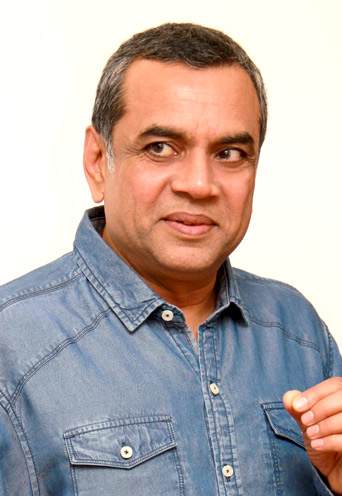
Before Baburao Ganpatrao Apte, before 240 films, Paresh Rawal was a Gujarati stage actor, and he never actually stopped being one. That is the fact most Hera Pheri fans miss. His comic timing, the one that turns a landlord counting money into a national catchphrase, was trained in Gujarati commercial theatre where the audience is close enough to see you think. He kept the association through the entire film career, and his Gujarati play Dear Father was adapted into a film of the same name in 2022, running the pipeline in the direction it usually does not go.
The range is what makes him unusual among comic actors. The same year he was winning a National Film Award for Best Supporting Actor for Woh Chokri and Sir, and a Filmfare award for a negative role, he was building the Hindi comedy persona that Hera Pheri in 2000 and Phir Hera Pheri in 2006 turned into a permanent cultural fixture. Padma Shri in 2014. Over 240 films. He has said in interviews that the timing felt right to return to Gujarati cinema after several decades, and the return happened through the play, not the studio.
Photo: Bollywood Hungama, CC BY 3.0, via Wikimedia Commons.
7Dinyar Contractor

Dinyar Contractor is the Parsi seam in Gujarati comedy, and leaving it out would falsify the whole history. Parsi theatre in Bombay was performed in Gujarati, it invented much of the farce grammar the later commercial stage inherited, and Contractor came up inside it. He started acting at school, turned professional in 1966, and worked in both Gujarati and Hindi theatre for over five decades. When Mumbai Doordarshan launched its DD-2 channel he was there with Adi Marzban on Aao Marvao Meri Saathe, a Gujarati programme, which puts him at the exact hinge where the stage first walked into a television studio.
Hindi cinema then used him the way it uses every great stage comic, in small sharp doses. He is the principal in Khiladi and in Mujhse Shaadi Karogi, the casino manager in Baadshah, the hotel general manager in Chori Chori Chupke Chupke, the judge in Khichdi: The Movie. Character parts, four minutes at a time, played by a man who could have carried three acts. The Padma Shri was announced in January 2019. He died that June, five months later, which is roughly how long Indian comedy usually takes to say thank you.
Photo: President's Secretariat, GODL-India, via Wikimedia Commons.
The screen
Two of the biggest comedies in Indian television history are Gujarati at the root. Taarak Mehta Ka Ooltah Chashmah is a Gujarati humour column. Khichdi is a Gujarati play called Ladakvaya. Neither fact is widely known outside the state, and both explain why so many of the people below learned their craft in a theatre in Mumbai or Ahmedabad long before a camera was pointed at them.
8Tarak Mehta

Tarak Mehta wrote a weekly humour column for Chitralekha starting in March 1971 and kept it going for decades. Duniya Ne Undha Chasma, the world through inverted spectacles, looked at whatever was happening that week and turned it sideways. That is the entire premise, and out of it came 80 books, a body of Gujarati one-act plays with titles like Jojo Hasi na Kadhta, and a reputation in Gujarati theatre that had nothing to do with television at all.
Then in 2008 Sony SAB built a sitcom on the column and Taarak Mehta Ka Ooltah Chashmah became one of the longest-running series in Indian television history, running past its own source material by years. It is the largest single act of cultural export Gujarati humour has ever managed: a Gujarati columnist's sensibility playing nightly in Hindi to the whole country. He was given the Padma Shri in 2015, the Gujarat Sahitya Akademi's Sahitya Gaurav Puraskar in 2011, and the Ramanlal Nilkanth Hasya Paritoshik posthumously in 2017. He moved to Ahmedabad in later life and his family donated his body to medical research.
Photo: Sanjay Vaidya, CC BY-SA 4.0, via Wikimedia Commons.
9Satish Shah

Satish Shah's father's family came from Mandvi in Gujarat, he trained at FTII and graduated in 1976, and in 1984 he did something no Indian comic actor has repeated: 55 different characters across 55 episodes of Yeh Jo Hai Zindagi. A new man every week for a year, built and discarded. That is not a sitcom role, that is a discipline. The same year he played the municipal commissioner D'Mello in Jaane Bhi Do Yaaro, a performance mostly delivered while playing a corpse, which is the single most quoted piece of physical comedy in Indian cinema.
He then did the thing great character comics do and simply refused to stop working: 50 episodes of Filmy Chakkar, 80 of Ghar Jamai, 109 of All The Best opposite Swaroop Sampat, and finally Indravadan Sarabhai in Sarabhai vs Sarabhai from 2004, which won him the ITA Award and the Indian Telly Award for Best Actor in a Comic Role. He co-judged Comedy Circus in 2008 and joined the FTII society in 2015. He died of cardiac arrest on 25 October 2025 at the age of 74. His co-stars sang the Sarabhai title song at his cremation, which tells you what kind of set he ran.
Photo: Bollywood Hungama, CC BY 3.0, via Wikimedia Commons.
10Dilip Joshi

Jethalal Champaklal Gada is the most watched Gujarati comic character in Indian history, and Dilip Joshi has been playing him every week since 2008. The character is a Gujarati shopkeeper running Gada Electronics, permanently one bad decision away from disaster, and the show he lives in is built on the Gujarati humour column of Tarak Mehta. That is the craft claim for putting him here: whatever the demographics of the audience, the comic engine is a Gujarati merchant archetype that Bhavai and the commercial stage were both working with long before Sony SAB existed.
The route in was ordinary and slow. He started acting at twelve, worked backstage in commercial theatre for around fifty rupees a role, and won the Indian National Theatre Best Actor award while studying. Small parts in Maine Pyar Kiya and Hum Aapke Hain Koun..! followed, and for a stretch he ran a travel agency. Then a sitcom that nobody expected to last two years turned into a national institution, and he has five Telly Awards and three ITA Awards from it. English Wikipedia records that he was born in Mumbai and does not detail his family's origins, so this page claims nothing further about them.
Photo: Bollywood Hungama, CC BY 3.0, via Wikimedia Commons.
11Deven Bhojani
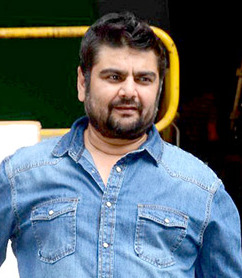
Deven Bhojani is a Gujarati born and raised in Mumbai who is best known, by his own biography's ordering, for his Gujarati plays rather than for anything he has done on camera. That ordering matters. He came to television in 1987 through Shankar Nag's Malgudi Days, built a reputation in comic and supporting roles, and then did the thing very few Indian comic actors manage, which is to move behind the camera and be better there.
He directed Sarabhai vs Sarabhai and won three best director awards for it, the ITA, the Indian Telly and the Apsara. Sarabhai is a Gujarati family sitcom about a Cuffe Parade household written in English-inflected Hindi, and the reason its rhythm works is that it is directed like a play: long scenes, small rooms, actors allowed to finish. He studied film direction at the University of Southern California after a commerce degree in Mumbai, which is an unusually deliberate education for someone whose day job was making people laugh in Vile Parle.
Photo: Bollywood Hungama, CC BY 3.0, via Wikimedia Commons.
12Jamnadas Majethia
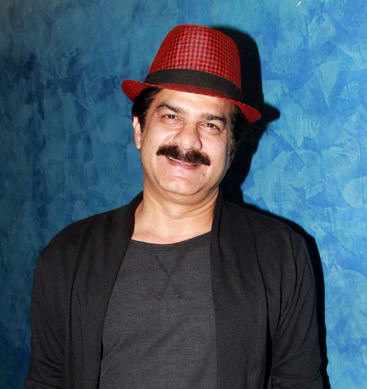
JD Majethia was born in Porbandar into a Sindhi Hindu family, spent two decades in Gujarati theatre, and then did something structurally important: he took a Gujarati play his own company had staged, Ladakvaya, and turned it into Khichdi. Khichdi debuted on Star Plus on 10 September 2002, became one of the first Indian television shows to run in proper seasons, and then became the first Indian television series adapted into a Bollywood film franchise. A Gujarati stage comedy, translated once, ended up rewriting how Indian television packages itself.
Hats Off Productions, which he formed with the writer Aatish Kapadia, is the single most consequential comedy shop in this whole story. Khichdi, Instant Khichdi, Sarabhai vs Sarabhai, Badi Door Se Aaye Hain, the Wagle Ki Duniya revival, plus two Khichdi films. He was nominated for the Apsara Award for Best Actor in a Comic Role in 2011 for playing Himanshu Seth in Khichdi: The Movie, and in 2013 he opened HatsOff Actors Studios to train the next lot. He is usually filed as a producer. He is more accurately a Gujarati theatre man who got television to speak his language.
Photo: Bollywood Hungama, CC BY 3.0, via Wikimedia Commons.
13Supriya Pathak

Hansa Parekh is one of the great comic creations of Indian television, a woman of monumental slowness delivered with absolute conviction, and the actor playing her is the daughter of Dina Pathak, the Kathiyawadi Gujarati theatre artiste. The lineage is not decorative. Supriya Pathak's first acting job was in her mother's revival of Maina Gurjari, the Rasiklal Parikh play that the Bhavai-trained comic actor Pransukh Nayak had been acclaimed in back in 1953. Three generations of Gujarati stage comedy pass through one play title.
She won a Filmfare Award for Best Supporting Actress for Kalyug in 1981 and worked through Bazaar, Masoom and Mirch Masala before television, and she works in Gujarati as well as Hindi films. What is remarkable about the Hansa performance is its restraint. The character is written broad and she plays her completely straight, never once winking at the audience, which is exactly the discipline the proscenium teaches and the reason the joke has survived twenty years and two feature films.
Photo: Bollywood Hungama, CC BY 3.0, via Wikimedia Commons.
14Vandana Pathak

Vandana Pathak was brought up in Ahmedabad in a Maharashtrian family, in a house where Gujarati theatre was the family trade. Her father is Arvind Vaidya, who directed more than two hundred plays over six decades, learned Gujarati from scratch as an outsider under the IPTA director Jashwant Thaker, and was given the Padma Shri in January 2026. She acted in Gujarati plays before television, arrived on screen as Meenakshi Mathur in Hum Paanch in 1995, and then landed Jayshree Parekh in Khichdi.
Her range inside comedy is wider than the Khichdi role suggests: Sheela Devi in Main Kab Saas Banoongi, R. K. Laxman Ki Duniya, Mahisagar, and an alien in Badi Door Se Aaye Hai for which she has said she took inspiration from her father. She said she had been doing comedy for fourteen years straight and was actively hunting for something serious when Gaura in Saath Nibhaana Saathiya arrived in 2015. That is the occupational hazard of being genuinely funny in Indian television. Once the industry decides you can do it, it stops asking whether you can do anything else.
Photo: Nizil Shah, CC BY-SA 4.0, via Wikimedia Commons.
15Tiku Talsania

Tiku Talsania has been a working comic actor for four decades and kept a freelance foot in Gujarati theatre the entire time, which is the arrangement most Gujarati comics of his generation ran. Films paid, the stage kept the instrument tuned. He came up through Yeh Jo Hai Zindagi in 1984 and then through the 1990s did the specific job Hindi cinema needed then: Dil Hai Ke Manta Nahin, Bol Radha Bol, Mr. Bechara, and Andaz Apna Apna, where every supporting actor had to be funny enough to survive the two leads.
The interesting turns are the ones that break the type. He played the protagonist's caretaker Dharamdas in Sanjay Leela Bhansali's Devdas and got critical notice for it, and he took a serious part in Waqt Hamara Hai as far back as 1993. His ancestral village is Talsana, which is where the surname comes from, and the family business continues: his daughter Shikha Talsania acts, his son Rohaan composes. Four decades of steady, unshowy comic work is a harder credential than one viral year, and it is the one most of this section shares.
Photo: Bollywood Hungama, CC BY 3.0, via Wikimedia Commons.
16Devang Patel

Devang Patel invented a Gujarati comedy format that nobody else has properly repeated: the parody record. Buma Bum is a set of Gujarati parody songs with titles that are the whole joke, Maru Shirt Fateli Mari Pent Fateli, my shirt is torn and so are my trousers, and Chashmish Mane Log Bole, people call me four eyes. He then did the same thing in Hindi at scale across Meri Marzi in 1995 and the two Patel Scope albums, rewriting Ricky Martin, Vengaboys, Boney M and half the Bollywood chart into gags. In the pre-YouTube era, this was the closest thing Gujarat had to viral comedy.
He carried it into film with two big budget Gujarati releases, Muratiyo No. 1 in 2005 and Vanechandno Varghodo in 2007, both of which did moderate business, and came back to acting with Grand Hali in 2017. That 2007 title carries the same name as one of Shahabuddin Rathod's best known comic pieces, which is a neat marker of how small and self-referential the Gujarati comedy world actually is. He also wrote and performed Amdavad Heritage Garbo with the singer Shuchita Vyas, a garba dedicated to the walled city, which is about as Ahmedabad as a career gets.
Photo: Abhikumsin, CC BY-SA 4.0, via Wikimedia Commons.
The internet and the mic
The newest room. Gujarati standup barely existed as a paid profession before 2011, and the people below built the circuit from open mics in Vadodara and Ahmedabad. What they inherited from the stage is the touring model. What they added is that a Gujarati comic can now sell a ticket in Toronto without a producer in Mumbai giving permission first.
17Manan Desai
Manan Desai co-founded The Comedy Factory in 2011, which is the single event that turned Gujarati standup from a hobby into a job. Before it there was no open mic circuit in the language, no room to fail in, and no route from a bad first five minutes to a paid show. He built the room. Nearly every Gujarati comic working today either came through a TCF open mic or was booked on a TCF bill, which is why the founders of Indian regional comedy scenes tend to be less famous than the people they trained.
He arrived from radio, having worked as an RJ at My FM and Radio Mirchi, which is the correct apprenticeship for this: talking to an audience you cannot see, in Gujarati, on a clock. He crossed into Hindi television on Comedy Nights Bachao and into Gujarati cinema in Ventilator, Chor Bani Thangaat Kare and Order Order Out Of Order. His Instagram bio, verified on 29 July 2026, describes the job as taking Gujarati culture and entertainment worldwide, which sounds like marketing until you notice the touring schedule actually does that.
Instagram: @instafunny_manan (verified 2026-07-29).
18Chirayu Mistry
Chirayu Mistry's own account of how this career started is the most useful document on this page. First attempt at standup on a stage at MSU in Vadodara in 2013, and he is glad no video exists. Then the first open mic The Comedy Factory ever ran in Vadodara, which he won. Then a set at Weekend Window after which the organisers handed him an envelope with fifteen hundred rupees in it, and he could not work out why anybody would pay him to talk. That is the entire economic history of Gujarati standup in three anecdotes.
He built a solo show called Mistry Solved, took it from a trial room to a sold out auditorium in Mumbai, and in December 2024, after more than ten years of doing this, released his first standup special in Gujarati, with the Hindi version out the next day. Ten years to a special is slow by Hindi comedy standards and fast by Gujarati ones, because he was building the ladder while climbing it. His profile calls him Hasya Samraat, a title borrowed straight from the old Gujarati stage, and his bits still run on that register: Co-Veg Restaurant, Bodybuilder Baa, jokes about family plumbing rather than about being a comedian.
Instagram: @chirayu_m (verified 2026-07-29).
19Ojas Rawal
Ojas Rawal is the clearest living example of the argument this page is making, which is that Gujarati comedy is one continuous circuit and not four separate industries. In a single stretch of 2026 he was on a Gujarati comedy play touring the American south and midwest, Patni Tari Beek Che Baki Badhu Theek Che, playing Spartanburg, Chattanooga, Brunswick, Fort Myers, Atlanta, Los Angeles and Chicago with Hardik Sangani, then booked into an Australian run from 24 to 27 September, then doing a solo standup night at the Sringeri Temple in Etobicoke on 31 July for a charity. Stage, tour, mic, cause. That is the Gujarati performer's job description, unchanged since the dayro.
The film work runs alongside it rather than replacing it. He was in Jhamkudi, the 2024 Gujarati comedy horror, and in Maharani in 2025, and in July 2026 he opened in Layak Nalayakk playing Sameer Joshi, a tourist who goes to London and walks into a scam. He shot another Gujarati feature in Surat the same month. His own bio lists the full stack without embarrassment: actor in films, television and theatre, anchor for weddings and corporate events and game shows, comedian, speaker on cultural and youth activism. That is not a lack of focus. That is what a working Gujarati comic actually does to stay working.
Instagram: @ojasrawal (verified 2026-07-29).
20Munawar Faruqui

Munawar Faruqui is on this page as a Gujarat-born comic rather than a Gujarati-language one, and the distinction is worth stating plainly because he performs in Hindi and Urdu. He was born in Junagadh into a Gujarati Muslim family, left school after the fifth standard when his father's debts collapsed the household, worked in a gift shop as a child, and made and sold samosas and chaklis alongside his mother and grandmother. She died when he was fourteen. He moved to Mumbai to an aunt's house and did odd jobs. Almost nothing in that paragraph is funny, which is the usual arrangement.
He uploaded a set called Dawood, Yamraaj and Aurat in April 2020 and a Ghost Story set in February 2021. Between those two uploads, on 2 January 2021, Madhya Pradesh Police arrested him mid-performance at a cafe in Indore following a complaint by the son of a sitting MLA, an arrest that drew criticism from comedians in India and abroad. He then won Lock Upp in 2022 and Bigg Boss 17 in January 2024, converting a career interrupted by the state into a career on national reality television. Whatever else that story is, it is the most consequential thing to happen to an Indian comic in the last decade, and it started in Junagadh.
Photo: Bollywood Hungama, CC BY 3.0, via Wikimedia Commons.
21Dhaval Domadiya
Dhaval Domadiya makes domestic farce, which is the oldest structure in this entire tradition. A courtyard, a household, a small crisis that everybody handles badly, a resolution in the last ten seconds. Swap the phone camera for a Bhavai troupe's oil lamp and the shape of the thing does not change. His comedy is Saurashtra specific in a way that resists translation: the pace is slower than urban sketch, the argument is the joke rather than the setup to it, and the laugh depends on the audience already knowing exactly how that family works.
The interesting move in his career is the split. The comedy account and the family vlog channel are separate, and his Instagram bio, verified on 29 July 2026, does not point at the comedy at all, it points at the vlogs. A comedian whose material is domestic life eventually finds that the domestic life is the product, and he has been unusually direct about letting that happen. His captions are often a single Gujarati phrase, akhand moj among them, which is a fair summary of the entire aesthetic.
Instagram: @dhaval_domadiya (verified 2026-07-29).
22Dev Raval
Dev Raval writes the title first. That one road incident. Girlfriend versus boyfriend. My financial condition right now. The caption states the premise, the sketch executes it, and the whole thing is done inside a minute. It is a genuinely different comic architecture from the Saurashtra household farce: no build, no relationships to establish, just a recognisable situation and an immediate exaggeration of it. That structure is why his work travels beyond Gujarat even though the dialogue does not leave Gujarati.
The road incident sketch posted on 25 July 2026 took 6.82 million plays and 288 thousand likes, and it contains no jokes about being a comedian, no meta commentary and no guest. It is one situation, played out. His Gujarati bio states the ambition without irony: a little space in your phone and in your heart. Under it sits the clothing label he runs. That is the modern arrangement, and it is not new. Sanjay Goradia sells tickets, Sairam Dave sells books, Dev Raval sells shirts. The comedy has always had to pay for itself.
Instagram: @dev_ravall (verified 2026-07-29).
What the numbers say
Gujarati comedy measured in live shows, not views
All six bars count live performances in front of paying audiences, taken from published biographical records rather than from any audited box office system. The first three are career totals for one performer. The last three are the runs of single productions. Internet view counts are deliberately excluded, because the point of the chart is that the largest number in Gujarati comedy belongs to a Bhavai-trained stage actor who died in 1989.
Questions people actually ask
Who is the most famous Gujarati comedian?
On the stage it is Siddharth Randeria, whose Gujjubhai franchise runs across seven plays and two films and who holds the record for most live performances by an actor at over 12,000. On television the most watched Gujarati comic character is Jethalal Champaklal Gada, played by Dilip Joshi in Taarak Mehta Ka Ooltah Chashmah since 2008. Among humorists, Shahabuddin Rathod and Jagdish Trivedi are the two names Gujarat itself would give you first.
What is Bhavai and how does it connect to Gujarati comedy today?
Bhavai is the folk theatre form of Gujarat, also called vesha or swang, built around short comic acts performed by touring troupes on open ground. Its actors moved into the professional Gujarati theatre companies of the twentieth century and brought the timing and the stock-character comedy with them. Pransukh Nayak, born into a Bhavai family in Jagudan, went on to give 22,455 stage performances and is listed in the 1989 Guinness Book of Records.
Who is Gujjubhai?
Gujjubhai is a comic character created and played by Siddharth Randeria, a middle class Gujarati man with far more confidence than competence. The franchise began on stage and expanded to seven plays, of which Lage Raho Gujjubhai alone completed 800 shows in three years. It moved to cinema in 2015 with Gujjubhai The Great, directed by Randeria's son Ishaan, followed by GujjuBhai Most Wanted in 2018.
Which Gujarati comedians and humorists have won the Padma Shri?
Paresh Rawal in 2014, Tarak Mehta in 2015, Manoj Joshi in 2018, Dinyar Contractor in January 2019, Shahabuddin Rathod in 2020, Jagdish Trivedi in 2024, and the Gujarati theatre director Arvind Vaidya in January 2026. Shahabuddin Rathod's citation was for literature and education rather than for entertainment, which is a fair description of a career built out of school principalship and comic writing.
Is Gujarati standup comedy a real professional circuit?
It is, and it is roughly fifteen years old. The Comedy Factory, co-founded by Manan Desai in 2011, created the first Gujarati open mic circuit, which is where Chirayu Mistry started before releasing the first Gujarati standup special in December 2024. Gujarati comedy shows now tour the United States, Canada, the United Kingdom and Australia, with performers such as Ojas Rawal running full overseas legs of Gujarati comedy plays and solo standup nights.
Sources and image credits
All photographs are free-licensed files from Wikimedia Commons, reused with the attribution each licence requires. No press agency or studio photographs are hosted on this site. Instagram content is linked or embedded from the official account, never re-hosted.
- English Wikipedia biographies of Shahabuddin Rathod, Jagdish Trivedi, Siddharth Randeria, Sanjay Goradia, Paresh Rawal, Dinyar Contractor, Tarak Mehta, Satish Shah, Dilip Joshi, Deven Bhojani, Jamnadas Majethia, Supriya Pathak, Vandana Pathak, Arvind Vaidya, Tiku Talsania, Devang Patel, Manan Desai, Munawar Faruqui, Pransukh Nayak and Ramesh Mehta, retrieved 29 July 2026
- English Wikipedia articles on the Khichdi franchise, Sarabhai vs Sarabhai, Taarak Mehta Ka Ooltah Chashmah and Gujjubhai The Great, retrieved 29 July 2026, used for show origins, cast and production credits
- Gujarati Wikipedia biographies of Sairam Dave and Shahabuddin Rathod and the article on the Doordarshan Ahmedabad programme Gammat Gulal, retrieved 29 July 2026
- Apify Instagram profile scrapes of ojasrawal, instafunny_manan, chirayu_m, sairamdaveofficial, jagdishtrivediofficial, dhaval_domadiya and dev_ravall, run 29 July 2026, used to confirm account ownership through display name plus biography or external link
- Apify Instagram post scrapes of the recent feeds of ojasrawal, chirayu_m, dhaval_domadiya and dev_ravall, run 29 July 2026, used for tour dates, film credits and career detail stated by the performers themselves
- Wikimedia Commons file metadata for every photograph on this page, checked 29 July 2026 for licence and photographer credit
- Reported Gujarati box office figures for Chaal Jeevi Laiye! and Laalo cross-checked against the highest grossing Gujarati films list on this site, which labels all such figures as industry-reported and not audited
Keep reading
- 26 Best Gujarati YouTube Channels, Ranked by Verified Subscribers
- 25 Best Gujarati Instagram Creators, Ranked by Verified Followers
- 13 Best Gujarati Podcasts and Audio Shows
- 18 Gujarati Food Creators and Recipe Channels, Ranked by Verified Reach
- 18 Gujarati News Channels and Media Brands, Mapped by Verified Reach
- Manan Desai