The 20 best Gujarati actors of all time run from Jaishankar Sundari, the stage legend who played the female leads in early Gujarati plays, to Pratik Gandhi, who led Wrong Side Raju (2016) to the National Film Award for Best Gujarati Film before Scam 1992 made him a national name. Between them sit Upendra Trivedi, the Padma Shri winning Abhinay Samrat, Sanjeev Kumar with two National Awards for Best Actor, and Paresh Rawal and Manoj Joshi, who each hold a National Film Award and a Padma Shri. The commercial peak belongs to Siddharth Randeria and Yash Soni, whose Chaal Jeevi Laiye! (2019) held the Gujarati box office record at a reported Rs 50 crore until Laalo reportedly crossed Rs 120 crore in 2025.
Gujarati cinema spent most of its life being underestimated, including by Gujaratis. For decades it meant rural folk dramas playing in single screens while the same audience queued for Hindi films at the multiplex. Then Chhello Divas opened in 2015, Wrong Side Raju won a National Award in 2016, and in 2025 Laalo became the first Gujarati film to reportedly cross Rs 100 crore. The industry changed. The acting talent had been there the whole time.
This list runs chronologically rather than as a power ranking, because the honest way to read Gujarati acting is as one continuous line: a stage tradition that produced Jaishankar Sundari and Bapulal Nayak, a commercial film era that produced Upendra Trivedi and Asrani, a crossover generation that took Gujarati training to the national industry, and a multiplex wave that finally gave Gujarati films a young urban audience. Every name here is checked against a verifiable record, and anyone whose credits or photographs could not be verified was cut rather than padded out.
The list at a glance
| Actor | Era | Known for | Hardest credential |
|---|---|---|---|
| Jaishankar Bhojak | 1889 to 1975 | Female roles in early Gujarati plays | Ranjitram Suvarna Chandrak 1951 and the Padma Bhushan |
| Bapulal Nayak | 1879 to 1947 | Mumbai Gujarati Natak Mandali leads | Owned the company he started in as an actor |
| Upendra Trivedi | 1936 to 2015 | Mehndi Rang Lagyo, Jogidas Khuman | Padma Shri in 1989, called Abhinay Samrat |
| Sanjeev Kumar | 1938 to 1985 | Kalapi, Koshish, Angoor | Two National Film Awards for Best Actor |
| Asrani | 1941 to 2025 | Amdavad No Rikshawalo, Sholay | Gujarati lead from 1972 to 1984 and director of six films |
| Hitu Kanodia | 1980s to present | Raado, Kamthaan, Vash Level 2 | Over 100 Gujarati films, plus an MLA term from Idar |
| Paresh Rawal | 1984 to present | Gujarati stage, Dear Father | National Film Award and the Padma Shri in 2014 |
| Manoj Joshi | 1998 to present | Chanakya on stage, Pappa Tamne Nahi Samjaay | National Film Award and the Padma Shri in 2018 |
| Darshan Jariwala | 1980s to present | Gandhi, My Father, Narsinh Mehta, Bey Yaar | National Film Award for Best Supporting Actor |
| Sharman Joshi | 1999 to present | 3 Idiots, Rang De Basanti | IIFA Award, and 550 plus shows of Gujarati All the Best |
| Dilip Joshi | 1989 to present | Jethalal in Taarak Mehta Ka Ooltah Chashmah | One character played daily since 2008 |
| Deven Bhojani | 1987 to present | Gujarati plays, Sarabhai vs Sarabhai | Three best director awards for Sarabhai vs Sarabhai |
| Siddharth Randeria | 1970 to present | Gujjubhai series, Chaal Jeevi Laiye! | Over 12,000 live performances |
| Sanjay Goradia | 1979 to present | Pappu Paas Thayi Gayo, Bairaono Bahubali | Produced over 100 Gujarati plays |
| Deepak Antani | 1988 to present | Gandhi Godse - Ek Yudh, Mujib | Record holder for most performances as Gandhi |
| Pratik Gandhi | 2014 to present | Wrong Side Raju, Scam 1992 | Led the National Award winning Best Gujarati Film |
| Malhar Thakar | 2012 to present | Chhello Divas, Love Ni Bhavai, Scoop | Love Ni Bhavai ran over 100 days in theatres |
| Yash Soni | 2015 to present | Chhello Divas, Chaal Jeevi Laiye! | Led the record holding Gujarati film for six years |
| Raunaq Kamdar | 2001 to present | Naadi Dosh, Order Order Out of Order | Directed and produced theatre before his film debut |
| Devarshi Shah | 2016 to present | Hardik Abhinandan, Bau Na Vichar, Raado | Carried Raado, a harder register for Gujarati leads |
How this list was built
Three filters. First, the actor had to have a documented body of work in Gujarati cinema or Gujarati theatre, so Gujarati-origin actors with no traceable Gujarati-language or Gujarati stage credits were left out. Second, every date, award, film title and box office figure had to be traceable to English Wikipedia biographies and their cited sources, checked in July 2026; where two sources disagreed, as with one actor's birth year, the disputed detail was dropped rather than guessed. Third, every entry needed either a free-licensed Wikimedia Commons photograph with a named photographer and licence, or a verified Instagram account confirmed by a live profile check. Roughly two thirds of the shortlist failed the image test, including Arvind Trivedi, Naresh Kanodia, Ramesh Mehta, Hiten Kumar and Vikram Thakor, all of whom have real claims to a list like this and none of whom have a usable free-licensed photograph. They were removed rather than shipped as blanks. The list is male actors only.
Before the camera: the Gujarati stage
Gujarati acting was a theatre tradition for decades before it was a film industry, and two men set the standard everyone else inherited.
1Jaishankar Bhojak

Gujarati acting did not begin with a camera. It began with a boy from a family of hereditary Bhojak performers who took the stage name Sundari from a role and never handed it back. In the early Gujarati plays women were kept off the professional stage, so the female leads were played by men, and Jaishankar Bhojak played them better than anyone before or since. He retired from acting in 1932, stayed away for sixteen years, then returned in 1948 as a director and a teacher rather than as a star.
He was awarded the Ranjitram Suvarna Chandrak in 1951 and later the Padma Bhushan, and his autobiography was turned into a play, Sundari: An Actor Prepares, staged in 1998. He died at Visnagar in 1975. Every technique the Gujarati stage eventually handed to Gujarati cinema, the projection, the timing, the ability to hold a full house without a microphone, passed through his hands first. Start a list of Gujarati actors anywhere else and you are starting in the middle of the story.
Photo: Photo Division, Government of India, public domain, via Wikimedia Commons.
2Bapulal Nayak

Born into a family of traditional folk performers, Bapulal Nayak joined the Mumbai Gujarati Natak Mandali young and was well received in his first roles. What separates him from every other leading man of the period is that he did not stop at acting. He moved into stage planning and company management, became a partner, and eventually bought the theatre company outright. He acted in plays by Mulshankar Mulani, Gajendrashankar Pandya and Nrisinh Vibhakar, and wrote and directed several of his own.
His pairing with Jaishankar Bhojak, who played the women opposite him, was the first genuine star duo in Gujarati performance, and the pair were photographed together on stage as early as 1904. His career ran five decades and ended the way many theatre careers ended in the 1930s and 1940s. Cinema arrived, the ticket buyers followed it, his company took losses it could not absorb, and he retired rather than thin the work out to survive.
Photo: Unidentified photographer, public domain, via Wikimedia Commons.
The golden age of Gujarati cinema
The decades when a Gujarati film could open across the state on the strength of one name on the poster.
3Upendra Trivedi

Gujarati cinema calls him Abhinay Samrat, emperor of acting, and unlike most film-industry nicknames that one survives inspection. His family came from Kukadia village near Idar, his father was a mill worker who was paralysed, and Trivedi worked as a coolie and in an umbrella factory before the stage took him. Mehndi Rang Lagyo (1960) and Jogidas Khuman (1962) were among his earliest screen appearances, and Kadu Makrani, Jesal Toral and Ranakdevi followed across three decades of near-continuous work.
He did not only act. He directed and produced Jher To Peedhan Jani Jani from Manubhai Pancholi's novel, wrote an autobiography, and was elected to the state legislative assembly three times. He received the Padma Shri in 1989. His younger brother Arvind Trivedi, the Ravana of the 1987 Ramayan, was the other half of the most prolific acting family Gujarat has produced. If Gujarati cinema had a load-bearing wall through its commercial decades, Upendra Trivedi was it.
Photo: Chirag Umakant Thakkar, CC BY-SA 4.0, via Wikimedia Commons.
4Sanjeev Kumar

He was born Harihar Jethalal Jariwala into a Gujarati family, spoke Gujarati, Hindi and English fluently, and won two National Film Awards for Best Actor, for Dastak (1970) and Koshish (1972). The Gujarati work is not a footnote to that. He played the title role in Kalapi (1966), Manhar Raskapur's film on the poet Kalapi, opposite Padmarani and Aruna Irani, then worked with Aruna Irani again in Mare Javun Pele Par (1968). He also won a Best Actor award for the stage, for the Gujarati play Koi no Ladakh Vayo.
In Hindi cinema he did the thing almost nobody manages, which is to be equally convincing in Koshish, Sholay, Trishul and Angoor. He played men decades older than himself and let the performance carry the age rather than the makeup. He died at 47. Rediff readers later voted him seventh among the greatest actors in the history of Indian cinema, which is a remarkable placement for a career that short.
Photo: Ministry of Information and Broadcasting, GODL-India, via Wikimedia Commons.
5Asrani

Most of India knows him as the Sholay jailer doing Hitler in a khaki cap. Gujarat knows him as a leading man. Across five decades Asrani appeared in more than 350 Hindi and Gujarati films, and in Gujarati cinema he carried films as the hero from 1972 to 1984 before moving into character roles from 1985 to 2012. In 1974 he directed his first film, in Gujarati, with himself as the hero, and the Kishore Kumar song Hu Amdavad No Rikshawalo was picturised on him. That song is still the shorthand for an entire era.
His Gujarati leads include Amdavad No Rikshawalo, Saat Qaidi, Sansar Chakra, Pankhi No Malo, Jugal Jodi, Maa Baap and Chel Chabilo Gujarati. In 1982 he set up a small Gujarati production company with Dinesh Hingoo, Harish Patel and Salim Parvez, and it dissolved in 1996 at a profit. From 1988 to 1993 he was a director at the Film Institute in Pune. Comedians rarely get called great actors. He directed six films and ran a film school, which settles the argument.
Photo: Bollywood Hungama, CC BY 3.0, via Wikimedia Commons.
6Hitu Kanodia
He was born into the Kanodia name, which in rural Gujarati cinema is closer to a studio than a surname. His father Naresh Kanodia was an actor, singer and politician, his uncle Mahesh Kanodia was a singer and politician, and Hitu started as a child artist before going on to act in over 100 Gujarati films. He was elected to the Gujarat legislative assembly from Idar in 2017 and served until 2022.
What makes him interesting is that he did not retire into nostalgia when the urban Gujarati wave arrived and changed the audience. He crossed into it. His verified Instagram account lists recent work including Vash Level 2, Raado, Kamthaan, 3 Ekka and 1947, which puts a man who began in the Dhola Maru and Meru Mulade era on the call sheet of the films selling tickets in multiplexes today. Very few actors in any Indian language have made that jump without looking out of place.
Instagram: @hitukanodia (verified 2026-07-29).
The crossover craftsmen
Actors who trained on the Gujarati stage, went national, and kept coming back.
7Paresh Rawal
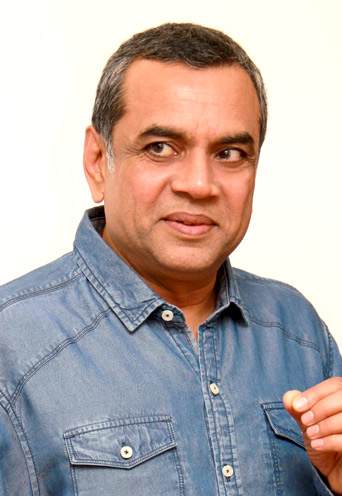
Before he was one of the most reliable actors in Hindi cinema, Paresh Rawal was a Gujarati theatre actor, and he never treated that as a stage he had grown out of. He has appeared in over 240 films, won a National Film Award and three Filmfare Awards, and received the Padma Shri in 2014. Through all of it he kept returning to the Gujarati stage rather than dropping in for a lap of honour.
His Gujarati play Dear Father was successful enough that it was adapted into a film of the same name in 2022, which is the cleanest proof available that his stage work is not a hobby running alongside the film career. He has also spoken about returning to Gujarati cinema after decades away, saying the timing finally felt right. The range is the point here: the same actor plays a comic set piece and a study in menace, and you do not catch him changing gears.
Photo: Bollywood Hungama, CC BY 3.0, via Wikimedia Commons.
8Manoj Joshi

He is from Adpodara village near Himmatnagar in north Gujarat, graduated from Sir J. J. School of Arts, and started in Marathi theatre while also performing in Gujarati and Hindi. That three-language training shows in the work. He has acted in over 70 films since 1998, won the National Film Award for Best Supporting Actor for the Marathi film Dashakriya at the 64th National Film Awards, and received the Padma Shri in 2018.
On stage he is best known for playing Chanakya, a role he has performed for years and which sits at the opposite end of the register from the comic parts most audiences know him for. He is also vice-president of the Bombay Art Society, and he anchored Pappa Tamne Nahi Samjaay (2017) in Gujarati alongside Ketki Dave and Johny Lever. A Padma Shri plus a National Award is the hardest pair of credentials on this list outside Sanjeev Kumar.
Photo: Suyash Dwivedi, CC BY-SA 4.0, via Wikimedia Commons.
9Darshan Jariwala

He is the son of the veteran Gujarati actress Leela Jariwala, and he won the National Film Award for Best Supporting Actor for playing Mohandas Gandhi in Gandhi, My Father (2007). The casting was not a coincidence. Feroz Abbas Khan had already wanted him for Gandhi in the play Mahatma v/s Gandhi and lost him to a date clash, then came back for the film and got him. That is a director chasing one actor across two productions for the same role.
The Gujarati work runs deeper than the award. His plays include Hatheli Par Baad Baaki, Patro Mitro, Mulraj Mansion and Andhalo Pato, and his Gujarati television serial Narsinh Mehta, on the saint poet, is still the one older viewers name first. He entered the new-wave Gujarati cinema with Bey Yaar in 2014, and Hindi television audiences know him as Chedilal Chaturvedi in Saas Bina Sasural, which ran from October 2010 to September 2012.
Photo: Bollywood Hungama, CC BY 3.0, via Wikimedia Commons.
10Sharman Joshi

He belongs to a Gujarati Brahmin family of actors and performing artists, and the credentials on that side are serious. His father Arvind Joshi was a veteran of Gujarati theatre, his uncle was the director Pravin Joshi, his aunt is Sarita Joshi, and Ketki Dave is a cousin. He began with supporting parts in Godmother (1999) and Lajja (2001), broke through with Style (2001), and then strung together Rang De Basanti, Golmaal, Dhol, Life in a... Metro, 3 Idiots and Ferrari Ki Sawaari. 3 Idiots won him the IIFA Award for Best Supporting Actor.
The reason he belongs on a Gujarati list rather than only a Hindi one is the stage. He has acted, produced and directed plays in English, Hindi, Marathi and Gujarati, and he played a deaf character in the Gujarati version of All the Best, a production that ran more than 550 shows in three years. Film careers rise and fall. A play that does 550 shows means an audience kept choosing to come back.
Photo: Bollywood Hungama, CC BY 3.0, via Wikimedia Commons.
11Dilip Joshi

He started backstage on the commercial stage, earning roughly Rs 50 per role, and picked up small film parts in Maine Pyar Kiya and Hum Aapke Hain Koun..! along the way. Then in 2008 he took the role of Jethalal Champaklal Gada in Taarak Mehta Ka Ooltah Chashmah and has been playing it ever since, which by any measure of sustained daily performance is one of the longest runs an Indian actor has ever had in a single character.
The reason it counts here is what the character is. Jethalal is a Gujarati shopkeeper written for a national Hindi-speaking audience, and Joshi plays him without turning him into a caricature of a Gujarati businessman. He made a Gujarati archetype legible to the whole country and likeable at the same time. Millions of Indians who have never seen a Gujarati film have a Gujarati man as their most-watched character on television, and that is his doing.
Photo: Bollywood Hungama, CC BY 3.0, via Wikimedia Commons.
12Deven Bhojani
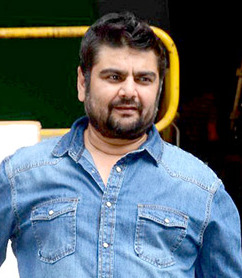
He is a Gujarati born and raised in Mumbai, and he is best known first for his Gujarati plays and only after that for the screen. He made his television debut in 1987 in Shankar Nag's Malgudi Days, which is a very unusual place for a Gujarati stage comic to start, and he then built a long run in comic and supporting roles across Hindi television.
Then he moved behind the camera and picked up three best director awards for Sarabhai vs Sarabhai, the ITA Award, the Indian Telly Award and the Apsara Award. That show is the sharpest comedy Indian television has produced, and its comic timing is stage timing transplanted into a studio. He is on this list because he proved a Gujarati theatre actor's instincts for rhythm translate into direction, which is a harder crossing than acting to acting.
Photo: Bollywood Hungama, CC BY 3.0, via Wikimedia Commons.
The men who kept the stage full
Two careers that explain why Gujarati theatre never collapsed the way most regional stages did.
13Siddharth Randeria

He has been in theatre since 1970 and holds the record for the most live performances by a Gujarati actor, having crossed 12,000 shows. The Gujjubhai series began with Gujjubhai E Gaam Gajavyu in 2003 and never stopped: Lage Raho Gujjubhai (2007) completed 800 shows in three years worldwide, Gujjubhai ni Golmaal (2012) did 350 shows across the world, and Gujjubhai Banya Dabangg completed 505 shows in 18 months. Those are touring numbers, not festival numbers.
He debuted in Gujarati cinema in 2015 with Gujjubhai The Great, returned for GujjuBhai Most Wanted (2018), played a cameo in Wrong Side Raju (2016) and took the lead in Natsamrat (2018). Then came Chaal Jeevi Laiye! (2019), which ran in theatres for over a year and held the record as the highest grossing Gujarati film of all time at a reported Rs 50 crore until Laalo passed it in 2025. He turned a stage character into a film franchise and then into a box office ceiling.
Photo: Nizil Shah, CC BY-SA 4.0, via Wikimedia Commons.
14Sanjay Goradia

He started backstage in 1979 on Pagla Ghoda, a play directed by Latesh Shah, and has since produced more than a hundred Gujarati plays and acted in roughly a quarter of them. His best-known productions include Pappu Paas Thayi Gayo, Aa Namo Bahu Nade Chhe, Chup Raho Khush Raho, De Taali Kona Baap Ni Diwali, Sunder Be Baydiwalo and Bairaono Bahubali. That is not a filmography, it is an infrastructure.
He also produced Hindi plays with names that pulled crowds who had never bought a Gujarati theatre ticket, including Maa Retire Hoti Hai with Jaya Bachchan, Pati-Patni aur Mein with Shatrughan Sinha and Chupkay Chupkay with Zeenat Aman. On Gujarati television he produced Aa Family Comedy Che (2014) and Kumkum Na Pagla Padya (2015) for Colors Gujarati. Most lists of great actors ignore the people who keep the stage financially alive. Gujarati theatre without Goradia is a much smaller industry.
Photo: Nizil Shah, CC BY-SA 4.0, via Wikimedia Commons.
15Deepak Antani

He began as a production assistant at Doordarshan in Ahmedabad, later became programming head at ETV, now Colors Gujarati, and consulted for regional channels including GSTV and Soham TV. Alongside that he built an acting career of more than 25 Gujarati and Hindi films and over 30 television serials, plus his own written and directed plays, short films and documentaries on Indian history and social themes.
One role separated him from every other character actor in Gujarat. He plays Gandhi, and he has played Gandhi more times than anyone: he holds records in both the Limca Book of Records, for 2020 to 2022, and the India Book of Records, for 2019, for the maximum number of performances as Mahatma Gandhi on stage and screen. The credits include Gandhiji My Mentor (2016), the stage play M.K. Gandhi Hazir Ho (2019), Rajkumar Santoshi's Gandhi Godse - Ek Yudh (2023) and Shyam Benegal's Mujib: The Making of a Nation (2023).
Photo: Bollywood Hungama, CC BY 3.0, via Wikimedia Commons.
The urban Gujarati wave
From Chhello Divas in 2015 onward, a new generation gave Gujarati cinema a multiplex audience it had never had.
16Pratik Gandhi

He studied industrial engineering at North Maharashtra University and held a job at Reliance Infrastructure until 2016, acting in the hours around it. Bey Yaar came in 2014. Then Wrong Side Raju in 2016, which won the National Film Award for Best Gujarati Film, followed by Love Ni Bhavai (2017) and Ventilator (2018). He quit the salaried job the same year Wrong Side Raju released, which tells you exactly how long he waited for proof before jumping.
Scam 1992 arrived in 2020 and his Harshad Mehta became the performance the whole country talked about, then Vitthal Teedi followed in 2021 and Madgaon Express and Do Aur Do Pyaar in 2024. In 2025 he was at the Toronto International Film Festival with Gandhi. He is the clearest evidence available that an actor can build a career in Gujarati cinema first and have the national industry come to him, rather than the other way round.
Photo: Desmond Herzfelder, CC BY 4.0, via Wikimedia Commons.
17Malhar Thakar

He studied at Navrang School and Sheth C. N. Vidyalaya in Ahmedabad and spent nine years in theatre before the film industry took him seriously. There was a bit part in Kevi Rite Jaish in 2012, a guy at a visa office, and then Chhello Divas in 2015 as the lead, which was a commercial success and effectively opened the urban Gujarati era. Love Ni Bhavai (2017) ran more than 100 days in theatres and Golkeri (2020) was declared a hit.
In 2018 he started his own production house, Ticket Window Entertainment, and in April 2020 announced an NGO for people affected by the pandemic. He crossed over to Hindi with a supporting role in Maja Ma (2022) and then to streaming with Jee Karda and Netflix's Scoop in 2023, where he played Ajitesh Bhatt. He married the actress Puja Joshi on 26 November 2024. Of the new generation, he is the one who moved fastest from being cast to doing the casting.
Photo: Snehrashmi, CC BY-SA 4.0, via Wikimedia Commons.
18Yash Soni

He was still a teenager when Chhello Divas opened in 2015 and made him a name, which is a strange amount of pressure for a first film. He followed it with Days of Tafree in 2016, the Hindi remake of his own debut, then Shu Thayu? in 2018, and then Chaal Jeevi Laiye! in 2019 opposite Siddharth Randeria, which became the highest grossing Gujarati film of all time and held that record for six years.
Look at the pattern rather than the titles. He has been in the biggest Gujarati film of two separate moments, the one that opened the urban wave and the one that set its commercial ceiling. That is not luck twice. He works in theatre alongside the films, which is the training that keeps young Gujarati leads from flattening out once the novelty of a new face wears off.
Photo: Hardycsh1, CC BY-SA 4.0, via Wikimedia Commons.
19Raunaq Kamdar

He went to St. Xavier's High School in Ahmedabad and studied architecture at CEPT University, and he started acting in theatre in 2001, well before the Gujarati film industry had anything to offer him. He directed plays including Frigyes Karinthy's The Refund and produced Ismat Apa ke Naam, Katha Collage, Pune Highway, Class of 64 and The Interview. That is an unusually literate back catalogue for a commercial leading man.
His film career started in 2016 with Hu Tu Tu Tu, then Tuu to Gayo the same year, Family Circus (2018), Have Thase Baap Re (2019), Order Order Out of Order (2019), Ekvismu Tiffin (2021) directed by Vijaygiri Bava and Naadi Dosh (2022), for which he was widely praised. He is the actor Gujarati directors call when the part needs restraint rather than volume, and there are not many of those in any industry.
Photo: Imfarhad7, CC BY-SA 4.0, via Wikimedia Commons.
20Devarshi Shah

He debuted in Gujarati cinema in 2016 with Hardik Abhinandan, directed by Dev Keshwala, playing Hardik Mochi. Bau Na Vichar followed in 2019, where he played Arun, and then Raado in 2022 as Neel. Three films, three registers, and no attempt to repeat the character that worked. He has also appeared in the Hindi television serials Yeh Un Dinon Ki Baat Hai and Rishton Ka Chakravyuh.
He is the youngest entry here and the one with the least settled reputation, which is precisely why he is worth watching. Raado gave Gujarati cinema a harder, more physical kind of leading man than the polite urban comedies of the 2015 to 2019 stretch had room for. If the industry keeps widening past the multiplex romantic comedy, actors built like this are the reason it can.
Photo: Nizil Shah, CC BY-SA 4.0, via Wikimedia Commons.
What the numbers say
The Gujarati box office ceiling, worldwide gross
All figures are industry-reported estimates, not audited accounts. Indian box office collections have no official tracking body and published estimates routinely differ between sources.
Questions people actually ask
Who is the greatest Gujarati actor of all time?
By hard credentials it is Sanjeev Kumar, who won two National Film Awards for Best Actor, for Dastak in 1970 and Koshish in 1972, and also won a Best Actor award for the Gujarati stage. Within Gujarati-language cinema specifically, Upendra Trivedi holds the title Abhinay Samrat and received the Padma Shri in 1989.
Who is the highest paid or biggest star in Gujarati cinema right now?
Fee figures in Gujarati cinema are not publicly disclosed, so any number you see quoted is a guess. On verifiable box office instead, Siddharth Randeria and Yash Soni headlined Chaal Jeevi Laiye! (2019), which held the all-time record at a reported Rs 50 crore, and Pratik Gandhi is the most nationally visible Gujarati actor after Scam 1992.
What is the highest grossing Gujarati film ever?
Laalo, released in 2025, at a reported Rs 120 crore worldwide. It opened weakly, collecting a reported Rs 0.40 crore in its first week, then grew on word of mouth and became the first Gujarati film to gross over Rs 100 crore by its 51st day. It broke the record held by Chaal Jeevi Laiye! since 2019.
Which Gujarati actors have won a National Film Award?
Sanjeev Kumar won Best Actor twice, for Dastak and Koshish. Darshan Jariwala won Best Supporting Actor for playing Gandhi in Gandhi, My Father. Manoj Joshi won Best Supporting Actor for Dashakriya at the 64th National Film Awards. Paresh Rawal is also a National Film Award winner. Pratik Gandhi led Wrong Side Raju, which won Best Gujarati Film.
Why are some famous Gujarati actors missing from this list?
Every entry needed a verified free-licensed photograph or a confirmed Instagram account, and several major names failed that test, including Arvind Trivedi, Naresh Kanodia, Ramesh Mehta, Hiten Kumar and Vikram Thakor. Rather than publish a name with an empty card or a guessed credit, they were removed. The list is also male actors only, so Gujarati actresses are covered separately.
Sources and image credits
All photographs are free-licensed files from Wikimedia Commons, reused with the attribution each licence requires. No press agency or studio photographs are hosted on this site. Instagram content is linked or embedded from the official account, never re-hosted.
- English Wikipedia biographies of each listed actor, retrieved July 2026
- Wikimedia Commons file pages for licence and photographer attribution, retrieved July 2026
- English Wikipedia articles on Laalo, Chaal Jeevi Laiye!, 3 Ekka, Chhello Divas, Hellaro and Gujjubhai The Great for reported box office estimates
- Instagram profile verification performed live on 29 July 2026 for entries without a free-licensed photograph
- National Film Awards and Padma awards records as cited in the corresponding Wikipedia articles