Gujarati cinema began on 9 April 1932 with Narsinh Mehta, a saint film directed by Nanubhai Vakil and produced by Sagar Movietone, though Gujaratis had already owned twenty of Bombay's leading studios during the silent era. The industry has produced more than a thousand films since, but its quality curve is not a straight line: a state subsidy scheme launched in the 1970s multiplied output and gutted craft so thoroughly that the National Film Award for Best Feature Film in Gujarati went unawarded in forty of the fifty-two cycles between 1970 and 2021. The recovery came in three waves, rural single screens after the 2005 tax exemption, urban multiplex films after Kevi Rite Jaish in 2012, and national recognition after Hellaro took the all-India Swarna Kamal at the 66th National Film Awards. In 2025 Laalo became the first Gujarati film to gross over Rs 100 crore, reported at Rs 120 crore, and in May 2026 the first Gujarati film screened at Cannes.
Most histories of Gujarati cinema are written as a sad story with a happy ending. Golden age, decline, revival, applause. That version is wrong in the part that matters. The industry did not fade because audiences left. It faded because in the 1970s the Gujarat government started paying producers to finish films, and a policy designed to protect a language accidentally created a market where finishing a film was worth more than making a good one. Anyone with a camera and a saint story could collect. The receipts are still on the record: for sixteen consecutive award cycles, from 1973 to 1988, the national jury looked at everything Gujarat produced and handed out nothing.
So this page is built around evidence rather than nostalgia. Twenty four landmark moments, each one anchored to a date, a name and a document, running from the silent studios of Bombay to a devotional film shot in Junagadh that outgrossed everything Gujarati cinema had made in ninety three years. Where the sources disagree, the disagreement is printed rather than smoothed over. One convention before you start, because it is where nearly every other article on this subject falls apart: a National Film Award year is the year of cinema being judged, not the year the trophy is handed over. The 70th National Film Awards honoured films of 2022, were announced on 16 August 2024, and were presented on 8 October 2024. Three years, one award. Everywhere below, the year against an award is the cycle year, with the ceremony number beside it.
The list at a glance
| Year | Landmark | Why it mattered |
|---|---|---|
| 1921 | Bhakta Vidur, the first film banned in India | Proved Gujarati producers ran Bombay cinema before Gujarati cinema existed |
| 1932 | Narsinh Mehta, the first Gujarati talkie | Gave the language a screen, on 9 April, under Sagar Movietone |
| 1948 | Gunsundari and a surge of 26 films in one year | Independence turned a trickle of twelve films into an industry |
| 1956 | Malela Jeev, Pannalal Patel adapting his own novel | Set the habit of building Gujarati films on Gujarati literature |
| 1960 | Mendi Rang Lagyo wins the first Gujarati National Award | Recognition arrived in the same year the state did, on 1 May 1960 |
| 1962 | Jogidas Khuman and the rise of Upendra Trivedi | Created the industry's first genuine star system |
| 1963 | Akhand Saubhagyavati, first Film Finance Corporation loan | Put central institutional money into a Gujarati film for the first time |
| 1968 | Liludi Dharati, the first Gujarati film in colour | Closed the technical gap with Hindi cinema, briefly |
| 1973 | The subsidy era begins in earnest | Paid for volume and destroyed craft for the next three decades |
| 1980 | Bhavni Bhavai, Ketan Mehta's debut | Showed what Gujarati cinema could do when the subsidy was not the point |
| 1993 | Manvini Bhavai wins at the 41st | The last Gujarati National Award for eighteen straight cycles |
| 1998 | Desh Re Joya Dada Pardesh Joya, reported Rs 22 crore | Set a box office ceiling nothing broke for over two decades |
| 2005 | Entertainment tax exemption returns | Kept the industry alive on rural single screens through its worst decade |
| 2012 | Kevi Rite Jaish, Abhishek Jain's debut | Brought urban Gujarati audiences back into a Gujarati film |
| 2013 | The Good Road becomes India's Oscar entry | First Gujarati film ever to represent India at the Academy Awards |
| 2014 | Bey Yaar runs fifty weeks | Turned one hit into a movement instead of an accident |
| 2015 | Chhello Divas and an eightfold box office jump | Reported industry gross went from Rs 7 crore to Rs 55 crore in a year |
| 2016 | Wrong Side Raju wins, and the grading policy lands | Tied state money to film quality for the first time |
| 2019 | Hellaro wins the Swarna Kamal | First and only Gujarati film to win Best Feature Film, all India |
| 2019 | Chaal Jeevi Laiye takes the box office record | Reported Rs 50 crore, still running in cinemas seven years later |
| 2022 | Chhello Show shortlisted at the 95th Academy Awards | Closest a Gujarati film has come to an Oscar nomination |
| 2024 | Vash is remade in Hindi as Shaitaan | Gujarati intellectual property became a Rs 200 crore Hindi asset |
| 2024 | Manasi Parekh wins Best Actress at the 70th | First Gujarati Best Actress win in the modern era |
| 2025 | Laalo reportedly crosses Rs 100 crore, then reaches Cannes | Broke the industry's financial ceiling by a factor of two |
How this list was built
Every date, award, ceremony number and box office figure on this page was read off English Wikipedia's Gujarati cinema article, the winners table for the National Film Award for Best Gujarati Feature Film, the individual film and ceremony pages, and the Gujarati section of the list of highest-grossing Indian films, then cross-checked against a second page before it was written down. Award years follow the official convention, meaning the year of cinema honoured, with the ceremony number stated next to it, never the presentation date. Box office numbers are labelled as reported because Indian regional box office has no audited tracker. Entries earn their place by being a turning point rather than a good film, which is why several well-regarded titles are absent and two pieces of tax policy are present. The photo rule this site runs on removed several moments that deserved to be here: Percy, the 1989 Parsi Gujarati winner directed by Pervez Merwanji, who died in 1993, has no free-licensed photograph of anyone involved; Hun Hunshi Hunshilal, the political satire whose year Wikipedia itself gives as both 1991 and 1992, has neither a photograph nor a settled date, so it was dropped on both counts; Kanku, the 1969 winner, and Gun Sundari No Ghar Sansar, the 1972 winner, have no Commons image of director Kantilal Rathod or Govind Saraiya; Jesal Toral, one of the biggest hits of the 1970s, has nothing for director Ravindra Dave; and Veer Hamirji, shortlisted for India's 2012 Oscar submission, has no photograph either. One available file was rejected on licence grounds rather than availability: a photograph of Nirupa Roy uploaded in 2024 claims own work over what is described as a still from the 1951 film Deedar, which is not a claim the uploader had standing to make, so the 1948 Gunsundari poster was used instead. Where a moment is a film rather than a person, it is illustrated with a public domain poster of that film or a Commons photograph of a verified participant, named in the alt text.
Before the talkies, and the first voice
Gujarati cinema is younger than the Gujarati film industry. That sentence is not a riddle.
11921: Bhakta Vidur, the silent era Gujaratis built and the British banned

Before a single word of Gujarati was spoken on screen, Gujaratis owned the business. Between 1913 and 1931 there were twenty leading film companies and studios owned by Gujaratis, almost all of them in Bombay, and at least forty four leading Gujarati directors working in the silent industry. Dwarkadas Sampat started in Rajkot by buying a projector and holding film shows, then partnered with S. N. Patankar before founding the Kohinoor Film Company. Kohinoor's Kach-Devyani in 1920 put garba dancing on screen, the first appearance of Gujarati culture in an Indian film. The silent Narsinh Mehta of 1920, produced by the Oriental Film Manufacturing Company, carried the song Vaishnav Jan To, which audiences and hall musicians performed live while the matching scenes ran.
Bhakta Vidur, directed by Kanjibhai Rathod in 1921, is where the ownership turned into a political fact. Sampat played Vidur in a Gandhi cap, and a song in the film praised the spinning wheel then on the Indian National Congress flag. The British banned it, making it the first film banned in India, and it was quietly re-released in 1922 under the title Dharm Vijay. Nothing about this is Gujarati cinema in the language sense. It is something more useful to know: the infrastructure, the capital and the craft were already Gujarati-owned, which is exactly why the language got a talkie within a year of India getting one at all.
Photo: Kohinoor Film Company, 1921 film still, public domain, via Wikimedia Commons.
21932: Narsinh Mehta, the first Gujarati talkie

Narsinh Mehta reached screens on 9 April 1932, directed by Nanubhai Vakil, produced by Sagar Movietone, starring Mohanlala, Marutirao, Master Manhar and Miss Mehtab. It was a saint film about the fifteenth century poet whose devotional verse every Gujarati household already knew, which was less a creative choice than a distribution strategy. Sound was expensive and untested, so you told a story the audience could follow even if the recording failed. Three shorter Gujarati sound experiments came first, Chav Chavno Murabbo on 4 February 1931 with the song Mane Mankad Karde, then the two reel Krishna-Sudama, then Mumbai ni Shethani, which premiered on 9 January 1932 at Wellington Cinema in Bombay alongside the Hindi talkie Shirin Farhad.
What followed was not a boom. Twelve Gujarati films were released between 1932 and 1940, with no Gujarati production at all in 1933, 1937 or 1938, and none between 1941 and 1946 because the war rationed raw film stock. Then there is the part nobody likes to print. Of roughly 1,030 Gujarati films made between 1932 and 2011, the National Film Archive of India holds about twenty. No silent film and no talkie from the 1930s or 1940s survives. The founding decade of this cinema exists as posters, cast lists and a handful of songs. Everything else has been lost, which is why a public domain poster is the only artefact of the first film that anyone can still look at.
Photo: Sagar Movietone, public domain, via Wikimedia Commons.
The folk and literature decades, 1948 to 1969
Independence opened the taps, and Gujarati novelists supplied the plumbing.
31948: Gunsundari and the year twenty six Gujarati films were released

Independence hit Gujarati cinema like a broken dam. Twenty six films came out in 1948 alone, and between 1946 and 1952 the industry produced seventy four, of which twenty seven were saint, sati or dacoit stories aimed squarely at a rural audience that already knew the plots. Ratibhai Punatar's Gunsundari, starring Nirupa Roy, was the year's emblem. The story had already been filmed by Chandulal Shah in 1927 with such success that he remade it in Hindi in 1934, so the 1948 version was a third pass at the same material, each one adjusted to its decade. A poor woman is despised by her husband for her moral stand, ends up on the street, and meets another outcast. The story stops there, which for 1948 was startling.
The same year Chaturbhuj Doshi's Kariyavar introduced Dina Pathak, and Nirupa Roy, who had debuted two years earlier in Ranakdevi, was on her way to becoming Hindi cinema's most recognisable screen mother. This is the pattern worth noticing. Gujarati cinema in this era functioned as a talent pipeline into Bombay, discovering performers and then losing them, which is a flattering way of saying it could not afford to keep anyone it found.
Photo: Ajit Pictures, public domain, via Wikimedia Commons.
41956: Malela Jeev, when Gujarati literature walked onto the screen

Manhar Raskapur directed Malela Jeev in 1956 from Pannalal Patel's novel, with Patel himself writing the screenplay. That detail is the landmark. Gujarat has one of the strongest literary traditions in India and for two decades its cinema had mostly ignored it in favour of saints and dacoits. From here the traffic ran the other way. Vidhata in 1956, Chundadi Chokha, Ghar Deevdi and Nandanvan in 1961, Gharni Shobha in 1963, Panetar in 1965, Mare Jaavu Pele Paar in 1968, Bahuroopi and Sansarleela in 1969, and Jigar ane Ami in 1970 were all adapted from Gujarati literary works. Ramchandra Thakur had already filmed Jhaverchand Meghani's Vevishal in 1949.
Pannalal Patel turned out to be the single most valuable supplier this industry ever had. Kanku, adapted from his short story and directed by Kantilal Rathod, won the National Film Award for Best Feature Film in Gujarati at the 17th cycle in 1969, and its actress Pallavi Mehta won at the Chicago International Film Festival. Manvini Bhavai, his 1947 famine novel, became the film that ended the industry's longest award drought in 1993. Two of Gujarati cinema's fifteen national wins came off one novelist's desk, which tells you where the writing strength was and where the film industry's was not. It also underlines the arithmetic of the period. Between 1951 and 1970 only fifty five Gujarati films were made in total, a fifth of the previous decade's rate.
Photo: Halarnkar, Tanaji, Goa University 1999, CC BY-SA 3.0, via Wikimedia Commons.
51960: Mendi Rang Lagyo wins the first Gujarati National Award, in the year Gujarat becomes a state

Mendi Rang Lagyo was directed by Manhar Raskapur, produced by Bipin Gajjar and written by Chaturbhuj Doshi, starring Rajendra Kumar and Usha Kiran, with a young Upendra Trivedi in one of his earliest screen appearances. What people actually remember is Avinash Vyas's score and songs sung by Lata Mangeshkar, Manna Dey and Mahendra Kapoor. Vyas would go on to write music for 168 Gujarati films and 61 Hindi ones, which makes him the most productive single figure in this industry's history by a distance nobody else is close to. The film won the first National Film Award for Best Feature Film in Gujarati, at the 8th cycle, then called the State Awards for Films, presented at Vigyan Bhavan on 31 March 1961 by Vice President Sarvepalli Radhakrishnan.
Now the timing, which is the reason this entry pairs two things. On 1 May 1960, Bombay State split into Gujarat and Maharashtra. The award arrived in the same twelve months as the state, and so did the problem. Bombay, where every studio, lab and technician sat, ended up in Maharashtra. Gujarat got a language, a film award and no production infrastructure at all. Every difficulty in the next four decades traces back to that single administrative line. You can win a national prize in the same year you lose your workshop, and the prize does not help you build another one.
Photo: Varsha Chitra Production, National Film Archive of India, public domain, via Wikimedia Commons.
61962: Jogidas Khuman and the arrival of Upendra Trivedi, the Abhinay Samrat

Manhar Raskapur and the producer and actor Champshibhai Nagda made a run of films between 1948 and 1966 that is as close as Gujarati cinema ever got to a studio system: Jogidas Khuman in 1948, Kahyagaro Kanth in 1950, Kanyadan in 1951, Mulu Manek in 1955, Malela Jeev in 1956, Kadu Makrani and Mendi Rang Lagyo in 1960, Jogidas Khuman again in 1962, Akhand Saubhagyavati in 1963 and Kalapi in 1966. Returning to Jogidas Khuman fourteen years after the first version was not a lack of ideas. It was a bet on a Kathiawadi outlaw legend that audiences would pay for twice, and it paid.
Upendra Trivedi, born 14 July 1936 and dead on 4 January 2015, is the actor the second version belongs to. He appeared in Mendi Rang Lagyo and Jogidas Khuman early, then spent four decades as the most prolific actor Gujarati cinema has had, earning the title Abhinay Samrat, emperor of acting. He was not only an actor. He produced Jher To Pidhan Jaani Jaani in 1972 from Manubhai Pancholi's novel, and in 1993 he produced, directed and starred in Manvini Bhavai. He was also elected to the Gujarat legislative assembly three times. In an industry with no studios, no permanent crews and no distribution muscle, the one durable institution turned out to be a man.
Photo: Chirag Umakant Thakkar, CC BY-SA 4.0, via Wikimedia Commons.
71963: Akhand Saubhagyavati, the first Gujarati film the central government financed

Akhand Saubhagyavati, again directed by Manhar Raskapur, was the first Gujarati film financed by the Film Finance Corporation, the body that later became the National Film Development Corporation. It starred Asha Parekh, then one of the biggest names in Hindi cinema, in the lead. Institutional money entering a regional language film in 1963 was rare, and it set a precedent that mattered far more than the film's own reception. The NFDC later produced or co-produced Bhavni Bhavai in 1980, Percy in 1989 and The Good Road in 2013, which between them account for three of the most decorated Gujarati films ever made.
There is a lesson buried in that list. Almost every Gujarati film that has travelled beyond Gujarat was financed by somebody other than the Gujarati commercial market. The commercial market funded volume. Institutions funded the films that got taken seriously. When the state subsidy arrived a decade later it did the opposite of what the Film Finance Corporation had done, because it rewarded completion rather than quality, and the difference between those two incentives explains most of what happened next.
Photo: Ministry of Information and Broadcasting, Government of India, GODL-India, via Wikimedia Commons.
81968: Liludi Dharati, the first Gujarati film in colour

Vallabh Choksi's Liludi Dharati was the first Gujarati film shot in colour, adapted from Chunilal Madia's 1957 novel of the same name. Madia, who lived from 1922 to 1968 and died the year the film came out, wrote the book in two parts and extended the story into a separate novel, Shevalna Shatdal, in 1960. Colour in 1968 was not a stylistic decision, it was a competitive one. Hindi cinema had moved and rural Gujarati audiences could see the difference on the same street. Eight years later Girish Manukant's Sonbai ni Chundadi in 1976 became the first Gujarati cinemascope film, following the same logic.
These two firsts are the clearest evidence that the industry could keep pace technically when someone decided to. The reason it stopped keeping pace is not technological. Within five years of Liludi Dharati the subsidy arrived, and once a producer could recover his money from the state on completion, spending more on the film became a way to make less. Colour, scope and sound quality all became optional again. The 1968 landmark reads today less like a beginning and more like a high water mark with a date on it.
Photo: Apurva Madia, CC BY-SA 4.0, via Wikimedia Commons.
The subsidy trap, 1973 to 2004
This is the part every other history of Gujarati cinema skips, gets backwards, or reduces to one sentence about declining quality. It deserves the receipts.
91973: The subsidy era begins, and the craft goes with it
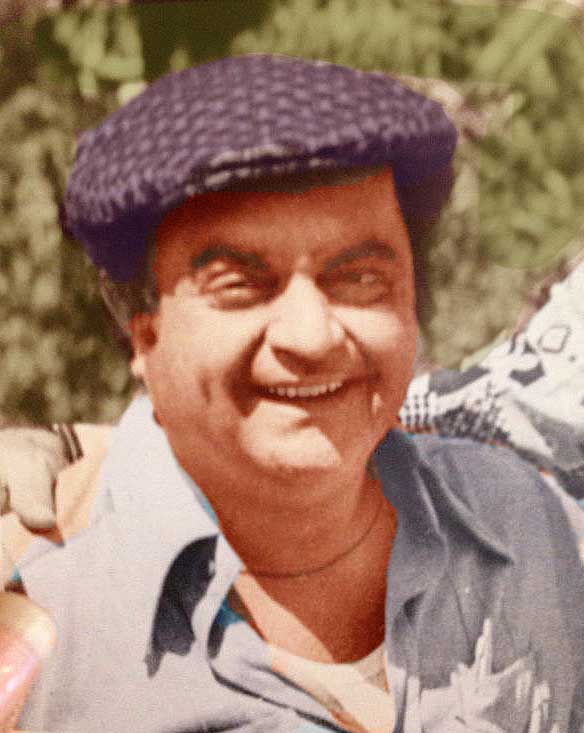
In the 1970s the Government of Gujarat announced subsidies and entertainment tax exemptions for Gujarati films, and a studio was built at Vadodara in 1972 to make production inside the state possible at all. The intent was sound. The state had lost Bombay in 1960 and this was an attempt to buy back an industry. The mechanism was the problem. A producer who completed a film qualified for an entertainment tax exemption worth Rs 3 lakh, so the payment was tied to finishing, not to anyone watching. In 1981 and 1982 the policy cost the state Rs 8 crore for the thirty nine films made in that window. After 1973 the output tilted overwhelmingly towards deity and dacoit subjects, the two cheapest genres to shoot, and by 1981 Gujarat had produced 368 feature films and 3,562 short films. People with no technical or artistic background entered the business specifically to collect, and in 1980 the exemption was cut to seventy percent with the remaining thirty percent redirected into other producer assistance.
Here is the receipt, and it is brutal. The National Film Award for Best Feature Film in Gujarati went unawarded for sixteen consecutive cycles, from 1973 through 1988. Not a weak year. Sixteen. The jury looked at everything a state-funded industry produced across a decade and a half and found nothing worth a Silver Lotus. It was possible to work differently: from 1973 to 1987 Arun Bhatt produced films with Hindi-level production values and urban settings, including Mota Gharni Vahu, Lohini Sagaai in 1980 from Ishwar Petlikar's novel, Paarki Thaapan and Shetal Tara Oonda Paani in 1986, and his Pooja na Phool won Best Film from the Government of Gujarat and was telecast on Doordarshan. He was the exception that proves the rule, and the rule was that nobody had to be him.
Photo: Pabock, CC BY-SA 4.0, via Wikimedia Commons.
101980: Bhavni Bhavai, the year Gujarati cinema got a conscience

Ketan Mehta made his debut with Bhavni Bhavai in 1980, a film about untouchability told through folklore and the Bhavai theatre form, with Naseeruddin Shah, Om Puri, Smita Patil, Mohan Gokhale and Benjamin Gilani. It was funded by the NFDC, the Sanchar Film Cooperative Society and a district bank in Ahmedabad, which is a sentence that tells you exactly how films like this got made, one improbable cheque at a time. Mehta won the Nargis Dutt Award for Best Feature Film on National Integration at the 28th National Film Awards, honouring films of 1980, and Meera Lakhia won Best Production Design at the same cycle. It was selected for a festival at the Museum of Modern Art and won the UNESCO Club Human Rights award at the Three Continents Festival at Nantes.
Now the detail that makes the whole subsidy argument land. At that same 28th cycle, the National Film Award for Best Feature Film in Gujarati was not given to anyone. Gujarat's most acclaimed film of the year could take an all-India prize and the regional Gujarati category still went empty, because the field around it had nothing in it. That is not a jury being harsh. That is a policy producing thirty nine films a year and an outcome where the one good film came from a cooperative society and a bank rather than from the industry the policy was funding.
Photo: Bollywood Hungama, CC BY 3.0, via Wikimedia Commons.
111993: Manvini Bhavai, the last serious film before the lights went out

Upendra Trivedi produced, directed and starred in Manvini Bhavai in 1993, opposite Anuradha Patel, with Aashish Trivedi co-producing. The source is Pannalal Patel's 1947 novel about Kalu and Raju, set during the famine of 1899 and 1900 that Gujarat remembers as the Chhappaniyo Dukal. It won Best Feature Film in Gujarati at the 41st National Film Awards, honouring films of 1993, with the ceremony held in 1994. Watch what that required. The actor who had carried the industry since 1960 had to finance, direct and star in the film himself to get one made that the national jury would look at.
Then the door closed. From the 1994 cycle to the 2011 cycle, eighteen consecutive years, the Best Feature Film in Gujarati award went unawarded. Combine that with the 1973 to 1988 blank and the picture is unambiguous: across the fifty two cycles between 1970 and 2021, the Gujarati award was handed out twelve times and withheld forty. The industry's commercial peak and its critical floor happened in the same stretch, which is the specific damage a completion-linked subsidy does. It does not stop films being made. It stops films being worth watching.
Photo: Chirag Umakant Thakkar, CC BY-SA 4.0, via Wikimedia Commons.
121998: Desh Re Joya Dada Pardesh Joya, the reported Rs 22 crore nobody touched for two decades
Govindbhai Patel's Desh Re Joya Dada Pardesh Joya is the commercial high point of old Gujarati cinema and the clearest proof that audiences had never gone anywhere. It reportedly grossed Rs 22 crore at a time when tickets sold for Rs 10 or Rs 15, with a reported 1.5 crore admissions. Hiten Kumar played Ram, Roma Manek played Radha, Arvind Trivedi played the patriarch, the music was by Arvind Barot, and the plot ran on diaspora anxiety, the fear of a daughter married off to America and what happens to her there. It was remade in Telugu as Velugu Needalu in 1999. The same year, the Gujarat Film Development Corporation, set up to promote exactly this industry, was closed down.
One correction worth printing, because the popular version of this story is slightly wrong. The record is usually described as standing for around sixteen years. English Wikipedia's own pages date its fall to Chaal Jeevi Laiye in 2019, which makes it twenty one years, and the current highest-grossing Gujarati films table still lists it sixth with Rs 22 crore. Treat the exact handover date as unsettled, but not the magnitude. A single rural-facing film outsold everything the urban new wave produced until 2019, and none of that Rs 22 crore bought a studio, a training pipeline or a distribution network. It was spent and gone, which is why 1999 looked exactly like 1997.
Instagram: @hitenkumaar (verified 2026-07-29).
132005: The tax exemption returns and rural Gujarat keeps the lights on

By the early 2000s fewer than twenty Gujarati films were being made a year. In 2005 the state government announced a 100 percent entertainment tax exemption for U and U/A certified films, 20 percent tax on A certified films, and a Rs 5 lakh subsidy per Gujarati film. Output climbed past sixty films a year in 2009 and 2010 and hit a record seventy two in 2012. The demand behind it was almost entirely rural, concentrated in north Gujarat and especially Banaskantha, from working class audiences who wanted local musical and linguistic styles on single screens. Vikram Thakor became the face of it, with six films for rural audiences earning a reported Rs 3 crore, and titles like Maiyar Ma Mandu Nathi Lagtu in 2001, Ek Var Piyu Ne Malva Aavje in 2006 and Dholi Taro Dhol Vage in 2008, the last of them produced by Reliance BIG Pictures.
The urban end was moving too, just quietly. Love Is Blind in 2005 was the first Gujarati film released in multiplexes. The Better Half in 2008, directed by Ashish Kakkad, was the first shot on Super 16mm, failed commercially and got critics and an urban audience paying attention. Judge the decade honestly and it is two things at once. Zero National Film Awards for Gujarati across all ten cycles from 2000 to 2009, and also the only reason there was still an industry standing when the 2012 films arrived. Rural Gujarat did not save Gujarati cinema's reputation. It saved its existence, which was the harder job. The Rs 5 lakh subsidy was discontinued in August 2013.
Photo: User:BernardM, CC BY-SA 3.0, via Wikimedia Commons.
The urban new wave, 2012 to 2018
Four years, four films, and a state policy that finally paid for quality instead of completion.
142012: Kevi Rite Jaish, the film that made urban Gujarat buy a ticket again
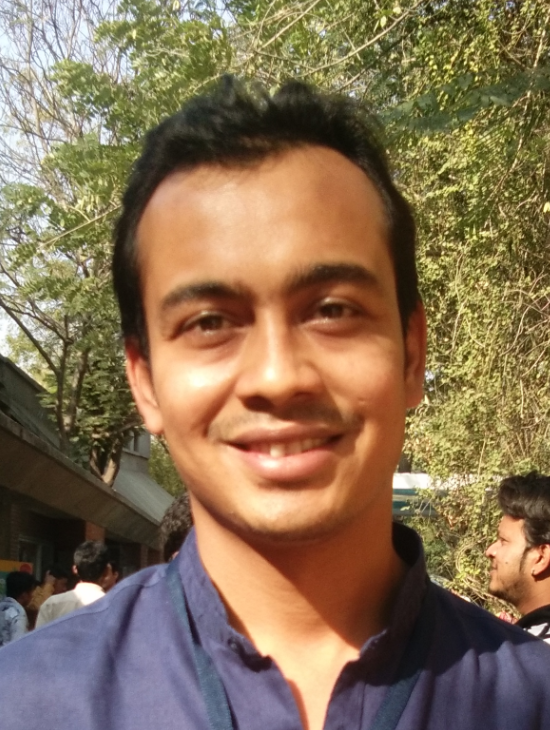
Abhishek Jain directed Kevi Rite Jaish in 2012, produced by Nayan Jain, and pointed the camera at the one subject urban Gujarat could not look away from: the Patel obsession with getting to America. Over half a century thousands of Patels had migrated to the United States and come to dominate its motel industry, and the film played that as satire rather than tragedy, with Divyang Thakkar leading alongside Veronica Kalpana-Gautam, Tejal Panchasara, Kenneth Desai and Anang Desai. It arrived in a year when Gujarat produced a record seventy two films, almost all of them aimed at exactly the audience this one ignored.
The reason it counts as a landmark rather than a hit is what it changed about who was in the room. A Gujarati-speaking, multiplex-going, Ahmedabad and Surat audience had spent thirty years watching Hindi films because Gujarati cinema had nothing for them, and the reasoning was never linguistic. It was that the product was bad and they knew it. Kevi Rite Jaish proved the audience was recoverable, and the success pulled new actors, directors and producers into the industry within two years. Jain went on to found CineMan Productions and later Oho Gujarati, and directed the Hindi film Hum Do Hamare Do in 2021. The 2012 film is the hinge the whole modern industry swings on.
Photo: Gazal World, CC BY-SA 4.0, via Wikimedia Commons.
152013: The Good Road becomes India's Oscar entry

Gyan Correa wrote and directed The Good Road for the NFDC, a hyperlink drama in which several stories cross on a highway in rural Kutch. It won Best Feature Film in Gujarati at the 60th National Film Awards, honouring films of 2012, cited for capturing the flavour of the never ending and undulating highways of the other India. Then on 17 September 2013 the Film Federation of India committee, chaired by Gautam Ghose, chose it from twenty submissions as India's entry for Best Foreign Language Film at the 86th Academy Awards. Ritesh Batra's The Lunchbox had been the presumed lock, backed publicly by Karan Johar. The committee went unanimously the other way. It won the Best Feature Film Jury Award at the Indian Film Festival Houston in October 2013 and was not nominated at the Oscars.
The row that followed was loud and mostly beside the point. What mattered is that a Gujarati-language film had become the film India sent, less than a year after Kevi Rite Jaish reopened the urban market, and the two events had nothing to do with each other. One came from an NFDC-funded auteur working in Kutch, the other from a commercial debut in Ahmedabad. A cinema that had gone eighteen award cycles without a national win produced both inside twelve months. Note the years carefully, because this is the trap: the film is dated 2013, its Oscar submission was 2013, and its National Award belongs to the 2012 cycle. All three are correct.
Photo: Bollywood Hungama, CC BY 3.0, via Wikimedia Commons.
162014: Bey Yaar runs fifty weeks and proves 2012 was not a fluke

Abhishek Jain's second film opened on 29 August 2014 and stayed in theatres for fifty weeks. Bey Yaar is a coming of age story about two childhood friends, with Manoj Joshi, Darshan Jariwala, Divyang Thakkar, Pratik Gandhi, Amit Mistry and Samvedna Suwalka. It was the first Gujarati film hosted by the New York Indian Film Festival, which put a Gujarati-language film in front of the diaspora as a film rather than as a curiosity. Pratik Gandhi, who would win his reputation two years later with Wrong Side Raju and national fame in 2020 with Scam 1992, is in the cast here.
One hit is a fluke and two is a market. That distinction is the entire significance of 2014. After Kevi Rite Jaish it was still reasonable to argue that urban Gujaratis had turned out once for a novelty. A fifty week run settles it. The industry read it correctly and moved: total releases hit sixty five in 2014, and the number of screens playing Gujarati films, which had been twenty to twenty five in 2011, was on its way to about 150 to 160 by the end of 2015. Distribution followed demand rather than subsidy, for the first time in forty years.
Photo: Bollywood Hungama, CC BY 3.0, via Wikimedia Commons.
172015: Chhello Divas and the year the box office grew eightfold

Krishnadev Yagnik wrote and directed Chhello Divas, which premiered on 20 November 2015 and followed eight friends through their final year of college. The cast list is essentially a roster of who would run Gujarati cinema for the next decade: Malhar Thakar, Yash Soni, Mitra Gadhavi, Aarjav Trivedi, Rahul Raval, Janki Bodiwala, Kinjal Rajpriya and Netri Trivedi. It was remade in Hindi as Days of Tafree in 2016, also by Yagnik, which made him one of the very few Gujarati directors to sell his own film upward rather than watch someone else do it.
The numbers around it are the reason 2015 gets its own entry. Reported Gujarati box office went from Rs 7 crore in 2014 to Rs 55 crore in 2015, an eightfold jump in twelve months. Sixty five films released in 2014 and sixty eight in 2015. Screens playing Gujarati films rose from twenty to twenty five in 2011 to roughly 150 to 160 by 2015. Chhello Divas and Gujjubhai the Great were the year's declared hits. If Kevi Rite Jaish reopened the market and Bey Yaar proved it existed, 2015 is when the market got big enough to have an economy, and where the youth audience decided Gujarati was a language you could hear your own life in.
Photo: Snehrashmi, CC BY-SA 4.0, via Wikimedia Commons.
182016: Wrong Side Raju wins the National Award and the state finally pays for quality

Mikhil Musale directed Wrong Side Raju, produced by CineMan Productions and Phantom Films, starring Pratik Gandhi, Kimberley Louisa McBeath and Asif Basra, inspired by a hit and run case in Ahmedabad in 2013. It won Best Feature Film in Gujarati at the 64th National Film Awards, honouring films of 2016. That began a run: Dhh by Manish Saini took the 65th for 2017, and Reva took the 66th for 2018. Three consecutive Gujarati awards after eighteen straight years of nothing, and this time from commercial films rather than from cooperatives and NFDC grants.
The policy change that runs alongside it is the underrated part of this story. In February 2016 the Gujarat government replaced the flat Rs 5 lakh subsidy, which had been discontinued in 2013, with a graded scheme. Films are assessed A to D on technical aspects, production quality, film components and box office performance. An A grade earns Rs 50 lakh, B earns Rs 25 lakh, C earns Rs 10 lakh and D earns Rs 5 lakh, or 75 percent of production cost, whichever is lower, with extra incentives for festival performance and award nominations. Multiplexes were directed to hold at least forty nine Gujarati screenings a year. Read it against 1973 and the correction is exact: the state stopped paying producers to finish and started paying them to be good. The entertainment tax exemption itself ended when GST arrived in July 2017, and in August 2018 the International Gujarati Film Festival launched in New Jersey.
Photo: Desmond Herzfelder, CC BY 4.0, via Wikimedia Commons.
National and global, 2019 to 2026
Seven years in which Gujarati cinema won the biggest prize in the country, was shortlisted at the Oscars, sold its intellectual property to Bollywood and, on industry figures, broke Rs 100 crore.
192019: Hellaro wins the Swarna Kamal, and Reva takes the Gujarati award at the same ceremony

Hellaro is the ceiling of this entire history. Abhishek Shah co-wrote and directed his debut feature about women in a 1970s Rann of Kutch village who are forbidden to dance and find a drummer in the desert, with an ensemble of Jayesh More, Shraddha Dangar, Brinda Trivedi Nayak, Shachi Joshi, Niilam Paanchal, Tejal Panchasara and Kaushambi Bhatt, produced under Saarthi Productions and Harfanmaula Films. It won Best Feature Film at the 66th National Film Awards, the Swarna Kamal, the one category with no language attached to it, beating every Hindi, Tamil, Malayalam and Bengali film of the cycle. The award belongs to the 2018 cycle and was announced on 9 August 2019 after a delay caused by the general election, while the film itself reached cinemas on 8 November 2019. Both years are correct and people keep collapsing them into one wrong sentence. It opened Indian Panorama at the 50th International Film Festival of India and reportedly grossed Rs 16 crore.
At the same 66th ceremony, Best Feature Film in Gujarati went to Reva, directed by Rahul Bhole and Vinit Kanojia, produced by Paresh Vora through Brainbox Studios and Baroda Talkies, starring Chetan Dhanani and Monal Gajjar, adapted from Dhruv Bhatt's 1998 novel Tatvamasi and released on 6 April 2018. So one ceremony gave Gujarat both the regional prize and the biggest prize in Indian cinema. Set that against 1980, when Bhavni Bhavai won an all-India award and the Gujarati category was left empty for lack of a field. Thirty eight years apart, the same jury, and in the second case the field was deep enough to fill both slots.
Photo: Imfarhad7, CC BY-SA 4.0, via Wikimedia Commons.
202019: Chaal Jeevi Laiye takes the box office record and never leaves the cinema

Vipul Mehta wrote and directed Chaal Jeevi Laiye, produced by Rashmin Majithia under Coconut Motion Pictures, with Siddharth Randeria, Yash Soni and Aarohi Patel, and a score by Sachin-Jigar. It is a road film about a father and son, released on 1 February 2019, and it took the record Desh Re Joya Dada Pardesh Joya had held since 1998. Reported figures vary between Rs 50 crore and roughly Rs 52 crore depending on the source, which is normal for Indian regional box office and worth saying out loud rather than pretending to a decimal point. It was remade in Marathi as Ole Aale in 2024 with Nana Patekar.
The genuinely strange fact about this film is not the gross. It entered its eighth year in cinemas on 1 February 2026, described as the first film released this century to do so. Seven straight years of screenings for a Gujarati road movie is not a box office record, it is a cultural habit. Siddharth Randeria, who carries it, came up through Gujarati theatre, which is the quiet infrastructure this industry has always run on. When Gujarat had no studios, no labs and no subsidy worth having, it had a live stage circuit, and almost every dependable Gujarati screen actor was trained on it.
Photo: Nizil Shah, CC BY-SA 4.0, via Wikimedia Commons.
212022: Chhello Show is India's Oscar entry and gets shortlisted

Pan Nalin made Chhello Show, released internationally as Last Film Show, as a semi-autobiographical story about a boy in rural Saurashtra who falls in love with projected light. It premiered at the 20th Tribeca Film Festival on 10 June 2021 and reached Indian cinemas on 14 October 2022, with Bhavin Rabari, Bhavesh Shrimali, Richa Meena, Dipen Raval and Paresh Mehta, produced by Nalin with Dheer Momaya, Siddharth Roy Kapur and Marc Duale. It won Best Feature Film in Gujarati at the 69th National Film Awards, honouring films of 2021, then was selected as India's entry for Best International Feature Film at the 95th Academy Awards and made the shortlist. It was not nominated. Nine years after The Good Road went and got nowhere, a Gujarati film got to the last round.
There is an irony in the subject that is too neat to leave out. The film is about a boy watching celluloid die, the projectionist's reels melted down and recast, the old machines scrapped. It was made by a director from Gujarat about Gujarat, financed and distributed internationally, and it went further at the Academy Awards than any Gujarati film before it. A cinema that lost almost every film it made before 1950 sent the world a film about losing film. Nobody planned that. It is still the truest thing this industry has ever said about itself.
Photo: Source Wide, CC BY-SA 4.0, via Wikimedia Commons.
222024: Vash becomes Shaitaan, and Gujarati intellectual property goes national

Krishnadev Yagnik wrote and directed Vash, a supernatural psychological horror film about a family whose daughter is enslaved by a stranger through dark magic, released on 17 February 2023 with Janki Bodiwala, Hitu Kanodia, Niilam Paanchal and Hiten Kumar. At the 71st National Film Awards, honouring films of 2023 and announced on 1 August 2025, Vash won Best Gujarati Feature Film and Janki Bodiwala won Best Actress in a Supporting Role. Its sequel Vash Level 2 in 2025 sits in the top ten highest grossing Gujarati films with a reported Rs 16 crore.
Then came the part that changes the economics. Vikas Bahl remade it in Hindi as Shaitaan, released on 8 March 2024 with Ajay Devgn, R. Madhavan and Jyothika, and Bodiwala reprising her own role, the rare case of an actor carried across with the intellectual property instead of being replaced. It reportedly grossed Rs 211.06 crore worldwide on an estimated budget of Rs 60 to 65 crore and ranked as the fifth highest grossing Hindi film of 2024. For seventy years the traffic ran one way, Gujarat supplying Bombay with actors and getting nothing back. This is the reverse: Gujarat wrote something Bollywood wanted to buy, and the Gujarati performance was the part that could not be recast.
Photo: Bollywood Hungama, CC BY 3.0, via Wikimedia Commons.
232024: Manasi Parekh wins Best Actress at the 70th for Kutch Express

Kutch Express, directed by Viral Shah and produced by Parthiv Gohil and Manasi Parekh, stars Ratna Pathak Shah, Manasi Parekh, Dharmendra Gohil, Darsheel Safary and Viraf Patel, with music by Sachin-Jigar and dialogues by Raam Mori. It took three awards at the 70th National Film Awards, honouring films of 2022, including Best Feature Film Promoting National, Social and Environmental Values, and Manasi Parekh won Best Actress for her performance as Monghi. The awards were announced on 16 August 2024 and presented by President Droupadi Murmu at Vigyan Bhawan on 8 October 2024. Notice the shape of that: she produced the film in which she won the country's top acting prize.
Two footnotes stop this entry being misread. First, no Best Gujarati Feature Film award was given at all at the 70th, so Gujarat's three wins that cycle came entirely from all-India categories, which is a harder route and a better signal. Second, this is the entry where the year convention earns its keep. You will see this award reported as 2022, as 2023 and as 2024 in different places, and all three numbers appear somewhere in the record: the cycle is 2022, the film released in early 2023, and the trophy was handed over in 2024. Anyone writing about Indian film awards without separating those three will be wrong roughly a third of the time.
Photo: Bollywood Hungama, CC BY 3.0, via Wikimedia Commons.
242025: Laalo reportedly crosses Rs 100 crore, and in 2026 reaches Cannes
Laalo, subtitled Krishna Sada Sahaayate, was directed by Ankit Sakhiya, written by Krushansh Vaja, Vicky Poornima and Sakhiya, and released on 10 October 2025 with Reeva Rachh, Shruhad Goswami, Karan Joshi and Mishty Kadecha. A rickshaw driver trapped at a farmhouse confronts his past through visions of Krishna. It opened badly. Reported collections were Rs 0.40 crore in week one, Rs 0.30 crore in week two and Rs 0.75 crore in week three. Then the fourth week broke: reported daily figures of Rs 0.45 crore, Rs 1.20 crore, Rs 2.20 crore and Rs 2.75 crore, about Rs 10.15 crore in twenty six days with roughly Rs 8.70 crore of it in the last five. By day thirty eight the reported net was Rs 52.75 crore. By day fifty one it was reported as the first Gujarati film to gross over Rs 100 crore worldwide, and it currently sits at a reported Rs 120 crore. PVR INOX, Cinepolis and Star Studio18 granted it a virtual print fee waiver, an arrangement usually reserved for major Hindi or international releases, and a Hindi dubbed version followed on 9 January 2026.
Two details close this history properly. Laalo was shot in and around Junagadh, at Bhavnath, Girnar, Damodar Kund and Narsinh Mehta no Choro, the courtyard of the poet saint whose life was the subject of the first Gujarati talkie in 1932. Ninety three years, and the biggest film in the industry's history was made in the poet's own yard. And in May 2026 it became the first Gujarati film screened at the Cannes Film Festival. The wider numbers back the moment up rather than depending on it. Ormax reported Gujarati box office growing 66 percent in 2024 to exceed Rs 80 crore, second only to Malayalam among Indian language industries by growth, and in 2025 Gujarati films collectively passed both Rs 100 crore and Rs 200 crore gross for the first time.
Instagram: @laalothefilm.official (verified 2026-07-29).
What the numbers say
National Film Awards for Best Gujarati Feature Film, by decade of cinema honoured
Counted by the year of cinema each ceremony honoured, not the presentation year, from the official winners table. Fifteen awards in sixty five cycles. The award was withheld entirely in forty of the fifty two cycles between 1970 and 2021, which is the clearest single measure of what the completion-linked state subsidy did to the craft.
Questions people actually ask
What was the first Gujarati film?
Narsinh Mehta, released on 9 April 1932, directed by Nanubhai Vakil and produced by Sagar Movietone, is the first full length Gujarati talkie. Shorter Gujarati sound films came earlier, including Chav Chavno Murabbo on 4 February 1931 and the two reel Mumbai ni Shethani in January 1932, but Narsinh Mehta is the film the industry dates itself from.
Why do National Film Award years for Gujarati films never match up?
Because each ceremony carries three different years. The 70th National Film Awards honoured films of 2022, were announced on 16 August 2024 and were presented on 8 October 2024. The official award year is the year of cinema being judged, so a film released in 2019 can win an award for the 2018 cycle, as Hellaro did. Every year on this page is the cycle year with the ceremony number beside it.
Which Gujarati films have won at the Oscars or been sent to them?
No Gujarati film has been nominated for or won an Academy Award. Two have been India's official entry: The Good Road in 2013 for the 86th Academy Awards, which was not nominated, and Chhello Show for the 95th Academy Awards, which made the shortlist but not the nomination list. Veer Hamirji was shortlisted at the Indian selection stage in 2012 but was not chosen.
Why did Gujarati cinema decline between the 1970s and 2000s?
Not from a lack of audience. Gujarat lost every studio and lab when Bombay went to Maharashtra in 1960, and in the 1970s the state introduced subsidies and an entertainment tax exemption of Rs 3 lakh paid on completing a film. Payment was tied to finishing rather than to quality, which pulled in people with no filmmaking background and pushed output towards the cheapest genres. The state paid Rs 8 crore in 1981 and 1982 for thirty nine films, while the National Film Award for Best Feature Film in Gujarati went unawarded for sixteen straight cycles from 1973 to 1988.
What is the highest grossing Gujarati film of all time?
Laalo, subtitled Krishna Sada Sahaayate, released on 10 October 2025, with a reported worldwide gross of Rs 120 crore. It is the first Gujarati film reported to pass Rs 100 crore. Chaal Jeevi Laiye from 2019 is second at a reported Rs 50 crore, and Desh Re Joya Dada Pardesh Joya from 1998 still ranks sixth at a reported Rs 22 crore. All Indian regional box office figures are industry reported and not independently audited.
Sources and image credits
All photographs are free-licensed files from Wikimedia Commons, reused with the attribution each licence requires. No press agency or studio photographs are hosted on this site. Instagram content is linked or embedded from the official account, never re-hosted.
- English Wikipedia, Gujarati cinema, retrieved 29 July 2026
- English Wikipedia, National Film Award for Best Gujarati Feature Film, full winners table, retrieved 29 July 2026
- English Wikipedia ceremony pages for the 8th, 17th, 20th, 28th, 37th, 41st, 60th, 64th, 65th, 66th, 69th, 70th, 71st and 72nd National Film Awards
- English Wikipedia film pages for Narsinh Mehta, Mendi Rang Lagyo, Jogidas Khuman, Kanku, Gunsundari, Liludi Dharati, Bhavni Bhavai, Manvini Bhavai, Desh Re Joya Dada Pardesh Joya, Kevi Rite Jaish, The Good Road, Bey Yaar, Chhello Divas, Wrong Side Raju, Dhh, Reva, Hellaro, Chaal Jeevi Laiye, Last Film Show, Kutch Express, Vash, Shaitaan, Maaran and Laalo
- English Wikipedia, List of highest-grossing Indian films, Gujarati section, retrieved 29 July 2026
- Wikimedia Commons file description pages for licence, authorship and date of every image used
- Instagram accounts scrape-verified through the Apify Instagram scraper on 29 July 2026
- Thaker, Dhirubhai and Desai, Kumarpal, eds., Gujarat: A Panorama of the Heritage of Gujarat, Gujarat Vishwakosh Trust, 2007, pages 512 to 532, the source Wikipedia cites for early industry counts