Gujarati actors have been supplying Hindi cinema since the 1940s. Sanjeev Kumar, born Harihar Jethalal Jariwala in Surat, won two National Film Awards for Best Actor, for Dastak in 1970 and Koshish in 1972. Paresh Rawal came off the Gujarati stage and has since done over 240 films, a National Film Award, three Filmfare Awards and the Padma Shri in 2014. Nirupa Roy went from a Gujarati film debut to more than 250 Hindi films and three Filmfare Awards. For seventy years that traffic ran one way. It stopped running one way in 2020, when Pratik Gandhi built a career in Gujarati cinema and let Scam 1992 come to him, and again in 2024, when Vikas Bahl remade the Gujarati thriller Vash as Shaitaan and kept Janki Bodiwala in her own role.
For most of Hindi cinema's history, being a Gujarati actor meant leaving. Surat, Bhuj, Bhavnagar, Valsad and Ahmedabad supplied the talent, the Gujarati stage supplied the training, and Bombay supplied the career. There was no third option, because until roughly 2015 there was no Gujarati film industry capable of paying a working actor a living for a decade. So they went, and once they were there they mostly stopped mentioning where they came from. Sanjeev Kumar was Jariwala. Nirupa Roy was Bulsara. Bindu was Desai. The names got sanded down on the way to the credits.
This page is about the twenty who made that crossing and about the fact that the road now has traffic in both directions. Scam 1992 in 2020 proved an actor could build in Gujarati cinema and be discovered there rather than in Andheri audition queues. Shaitaan in 2024 proved a Gujarati film could be bought whole by Hindi cinema, lead performance included. Ratna Pathak Shah, who spent four decades in Hindi film and television, made her Gujarati debut in 2023 in a film that then won three National Awards. The border did not disappear. It just stopped being one way.
The list at a glance
| Actor | Gujarati grounding | Hindi breakthrough | Which way the traffic ran |
|---|---|---|---|
| Sanjeev Kumar | Surat Gujarati Brahmin family, title role in Kalapi (1966) | Two National Film Awards for Best Actor, Dastak and Koshish | Gujarat to Bombay |
| Nirupa Roy | Born in Valsad district, Gujarati film debut in Ranakdevi (1946) | Over 250 films, three Filmfare Awards | Gujarat to Bombay |
| Bindu | Born in Valsad district to film producer Nanubhai Desai | Over 160 films, seven Filmfare nominations | Gujarat to Bombay |
| Asha Parekh | Gujarati father, three Gujarati films, directed the Gujarati serial Jyoti | Dadasaheb Phalke Award, 2020 | Gujarat to Bombay |
| Paresh Rawal | Gujarati family in Bombay, decades on the Gujarati stage | National Film Award 1994, Padma Shri 2014, over 240 films | Stage to screen, then back |
| Darshan Jariwala | Son of Gujarati actress Leela Jariwala, long Gujarati stage record | National Film Award for Gandhi, My Father (2007) | Stage to screen |
| Manoj Joshi | Born in Himmatnagar, Gujarati and Marathi theatre | Padma Shri 2018 and a National Film Award for Dashakriya | Stage to screen |
| Neeraj Vora | Born in Bhuj, wrote and directed the Gujarati play Aflatoon | Wrote Rangeela, Hera Pheri and Bhool Bhulaiyaa | Play to Hindi franchise |
| Sharman Joshi | Gujarati acting family, 550 shows of All the Best in Gujarati | IIFA Award for Best Supporting Actor, 3 Idiots | Stage to screen |
| Supriya Pathak | Daughter of Dina Pathak, debut in the Bhavai play Maina Gurjari | Filmfare Award on her first film, Kalyug (1981) | Stage to screen, Gujarati film 35 years later |
| Shefali Shah | Gujarati mother, Gujarati college theatre, lead in Dariya Chhoru (1999) | National Film Award for The Last Lear, Emmy nomination for Delhi Crime | Gujarati stage to Hindi screen |
| Satish Shah | Father's family from Mandvi, Gujarat | 55 characters in 55 episodes of Yeh Jo Hai Zindagi | Gujarat to Bombay |
| Dilip Joshi | Gujarati theatre, television and film actor | Jethalal in Taarak Mehta Ka Ooltah Chashmah since 2008 | Stage to national television |
| Deven Bhojani | Best known first for his Gujarati plays | Three best director awards for Sarabhai vs Sarabhai | Stage to the director's chair |
| Ketki Dave | Gujarati stage from age thirteen, five decades of Gujarati work | Daksha Virani in Kyunki Saas Bhi Kabhi Bahu Thi | Stage to national television |
| Pratik Gandhi | Wrong Side Raju (2016), National Award for Best Gujarati Film | Harshad Mehta in Scam 1992 (2020) | Gujarat to Bombay, in reverse |
| Janki Bodiwala | Lead in Vash (2023), National Award for Best Supporting Actress | Same role in the Hindi remake Shaitaan (2024) | Gujarati film bought by Bollywood |
| Ratna Pathak Shah | Daughter of Dina Pathak of Amreli, Gujarati debut in Kutch Express (2023) | Maya Sarabhai in Sarabhai vs Sarabhai | Bombay to Gujarat, at 65 |
| Jimit Trivedi | Lead in Gujjubhai The Great (2015) and its sequel | Hindi debut in Bhool Bhulaiyaa (2007) | Bombay to Gujarat |
| Bhavya Gandhi | Gujarati Jain family, lead in Pappa Tamne Nahi Samjaay (2017) | Tapu in Taarak Mehta Ka Ooltah Chashmah, 2008 to 2017 | Left a hit Hindi show for Gujarati films |
How this list was built
The inclusion rule, stated plainly so you can argue with it. Gujarati heritage alone is not enough, and a Gujarati-sounding surname is not evidence. An actor is on this page only if English-language reference sources document a Gujarati family origin AND a working connection to Gujarati theatre or Gujarati cinema, or if they are so consistently documented as Gujarati that the origin is not in question. That rule cuts in both directions and it cut some famous names. Asrani, who led Gujarati films from 1972 to 1984 and directed them, is documented as being born into a Sindhi Hindu family in Jaipur, so he is out of this list despite a Gujarati filmography longer than almost anyone here. Jamnadas Majethia, a fixture of Gujarati theatre for two decades, is documented as born into a Sindhi Hindu family in Porbandar, so he is out on the same test. Aruna Irani, whose father Faredun Irani ran a drama troupe, has no documented Gujarati ancestry and is out for that reason, as is her cousin Sarita Joshi, born Bhosle, who is one of the great Gujarati stage actors but not documented as Gujarati by birth. Vandana Pathak is excluded because English Wikipedia contradicts itself on her, calling her both born into a Maharashtrian family and the daughter of a Gujarati actor, and a disputed fact is not a fact. Rajendra Kumar and Kiran Kumar were checked and dropped: neither has documented Gujarati ancestry. Tiku Talsania and Anang Desai were both dropped because their documented Gujarati connection covers only one leg of the test in the sources checked. Second filter: every entry needed a free-licensed Wikimedia Commons photograph with a named photographer and licence, found through a Commons namespace-6 file search rather than page images alone, or a live-verified Instagram account. That test removed Dina Pathak, the doyenne of Gujarati theatre and a Hindi film regular in Gol Maal, Khubsoorat and Umrao Jaan, who has no usable free-licensed photograph on Commons at all. It also removed Amit Mistry, Aditya Lakhia, Rajeev Mehta and Utkarsh Mazumdar. A 2024 Commons upload of Nirupa Roy claiming own work on a 1951 film still was rejected as a false licence claim, and a genuinely public-domain 1961 still was used instead. All facts were checked against English Wikipedia biographies and their cited sources in July 2026, with Gujarati Wikipedia used as a second source where the English article was thin.
The one-way years, 1946 to 1985
Four careers built entirely on the assumption that a Gujarati actor who wanted work moved to Bombay and stayed.
1Sanjeev Kumar

He was born into a Gujarati Brahmin family in Surat that dealt in zari brocade, lost his father to a heart attack at eleven, and came to Bombay young. He started on the Bombay stage with IPTA and later the Indian National Theatre, and even there he had the habit that would define him: at twenty two he played an old man in an adaptation of Arthur Miller's All My Sons, and the next year he played a sixty year old with six children in a play called Damru directed by A.K. Hangal. Small role in Hum Hindustani in 1960, first lead in Nishan in 1965, then Sunghursh opposite Dilip Kumar in 1968.
The detail that belongs on this page and nowhere else is Khilona. His 1970 breakthrough, the film that turned him into a national name, was a Hindi remake of the Gujarati film Mare Javun Pele Paar, which he had made two years earlier. Gujarati cinema wrote the part and Hindi cinema bought it, half a century before anyone called that a trend. Gulzar spotted him on the Indo-Iranian production Subah-O-Shaam in 1972 and then cast him in nine films, deliberately alternating him between men decades older than himself in Parichay, Koshish, Aandhi and Mausam and men his own age in Angoor and Namkeen. He won the Filmfare Best Actor Award for Hrishikesh Mukherjee's Arjun Pandit. He died at 47, and Rediff readers still voted him seventh among the greatest actors in the history of Indian cinema.
Photo: Ministry of Information and Broadcasting, GODL-India, via Wikimedia Commons.
2Nirupa Roy

Her Hindi career is the longest of anyone on this page and the most typecast. Fifty three years of work, more than 250 films, three Filmfare Awards from four nominations, and a Filmfare Lifetime Achievement Award in 2004, the year she died. In the 1950s she made her name in mythologicals, playing goddesses so persuasively that audiences turned up at her house for blessings. In the 1970s she became the single most recognisable mother in Hindi cinema, the woman standing between Amitabh Bachchan and Shashi Kapoor while the whole audience waited for a line it already knew by heart.
The industry nicknamed her the Queen of Misery, which is a strange reward for range. What it actually recorded was a market: Hindi cinema of that era had one large, permanent, well-paid slot for a suffering mother, and she filled it so completely that nobody offered her the other slots. A Gujarati actress arriving in Bombay in 1946 did not get to negotiate the terms of her employment. She got to take the job that existed and be extraordinary inside it, which she was, for five decades.
Photo: BV Productions, public domain, via Wikimedia Commons.
3Bindu

Bindu Nanubhai Desai was born in a village in Valsad district to the film producer Nanubhai Desai and grew up with seven siblings. Her father died in 1954 when she was thirteen, and as the eldest daughter the earning fell to her. She made her debut in Anpadh in 1962 at twenty one, and by 1969 she had two hits in one year, Ittefaq and Do Raaste, and two Filmfare nominations to go with them. Aruna Irani, Indra Kumar, Adi Irani and Firoz Irani are her first cousins, which makes one Valsad family responsible for a startling share of 1970s Bombay.
She then did something no Gujarati actress had done before her, which was to become a star by playing the woman the script punishes. Shabnam in Kati Patang, Mona Darling in Zanjeer, the seductress in Imtihan, the wife in Abhimaan and the deglamorised role opposite Ashok Kumar in Arjun Pandit. Seven Filmfare nominations, all of them for supporting roles, none of them for playing anyone likeable. Along with Helen and her own cousin Aruna Irani she defined the Hindi film cabaret number and the vamp, then in the mid 1980s she came back as the mother in law and the cynical aunt in Hero, Kishen Kanhaiya and Biwi Ho To Aisi, and later turned up in Hum Aapke Hain Koun..!, Main Hoon Na and Om Shanti Om. Four decades, and the audience never once had to be reminded who she was.
Photo: Bollywood Hungama, CC BY 3.0, via Wikimedia Commons.
4Asha Parekh

The story that defines her Hindi career is the rejection. She was turned down at sixteen for not being star material, and eight days later was cast opposite Shammi Kapoor in Dil Deke Dekho. What followed was one of the most commercially dependable runs of the 1960s: Jab Pyar Kisi Se Hota Hai, Bharosa, Ziddi, Mere Sanam, Teesri Manzil, Love in Tokyo, Do Badan, Upkar, Kanyadaan, Shikar, Chirag, Kati Patang, Mera Gaon Mera Desh, Caravan. More than eighty five films across forty years, a Filmfare Award for Best Actress, the Padma Shri in 1992, the Filmfare Lifetime Achievement Award in 2002 and the Dadasaheb Phalke Award in 2020.
She is on this page rather than only on a Hindi list because she kept a Gujarati thread alive when there was no commercial reason to. Three Gujarati films, and a Gujarati-language television show called Jyoti that she directed between 1988 and 1989, made at a point in her career when she had nothing to prove and Gujarati production had nothing to offer her. Her autobiography, The Hit Girl, came out in 2017 and is unusually blunt about what a career like hers actually costs.
Photo: Ministry of Information and Broadcasting, GODL-India, via Wikimedia Commons.
The Gujarati stage as Bombay's staffing agency
Seven actors and one writer-director whose Hindi careers are downstream of a Gujarati rehearsal room.
5Paresh Rawal
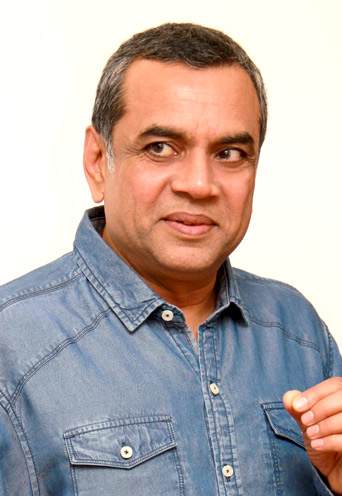
His Hindi career has three distinct acts and most people only remember the third. Act one is the villain: Arjun in 1985, then Naam in 1986 which established him, then more than a hundred films across the late 1980s and 1990s in Ram Lakhan, Kabzaa, King Uncle, Daud, Baazi, plus a parallel run as an antagonist in Telugu hits including Kshana Kshanam and Govinda Govinda. Act two is the actor the juries noticed: the National Film Award for Best Supporting Actor in 1994 for Woh Chokri and Sir, his first Filmfare for a negative role in Sir, and then Ketan Mehta's Sardar, where he played Vallabhbhai Patel.
Act three began in 2000 with Baburao Ganpatrao Apte in Hera Pheri, a Marathi landlord played by a Gujarati stage actor, which won him the Filmfare Best Comedian Award and rewired his entire market. After Hera Pheri he was a lead: Aankhen with Amitabh Bachchan, Awara Paagal Deewana, Hungama, Garam Masala, Welcome, Oye Lucky! Lucky Oye!, OMG, and later Sanju, Uri and The Storyteller in 2025, in which he played Satyajit Ray's Tarini Khuro. He served as a Member of Parliament between the second and third acts. The reason he matters to the reversal is Dear Father: his own Gujarati play, adapted into a Gujarati film in 2022, at a point where a Gujarati film was worth an actor of his size returning for.
Photo: Bollywood Hungama, CC BY 3.0, via Wikimedia Commons.
6Darshan Jariwala

The role that gave him his National Film Award is the hardest one in Indian screen acting, which is Mohandas Gandhi. He played him in Feroz Abbas Khan's Gandhi, My Father in 2007, opposite Akshaye Khanna as Harilal, and won Best Supporting Actor for it. What makes the casting interesting is that Khan had wanted him for Gandhi years earlier in the play Mahatma v/s Gandhi and lost him to a date clash, then came back for the film version and got him. Directors do not usually chase the same actor across two productions for the same historical figure unless they think nobody else can do it.
Outside that award his Hindi work is the steady, unglamorous kind that keeps an actor employed for forty years. Television gave him Chedilal Chaturvedi in Saas Bina Sasural, which ran on Sony from October 2010 to September 2012 and made him a face millions of Hindi viewers recognise without knowing his name. He is also, in a neat piece of industry symmetry, married to the Gujarati stage and television actress Apara Mehta, whom he married in 1980, which means the Gujarati theatre network runs through his household as well as his resume.
Photo: Bollywood Hungama, CC BY 3.0, via Wikimedia Commons.
7Manoj Joshi

His Hindi filmography is a working actor's ledger: over seventy films since 1998, opening with SI Bajju in Sarfarosh, then Hungama, Hulchul, Dhoom, Bhagam Bhag, Chup Chup Ke, Bhool Bhulaiyaa and Billu. The one everyone quotes without knowing they are quoting him is Kachra Seth in Phir Hera Pheri in 2006, a part with a few minutes of screen time that became a permanent piece of Hindi comedy vocabulary. On Hindi television he has played Chanakya in Chakravartin Ashoka Samrat, and earlier appeared in Chanakya, Ek Mahal Ho Sapno Ka and Sangdil.
The credential that lifts him above the comic-relief bracket came from a third language. He won the National Film Award for Best Supporting Actor at the 64th National Film Awards for the Marathi film Dashakriya, and the Padma Shri followed in 2018. He is also vice-president of the Bombay Art Society, which is a J. J. School of Arts graduate ending up back where he started. A Padma Shri plus a National Award is the heaviest pair of civilian and jury credentials on this page after Sanjeev Kumar and Asha Parekh.
Photo: Suyash Dwivedi, CC BY-SA 4.0, via Wikimedia Commons.
8Neeraj Vora

Almost nobody outside Gujarat knows that one of Hindi cinema's biggest comedy franchises began as a Gujarati play. Vora wrote and directed Aflatoon in 1992, it was a hit on the Gujarati stage, and Rohit Shetty adapted it into Golmaal. That is a Bhuj-born writer's regional theatre script becoming a Hindi film series, and it happened in 2006, long before anyone talked about Gujarati stories crossing over. He got into films through Ketan Mehta's Holi in 1984 and the television shows Choti Badi Baatien and Circus.
His writing credits are the spine of two decades of Hindi comedy: Rangeela, Akele Hum Akele Tum, Josh, Badshah, Chori Chori Chupke Chupke, Ajnabee, Awara Paagal Deewana, Hera Pheri, Garam Masala, Bhagam Bhag, Deewane Huye Paagal, Bhool Bhulaiyaa and Phir Hera Pheri, which he also directed. He became an actor by accident, stepping into a Rangeela scene because the cast member was absent and the sets were coming down, which led Anil Kapoor and Priyadarshan to call him for Virasat and Aamir Khan for Mann. Then Hello Brother, Khatta Meetha and Bol Bachchan. He suffered a stroke in October 2016 while working on Hera Pheri 3 and died in December 2017.
Photo: Bollywood Hungama, CC BY 3.0, via Wikimedia Commons.
9Sharman Joshi

His Hindi career has an unusual shape: two supporting parts, one low-budget breakthrough, then a five-year stretch inside some of the most watched films of the decade. Godmother in 1999 and Lajja in 2001 were the apprenticeship. Style in 2001 was the film that made him bankable. Then Rang De Basanti and Golmaal in 2006, Dhol and Life in a... Metro in 2007, 3 Idiots in 2009 and Ferrari Ki Sawaari in 2012. 3 Idiots won him the IIFA Award for Best Supporting Actor and two Filmfare nominations sit alongside it.
What happened after is the part worth studying. The run of hits was followed by a run of failures, with Hate Story 3 in 2015 and Mission Mangal in 2019 as the exceptions, and he moved to streaming with Baarish across 2019 and 2020 and Kafas in 2023. Actors trained only on film sets tend to disappear at that point. He did not, because the Gujarati stage he came from was still there and still paying, which is the quiet advantage every theatre-trained actor on this list has over their contemporaries.
Photo: Bollywood Hungama, CC BY 3.0, via Wikimedia Commons.
10Supriya Pathak

She won a Filmfare Award on her first film, which almost nobody does. Jennifer Kendall saw her in a Dinesh Thakur production at Prithvi Theatre and recommended her to Shyam Benegal, who cast her as Subhadra in Kalyug in 1981, and the Best Supporting Actress award followed immediately. Then Vijeta, Bazaar, Masoom, Mirch Masala, a minor part in Richard Attenborough's Gandhi, the title role in the Malayalam film Akalathe Ambili in 1985, the French production The Bengali Night in 1988, and Raakh in 1989. That is a parallel-cinema resume most actors would retire on.
She then took an eleven-year break from acting, launched the production house Grass Company with Pankaj Kapur in 1994, and came back in Ram Gopal Varma's Sarkar in 2005 and Sarkar Raj in 2008. Wake Up Sid in 2009 gave her a whole generation of new viewers, and Dhankor Baa in Goliyon Ki Raasleela Ram-Leela in 2013 was called by Filmfare the watershed of her career. Hansa Parekh in Khichdi runs alongside all of it as one of the most quoted comic performances Indian television has produced. And her first Gujarati film, Carry On Kesar, did not arrive until 2016, thirty five years after Kalyug. Read that gap as an industry statistic, not a personal choice.
Photo: Bollywood Hungama, CC BY 3.0, via Wikimedia Commons.
11Shefali Shah

Her first acting job was a Gujarati play at ten, because a school teacher's playwright husband asked her mother whether the child could play a part based on Damien Thorn from The Omen. She did not act again for years, then spent her college days at Mithibai doing inter-collegiate Gujarati theatre, in plays including Ant Vagarni Antakshari and Doctor Tame Pan?. A Rasa magazine piece in 1995 said she was on her way to becoming one of the stars of Gujarati theatre. Someone from the serial Campus saw her in one of those plays and suggested a screen test, and the Hindi television career started there, through Tara, Banegi Apni Baat, Naya Nukkad and Daraar.
The film career took its time. She walked off the sets of Rangeela in 1995 because the part turned out to be different from what she was told, then Satya in 1998 won her a Filmfare Critics Award, and she took the lead in the Gujarati film Dariya Chhoru in 1999. Kasturba Gandhi in Gandhi, My Father won her Best Actress at the Tokyo International Film Festival in 2007 and the National Film Award for Best Supporting Actress came the same period for The Last Lear. Then Delhi Crime in 2019, whose second season earned her an International Emmy nomination for Best Actress, and a second Filmfare Critics Award for Three of Us in 2023. Four decades after that Gujarati school play, she is one of the very few Indian actors whose name alone will get a series commissioned.
Photo: Bollywood Hungama, CC BY 3.0, via Wikimedia Commons.
The Gujarati household that Hindi television built
Four actors who made Gujarati families the default setting of Indian prime time.
12Satish Shah

His father's family was from Mandvi in Kutch. He grew up in Mumbai, went to New Era School and St. Xavier's College, then took formal acting training at the Film and Television Institute of India and graduated in 1976. His first film was Arvind Desai Ki Ajeeb Dastaan in 1978, and then Kundan Shah cast him as Municipal Commissioner D'Mello in Jaane Bhi Do Yaaro in 1984, a corpse that spends much of the film being carried around a stage. It is still one of the strangest performances in Indian cinema and one of the funniest.
The same year, Kundan Shah and Manjul Sinha gave him Yeh Jo Hai Zindagi, where he played fifty five different characters across fifty five episodes. No Indian actor has attempted anything like it since. Ghar Jamai ran eighty episodes, All The Best with Swaroop Sampat ran a hundred and nine, and Filmy Chakkar gave him fifty as Prakash opposite Ratna Pathak Shah, a pairing they repeated as Indravadan and Maya in Sarabhai vs Sarabhai from 2004, which won him the ITA Award and the Indian Telly Award for Best Actor in a Comic Role. In films he kept turning up exactly where the audience needed him: Kal Ho Naa Ho, Main Hoon Na, Fanaa and Om Shanti Om. He died of cardiac arrest in October 2025, and the Sarabhai cast sang the show's title song at his cremation.
Photo: Bollywood Hungama, CC BY 3.0, via Wikimedia Commons.
13Dilip Joshi

Gujarati Wikipedia describes him first as a Gujarati stage actor and only then as a television and film actor, which is the correct order. He started acting at twelve, won the Indian National Theatre Best Actor award while studying, and did commercial stage work for roughly fifty rupees a role. His Hindi film appearances were small and scattered: Maine Pyar Kiya, Hum Aapke Hain Koun..! and a minor part in Khiladi 420, which was Neeraj Vora's directorial debut, one Gujarati working for another without either of them making anything of it.
Then in 2008 he took Jethalal Champaklal Gada and has played him continuously since, collecting five Telly awards and three ITA awards along the way. The significance is not the longevity, it is the translation. Jethalal is a Gujarati shopkeeper written for a national Hindi-speaking audience, and Joshi plays him as a man rather than as an ethnic joke about business sense. Millions of Indians who could not name a single Gujarati film have a Gujarati man as the character they have watched most in their lives. That is a piece of cultural export no Gujarati film has matched.
Photo: Bollywood Hungama, CC BY 3.0, via Wikimedia Commons.
14Deven Bhojani
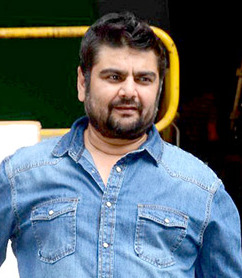
He entered Hindi screen work through an unusually literary door. His television debut was Shankar Nag's Malgudi Days in 1987, an adaptation of R. K. Narayan, which is not where you expect a Gujarati stage comic to begin. He then spent years in comic and supporting roles across Hindi television and film, the kind of work that builds recognition without building a name.
The crossing that matters is the one he made behind the camera. He directed Sarabhai vs Sarabhai and won three best director awards for it, the ITA Award, the Indian Telly Award and the Apsara Award. That show remains the sharpest comedy Indian television has produced, and its whole engine is timing: the pause before a line, the beat a joke is allowed to sit in. That is stage craft moved into a studio, and it is a harder crossing than acting to acting. A Gujarati theatre actor did not just get work in Bombay, he set the standard for a form.
Photo: Bollywood Hungama, CC BY 3.0, via Wikimedia Commons.
15Ketki Dave
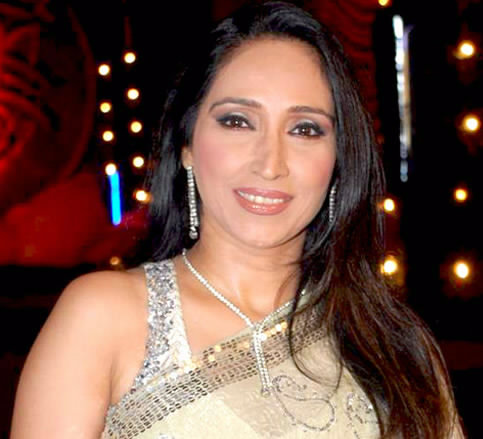
Daksha Virani is a masterclass in how a supporting character becomes load-bearing. The bindi, the entrance, the line delivered as Aara ra ra ra, and a viewership that could recognise her from the back of the head. Kyunki Saas Bhi Kabhi Bahu Thi was the show that set the grammar of Indian soap opera, and she was the comic pressure valve inside a form that otherwise had none. The character outlived every plot around it, and the makers brought her back for the 2025 sequel two decades later.
The Hindi film work runs beside it rather than under it: Kal Ho Naa Ho, Aamdani Atthanni Kharcha Rupaiya, Money Hai Toh Honey Hai and Hello! Hum Lallan Bol Rahe Hain, plus reality television on Nach Baliye 2, Bigg Boss season 2 and Behenein. She grew up inside the Gujarati theatre trade, married into it, ran a company inside it, and never left it while the Hindi work was happening. That is the pattern almost every name in this section shares. Hindi screens paid the bills. The Gujarati stage kept the instrument tuned.
Photo: Bollywood Hungama, CC BY 3.0, via Wikimedia Commons.
The reversal: Bombay starts commuting to Gujarat
Five careers where the traffic runs the other way, all of them after 2015.
16Pratik Gandhi

Every actor before him on this page had to get to Bombay first and be seen there. He inverted the sequence. He built in Gujarati cinema, in Bey Yaar, Wrong Side Raju and Love Ni Bhavai, while holding an engineering job, and Hindi cinema came to find him. Scam 1992 arrived in 2020 on a streaming platform, which is the mechanism that made the inversion possible, because a Sony LIV series does not need a Gujarati actor to already have a Bombay reputation before casting him.
What followed is the proof it was not a one-off. Vitthal Teedi in 2021, then Madgaon Express and Do Aur Do Pyaar as Hindi film leads in 2024, then the Toronto International Film Festival in 2025 with Gandhi. He did not move to Bombay and hope. He made the work where he was until the work was undeniable. For a young actor in Ahmedabad today, that is a materially different career map than the one Sanjeev Kumar had in 1960, and Pratik Gandhi is the reason the map got redrawn.
Photo: Desmond Herzfelder, CC BY 4.0, via Wikimedia Commons.
17Janki Bodiwala

The Shaitaan story is the cleanest evidence on this page that the direction of travel has changed. Vikas Bahl remade the Gujarati thriller Vash in Hindi in 2024, put Ajay Devgn, R. Madhavan and Jyothika in it, and kept the Gujarati film's lead performer in her own role, renamed Jahnvi Rishi. Hindi cinema has remade regional films for seventy years. It almost never keeps the regional actor, because the whole commercial logic of a remake is to swap in stars the Hindi market already knows.
It kept her because the performance was the asset. At the 71st National Film Awards, Vash won Best Gujarati Feature Film and she won Best Actress in a Supporting Role, shared with Urvashi for the Malayalam film Ullozhukku, and in 2025 she took the IIFA Award for Best Supporting Actress for Shaitaan. She was nominated for the Filmfare in the same category and lost it to Chhaya Kadam for Laapataa Ladies. A dental surgery graduate from Gandhinagar now holds a National Award and an IIFA for the same character in two languages, which is a sentence that would not have been possible before 2020.
Photo: Bollywood Hungama, CC BY 3.0, via Wikimedia Commons.
18Ratna Pathak Shah

Her Hindi record is long enough that the Gujarati footnote gets missed. Idhar Udhar in the 1980s, Mirch Masala, The Perfect Murder, then Maya Sarabhai in Sarabhai vs Sarabhai from 2004, which won her the ITA Award for Best Actress in Comedy and is quoted more than most Hindi film dialogue. Four Filmfare Best Supporting Actress nominations, for Jaane Tu... Ya Jaane Na, Golmaal 3, Kapoor & Sons, Lipstick Under My Burkha and Dhak Dhak, plus critical praise for Ek Main Aur Ekk Tu and Khoobsurat and a Filmfare OTT nomination for Unpaused. She co-founded the Motley Theatre Group and sat on the Padma awards selection committee in 2012.
Then in 2023, at sixty five, she made her first Gujarati film. Kutch Express cast her as Baiji, an outspoken, bidi-smoking mother in law in Bhuj, and the film won three awards at the 70th National Film Awards including Best Feature Film Promoting National, Social and Environmental Values. Darsheel Safary and Viraf Patel also made their Gujarati debuts in it. Her mother was a Kathiyawadi Gujarati from Amreli and one of the defining figures of Gujarati theatre, and it took forty two years after drama school for the Gujarati film industry to produce something worth her daughter's time. That gap is the whole argument of this page in a single career.
Photo: Satdeep Gill, CC BY-SA 4.0, via Wikimedia Commons.
19Jimit Trivedi

He arrived in Hindi cinema first, in Bhool Bhulaiyaa in 2007 with Akshay Kumar, and then did the thing that made no commercial sense at the time. In 2015 he took a lead role in Gujjubhai The Great opposite Siddharth Randeria, a Gujarati film, and it was a commercial success big enough to spawn Gujjubhai Most Wanted with him leading again. He also carried Polam Pol. That was the year Chhello Divas opened and the Gujarati multiplex audience announced itself, and he was one of the first Bombay-based actors to bet on it.
He kept both passports. He came back to Hindi film in 2018 for a supporting part in 102 Not Out with Amitabh Bachchan and Rishi Kapoor, and he has worked steadily across Hindi daily soaps including Ek Doosre Se Karte Hain Pyaar Hum. That is the shape of the new career: not a defection in either direction, just an actor who takes Gujarati leads and Hindi supporting roles in whatever order the calendar allows. Twenty years ago that was not a viable plan. It is now the plan.
Photo: Sneha.mindworkz, CC BY-SA 4.0, via Wikimedia Commons.
20Bhavya Gandhi

He spent nine years as Tipendra Jethalal Gada, the Tapu of Taarak Mehta Ka Ooltah Chashmah, on one of the most watched shows in Indian television history, and he also appeared as the child lead Suryakant in the Hindi film Striker in 2010. Then in 2017 he left the show, saying the makers were sidelining his character, and did what would have looked like career suicide in any earlier decade: he went to Gujarati cinema.
It worked. Pappa Tamne Nahi Samjaay in 2017, with Manoj Joshi, Ketki Dave and Johny Lever, was a critical and commercial success. Baap Kamaal Dikro Dhamaal followed in 2018, a lead in Bau Na Vichar in 2019, then Tari Sathe in 2021 and Kehvatlal Parivar in 2022. He has since returned to Hindi television in Pushpa Impossible in a negative role. He is the youngest person on this list and the clearest illustration of the change: a young actor with a guaranteed seat on national Hindi television gave it up for Gujarati films, and it was a promotion, not an exile.
Photo: Nizil Shah, CC BY-SA 4.0, via Wikimedia Commons.
What the numbers say
The wait: years between a Hindi credit and a first Gujarati film
Each bar is the gap between the two named credits, counted from release year to release year, so the arithmetic is checkable against the titles listed. The top five bars measure how long a Gujarati actor working in Hindi cinema had to wait before a Gujarati film was worth doing. The bottom two run in the opposite direction and measure how fast Hindi cinema now moves once a Gujarati film works. These are career timelines, not box office figures, and they describe only the twenty actors on this page.
Questions people actually ask
Who is the most successful Gujarati actor in Bollywood?
By awards, Sanjeev Kumar, born Harihar Jethalal Jariwala in Surat, who won two National Film Awards for Best Actor, for Dastak in 1970 and Koshish in 1972, and was voted seventh among the greatest actors in Indian cinema in a Rediff poll. By volume and longevity, Paresh Rawal, with over 240 films, a National Film Award, three Filmfare Awards and the Padma Shri in 2014. Asha Parekh holds the highest state honour on this list, the Dadasaheb Phalke Award in 2020.
Is Jethalal from Taarak Mehta Ka Ooltah Chashmah actually Gujarati?
Yes. Dilip Joshi, who has played Jethalal Champaklal Gada since 2008, is documented on Gujarati Wikipedia as a Gujarati theatre, television and film actor, and he began in commercial Gujarati stage productions earning roughly fifty rupees a role. His Hindi film credits before the show include Maine Pyar Kiya, Hum Aapke Hain Koun..! and Khiladi 420.
Which Gujarati film was remade in Bollywood with the same lead actress?
Vash, the 2023 Gujarati thriller directed by Krishnadev Yagnik, was remade in Hindi by Vikas Bahl as Shaitaan in 2024 with Ajay Devgn, R. Madhavan and Jyothika, and Janki Bodiwala played the same role in both. Vash won Best Gujarati Feature Film at the 71st National Film Awards and Bodiwala won Best Actress in a Supporting Role, followed by the IIFA Award for Best Supporting Actress in 2025 for Shaitaan.
Why did so many Gujarati actors move to Hindi cinema instead of staying?
Because until roughly 2015 there was no Gujarati film industry that could pay a working actor for a full career. The Gujarati stage was strong and continuous, Gujarati cinema was not, so actors used the stage as training and Bombay as employment. Supriya Pathak's first Gujarati film came thirty five years after her Filmfare-winning Hindi debut, and Ratna Pathak Shah's came at sixty five. Those gaps are industry economics, not personal preference.
Are Gujarati actors still leaving for Bollywood in 2026?
Less often, and no longer as the only route. Pratik Gandhi built his career inside Gujarati cinema and let Scam 1992 find him in 2020, Bhavya Gandhi left a hit Hindi television show in 2017 to lead Gujarati films, and Jimit Trivedi now alternates Gujarati leads with Hindi supporting roles. Streaming removed the requirement that an actor be seen in Bombay before being cast from Bombay.
Sources and image credits
All photographs are free-licensed files from Wikimedia Commons, reused with the attribution each licence requires. No press agency or studio photographs are hosted on this site. Instagram content is linked or embedded from the official account, never re-hosted.
- English Wikipedia biographies of each listed actor, retrieved July 2026
- Gujarati Wikipedia biographies of Dilip Joshi and Apara Mehta, used as a second source where the English articles were thin, retrieved July 2026
- Wikimedia Commons file pages for licence, photographer and date attribution, checked by namespace-6 file search rather than page images alone, retrieved July 2026
- English Wikipedia articles on Kutch Express (2023), Vash, Shaitaan, Wrong Side Raju and Khilona for release years, remake lineage and award records
- National Film Awards, Filmfare, IIFA and Padma awards records as cited in the corresponding Wikipedia articles
- Instagram profile verification performed live on 29 July 2026 for entries carrying a handle