Gujarat's dance infrastructure was built by a handful of choreographers working from Ahmedabad: Mrinalini Sarabhai founded Darpana Academy of Performing Arts in 1948, Elakshiben Thakore founded Nrityabharti in 1960, and Kumudini Lakhia founded Kadamb in 1967 and choreographed Umrao Jaan in 1981. Garba on the Hindi screen is a separate story with a blunt answer: Dholi Taaro Dhol Baaje was choreographed by Vaibhavi Merchant, who won a National Film Award for it, and Dholida from Gangubai Kathiawadi was choreographed by Kruti Mahesh, and no source consulted documents either woman as Gujarati.
Garba is the one Gujarati cultural export the whole world can name, and it is almost the only Gujarati art form that gets exported without a translation note. So it is worth asking who actually choreographs it, and the answer splits into three unrelated worlds that rarely talk to each other. There is the classical institution world, built in Ahmedabad from 1948 onward by a woman from Kerala and continued by a Kathak dancer from outside the state and a Bharatanatyam teacher setting Tamil technique to Gujarati poetry. There is the Bombay film world, where the two most famous garba numbers in modern Hindi cinema were staged by choreographers with no documented Gujarati connection at all. And there is the Navratri training trade, which is enormous, entirely undocumented and lives on Instagram.
This page covers all three and labels each one. Fifteen people: six who built or continued the institutions inside Gujarat, six Gujaratis who took their choreography somewhere else, and three who work at the point where garba meets a camera or a crowd. English Wikipedia turns out to be almost useless on Gujarati film choreography specifically, which is itself a finding, and it is stated plainly in the methodology below rather than covered up with guesses.
The list at a glance
| Name | Form or trade | Base | Hardest credential |
|---|---|---|---|
| Mrinalini Sarabhai | Bharatanatyam, Kathakali, dance drama | Ahmedabad | Founded Darpana Academy of Performing Arts in 1948 |
| Kumudini Lakhia | Kathak, group choreography | Ahmedabad | Padma Vibhushan 2025, choreographed Umrao Jaan in 1981 |
| Mallika Sarabhai | Kuchipudi, Bharatanatyam, theatre | Ahmedabad | Golden Star for Best Dance Soloist, Paris, 1977 |
| Aditi Mangaldas | Kathak and contemporary Kathak | Delhi, raised in Ahmedabad | Co-commissions from Sadler's Wells, NCPA and Esplanade |
| Elakshiben Thakore | Bharatanatyam set to Gujarati poetry | Ahmedabad | Around 200 compositions on Gujarati and Hindi literature |
| Revanta Sarabhai | Bharatanatyam and contemporary | Ahmedabad and Den Haag | Associate choreographer at Korzo, Den Haag, since 2012 |
| Astad Deboo | Contemporary dance | Mumbai, born in Navsari | Commissioned by Pierre Cardin for Maya Plisetskaya, 1986 |
| Kanak Rele | Mohiniyattam | Mumbai, born in Gujarat | Padma Bhushan 2013, founded Nalanda Dance Research Centre |
| Sonal Mansingh | Bharatanatyam and Odissi | Delhi | Padma Vibhushan 2003, Sangeet Natak Akademi Fellowship |
| Prachee Shah Paandya | Kathak, Jaipur gharana | Mumbai | Guinness World Record for 93 spins in one minute |
| Dharmesh Yelande | Screen and stage dance | Vadodara and Mumbai | Choreographed Tees Maar Khan for Farah Khan in 2010 |
| Neerav Bavlecha | Lyrical contemporary | Born in Ahmedabad | Permanent judge across three seasons of D 4 Dance |
| Vaibhavi Merchant | Hindi film choreography | Mumbai | Two National Film Awards for Best Choreography |
| Kruti Mahesh | Hindi film choreography | Mumbai | National Film Award for Ghoomar, Filmfare for Dholida |
| Parth Patel | Garba teaching and performance | Mumbai | Co-founded Thangaat Garba, verified account scraped 29 July 2026 |
How this list was built
Fifteen entries survived three tests: documented choreographic or dance work, a stated connection to Gujarat by heritage or by working life, and a free-licensed Wikimedia Commons photograph or an Instagram account confirmed by a live Apify scrape on 29 July 2026. Where heritage and working life point in different directions this page says so in the entry rather than blurring it. Mrinalini Sarabhai was born in present day Kerala to a Tamil father and a Malayali mother and is at the top of the list because she built Gujarat's dance infrastructure from 1948. Kumudini Lakhia's birthplace is not recorded on English Wikipedia, so none is claimed. Prachee Shah Paandya is Gujarati Jain by birth and has said in an interview that she cannot speak Gujarati. The last section is labelled separately for a reason: Vaibhavi Merchant and Kruti Mahesh are the two most important garba choreographers in Hindi cinema and neither is documented as Gujarati, which is a more interesting fact than any name substitution would have been. Three people were dropped for failing the image test rather than the merit test. Chandralekha, born Chandralekha Prabhudas Patel, a niece of Vallabhbhai Patel who spent her childhood in Gujarat and received the Sangeet Natak Akademi Fellowship in 2004, has no free-licensed photograph on Commons. Nor do Darshana Jhaveri of the Jhaveri sisters, Yog Sunder Desai, who is recorded as the only Gujarati male dancer to receive the Sangeet Natak Akademi Award, or Shanta Gandhi, the Bhavai revivalist and sister of Dina Pathak. Samir Tanna and Arsh Tanna are widely credited with the garba choreography on Hellaro, but the film's own Wikipedia page does not name a choreographer and no account matching their names survived an Instagram scrape, so they are named here and left off the list. On Gujarati film choreography generally: fourteen Gujarati feature pages were checked for a named choreographer credit and exactly one carried one, Prince Gupta for the song Soni Gujarat Ni in Golkeri. Hellaro won a special mention for choreography at the 50th International Film Festival of India in 2019 without the choreographer being named on its page. That gap is the story, and inventing names to fill it was not an option.
The Ahmedabad institutions
Three schools founded within twenty years of each other gave Gujarat a professional dance sector where there had been none: Darpana in 1948, Nrityabharti in 1960 and Kadamb in 1967. Everything else in the state's classical dance grows out of those three addresses.
1Mrinalini Sarabhai

She was not Gujarati and this page says so at the top rather than at the bottom. She was born in present day Kerala to a Tamil Brahmin father, the lawyer Subbarama Swaminathan, and a Malayali Nair mother, Ammu Swaminathan, went to boarding school in Switzerland where she got her first Dalcroze lessons, studied at Santiniketan under Rabindranath Tagore, enrolled briefly at the American Academy of Dramatic Arts, and trained in Bharatanatyam under Meenakshisundaram Pillai and in Kathakali under Thakazhi Kunchu Kurup. She married the physicist Vikram Sarabhai in 1942, moved to Ahmedabad, and in 1948 founded Darpana. A year later she was performing at the Theatre national de Chaillot in Paris.
She is at the head of this list because Gujarat has a professional dance infrastructure and she built it. Darpana is where Mallika Sarabhai and Revanta Sarabhai trained, where three thousand hours of Doordarshan Gujarati programming was later produced, and where the state's dance teaching, puppetry and theatre training were consolidated into one institution that is still running. She chaired the Gujarat State Handicrafts and Handloom Development Corporation, took the Mexican government's gold medal for choreographing the Ballet Folklorico, choreographed more than three hundred dance dramas, and received the Dhirubhai Thakar Savyasachi Saraswat Award in 2014. Google marked her hundredth birthday with a doodle on 11 May 2018.
Photo: Gujarat Vishw Kosh Trust, CC BY-SA 4.0, via Wikimedia Commons.
2Kumudini Lakhia

She did to Kathak what nobody had dared: she took the dancer out of the middle of the floor. From the 1960s she moved the form away from the solo and turned it into a group spectacle, then stripped out the mythological narrative and replaced it with contemporary subject matter, which meant a Kathak piece could be about a pulse or a duet or a question rather than about Krishna. Dhabkar in 1973, Yugal in 1976, Atah Kim in 1982, Okha Haran in 1990, Hun-Nari in 1993, Mushti in 2005. She trained under Sohanlal of the Bikaner gharana from the age of seven, then Ashiq Hussain of Benaras, Sunder Prasad of Jaipur, Radheylal Misra and Shambhu Maharaj, and toured the West as a dancer with Ram Gopal before she ever choreographed.
Her one screen credit is a large one. She choreographed Muzaffar Ali's Umrao Jaan in 1981 alongside Gopi Krishna, which is the film most often cited when Indian cinema is credited with taking classical dance seriously. Everything else was built in Ahmedabad. Kadamb, founded in 1967, produced Aditi Mangaldas, Daksha Sheth, Maulik Shah, Ishira Parikh, Prashant Shah, Urja Thakore, Parul Shah, Vaishali Trivedi and Sandhya Desai. English Wikipedia does not record where she was born, so this page claims no birthplace; her school, her fifty eight year career and her death in April 2025 at ninety four are all Ahmedabad. The Padma Vibhushan came in the last year of her life.
Photo: Gujarat Vishw Kosh Trust, CC BY-SA 4.0, via Wikimedia Commons.
3Mallika Sarabhai

Her choreography is almost all argument. Shakti: The Power of Women in 1989 was a solo theatrical work about violence against women, Sita's Daughters has been performed more than five hundred times in three languages, Unsuni was built from Harsh Mander's book Unheard Voices and toured about a hundred and twenty schools and colleges, and An Idea Named Meera, In Search of the Goddess and SvaKranti followed the same method. In 2014 she and the filmmaker Yadavan Chandran made Kadak Badshaahi, a multimedia production on six hundred and three years of Ahmedabad, which ran thirty three full nights at Darpana's own venue, Natarani. That is a run length no dance production in India has any business achieving.
The screen work sits underneath the stage work rather than above it. She acted in the Gujarati film Mena Gurjari in 1975, in Himalay Se Ooncha the same year and in Sheesha in 1986, and through Darpana Communications she has produced roughly three thousand hours of programming for Doordarshan Gujarati, including the first NACO series on HIV, Talk Positive, the science series Turning Point and the culture quiz Vaividhyotsav. She won the Golden Star for Best Dance Soloist at the Theatre des Champs Elysees in Paris in 1977 and now runs Darpana. She is on this page for choreography and for the television pipeline, not for the surname.
Photo: Chinchu.c, CC BY-SA 4.0, via Wikimedia Commons.
4Aditi Mangaldas

She is the clearest evidence that Kadamb worked. She grew up in Ahmedabad, took a science degree at St. Xavier's there, trained under Kumudini Lakhia from a young age and then moved to Delhi at her aunt Pupul Jayakar's urging to study under Birju Maharaj at Kathak Kendra. Two gharana traditions and one contemporary teacher is an unusual foundation, and the repertoire she built on it goes straight at subject matter Kathak had never touched. Within, in 2013, was her response to the 2012 Delhi gang rape. Inter_rupted, premiered in 2016, is about the disintegrating body. Forbidden, premiered at the NCPA on 4 December 2022, is about female sexuality and the taboos around it.
The international commissioning record is the part Indian coverage tends to skip: Inter_rupted and Forbidden were co-commissioned by Dance Umbrella, Sadler's Wells, the NCPA and the Esplanade in Singapore, which is a level of institutional backing very few Indian choreographers of any form have had. The Guardian gave Forbidden four stars at Sadler's Wells in October 2023. She has also choreographed for the British dancer Aakash Odedra and for her own student Gauri Diwakar. She declined the Gujarat Sangeet Natak Academy Award in 2007 and the national award in 2013, both for reasons she has described as compelling and not elaborated.
Photo: Dobromila, CC BY-SA 3.0, via Wikimedia Commons.
5Elakshiben Thakore

She solved a specific problem: Bharatanatyam is a Tamil form with a Tamil and Telugu song repertoire, and in the Gujarat of the late 1950s that made it foreign. Her answer was to compose a full Bharatanatyam margam to Gujarati and Hindi poetry instead, drawing on Mirabai, Tulsidas, Narsinh Mehta, Nanalal Dalpatram Kavi, Premanand Bhatt and Sarojini Naidu, and she has composed around two hundred recitals that way. Founding Nrityabharti Academy of Dance in Ahmedabad in 1960 gave her somewhere to teach it. That is a choreographic decision with a linguistic argument inside it, and it is the reason Bharatanatyam took root in Gujarat at all.
The institutional record around her is long. She sat on the Sangeet Nritya Natya Academy of Gujarat from 1975 to 1995, on the advisory board of Doordarshan Kendra Ahmedabad from 1992 to 1995 and again from 2000 to 2008, and served as an examiner in dance for Maharaja Sayajirao University of Baroda and the university at Vallabh Vidyanagar, plus the dance expert committee at Gujarat University. She ran heritage summer camps in Stroudsburg, Pennsylvania, from 1984 to 1990, and acted in Gujarati plays including Dharagurjari, Idariyo Garh Jitya and Muzaffar Shah. Her article contradicts itself on when she started dancing, giving both a very early age and the age of eighteen, so this page states neither. She married the theatre figure Arun Thakore, founder of Rangmandal in Ahmedabad, and runs the academy with her son Chandan.
Photo: Sharvilak11, CC BY-SA 4.0, via Wikimedia Commons.
6Revanta Sarabhai

He is the third generation of the same house and the first to take it out to Europe as a working choreographer rather than as a touring soloist. He was trained by his grandmother Mrinalini, gave his solo classical debut at eight, toured with the Darpana Performing Group from 1999, then took a fine arts degree at the University of the Arts in Philadelphia and a master's in performance and creative research at the University of Roehampton in London. He has been an associate choreographer at Korzo in Den Haag since 2012, worked as an independent dancer and choreographer in Europe, and moved back to India in 2014 to head arts education and training at Darpana until 2017.
The screen record is Gujarati and it is his own rather than the family's. He made his feature debut in 2017 in Dhantya Open opposite Kiran Kumar, Naresh Kanodia and Manav Gohil, and has since acted in O! Taareee in 2017, Mijaaj and Paaghadi in 2018 and Mara Pappa Superhero in 2021, plus an episode of the web series Cutting on Oho Gujarati in 2021. In 2018 he hosted the Gujarati dance reality show Naach Maari Saathe on Colors Gujarati, which is one of the very few places where a trained classical choreographer has been put in front of a mass Gujarati television audience.
Photo: Ramesh lalwani, CC BY-SA 4.0, via Wikimedia Commons.
Gujaratis who choreographed somewhere else
A Navsari Parsi who studied with Pina Bausch, a Gujarat-born woman who became Kerala's leading Mohiniyattam exponent, and two reality-television choreographers from Ahmedabad and Vadodara. None of them built their careers in Gujarat and all of them came out of it.
7Astad Deboo

He was born into a Parsi family in Navsari, learned Kathak from the age of six in Jamshedpur, saw the Murray Louis Dance Company perform in Bombay while he was doing a commerce degree, and left India in 1969 on a cargo boat out of Bombay port. He then hitchhiked through Europe and reached New York in 1974. What he assembled over that decade has no Indian precedent: Martha Graham technique, the London School of Contemporary Dance, Jose Limon's method, Pina Bausch at Wuppertal, Alison Becker Chase at Pilobolus, and then, on his return in 1977, Kathakali under Guru E. Krishna Panikar in Thiruvalla, ending with a performance at the Guruvayur temple.
The commissions that followed are the strangest list in Indian dance. Pierre Cardin hired him in 1986 to choreograph for Maya Plisetskaya, the Bolshoi prima ballerina. He worked with Pink Floyd at Chelsea Town Hall in London, with the Gundecha Brothers, and with the Thang-Ta martial artists and Pung cholom drummers of Manipur. He spent years with Tim McCarthy at Gallaudet University on a deaf performing arts programme, took twelve hearing impaired dancers from the Clarke School for the Deaf in Chennai to the Deaf Olympics in Melbourne in 2005, and built Breaking Boundaries in 2009 with fourteen children from the Salaam Baalak Trust. His film credit is M. F. Husain's Meenaxi: A Tale of Three Cities in 2004. He died of non-Hodgkin lymphoma in Mumbai at seventy three.
Photo: Ramesh Lalwani, CC BY 2.0, via Wikimedia Commons.
8Kanak Rele

A Gujarat-born woman became the leading exponent of a Kerala form, which is either an accident of childhood or the whole point of Indian classical dance. She spent part of her childhood at Santiniketan and in Kolkata with an uncle, watched Kathakali and Mohiniyattam performances there, and started Kathakali training under Guru Panchali Karunakara Panicker at seven. Mohiniyattam came much later, under Kalamandalam Rajalakshmi. In 1970 and 1971, funded by the Sangeet Natak Akademi and then the Ford Foundation, she went to Kerala and filmed the surviving exponents, Kunjukutty Amma, Chinnammu Amma and Kalyanikutty Amma, and built a teaching method out of what she recorded.
Her choreography broke the form's default subject. Mohiniyattam traditionally gives you the nayika pining for love; she gave it Kubja, Kalyani, Silappadikaram and Swapnavasavadattam, and worked with the poet Kavalam Narayana Panicker to set pieces to Sopana Sangeetham talas. The Enlightened One, Gautama Buddha, premiered in 2011 against the background of the 26/11 attacks. She also did the unglamorous institutional work: a PhD in dance from the University of Mumbai, a law degree and a Manchester diploma in international law before that, the founding of the Department of Fine Arts at the University of Mumbai and a term as its dean, and a body kinetics notation system for Mohiniyattam movement. Gujarat gave her its Gaurav Puraskar in 1989.
Photo: Fotokannan, CC BY-SA 3.0, via Wikimedia Commons.
9Sonal Mansingh

The Gujarati line here is on the record and it is a political one. She was born in Mumbai to Arvind and Poornima Pakvasa; her mother was a social worker from Gujarat who received the Padma Bhushan in 2004, and her grandfather was Mangal Das Pakvasa, a freedom fighter and one of the first five Governors of independent India. She learned Manipuri at four, Bharatanatyam from seven under gurus of the Pandanallur school including Kumar Jayakar, and then at eighteen went to Bangalore against her family's wishes to train under U. S. Krishna Rao and Chandrabhaga Devi, took abhinaya from Mylapore Gowri Ammal, and began Odissi under Kelucharan Mohapatra in 1965.
Her arangetram was in Mumbai in 1962 and she founded the Centre for Indian Classical Dances in Delhi in 1977. She was the youngest recipient of both the Padma Bhushan and the Padma Vibhushan, and the second woman dancer in India to receive the Padma Vibhushan after Balasaraswati. Her choreographic works include Draupadi, Panchkanya, Devi Durga, Mera Bharat and Gita Govinda, and the through line in them is the same as in Kanak Rele's: the female mythological figure rewritten as an agent rather than an object. Prakash Jha's documentary about her, Sonal, won the National Film Award for Best Non-Feature Film.
Photo: President's Secretariat, GODL-India, via Wikimedia Commons.
10Prachee Shah Paandya

She holds the Guinness World Record for ninety three Kathak spins in a single minute, which sounds like a stunt until you consider that the chakkar is the technical spine of the form and that most professionals top out well below that. She trained under Ganesh Hiralal, of the seventh generation of the Hiralal family of the Jaipur gharana, has performed in dance shows in India and abroad, and in 2015 was appointed a Kathak ambassador by the Government of India. In 2019 she was at Cannes moderating a session on women in global cinema.
Her Gujarati identity comes with an honest complication that she has stated herself. She is Gujarati Jain by birth, but her family has lived in Maharashtra for three generations, and she has said in an interview that she does not know how to speak Gujarati and is fluent in Marathi instead. That is exactly the kind of detail lists like this usually sand off. She works in Hindi and Gujarati films and television, and is best known on screen as Pooja Hemant Virani in Kyunki Saas Bhi Kabhi Bahu Thi. She has been married to the filmmaker Vishwas Paandya since 9 December 2005.
Photo: Bollywood Hungama, CC BY 3.0, via Wikimedia Commons.
11Dharmesh Yelande

He came out of Vadodara through the reality circuit, which for his generation of Indian dancers replaced the film industry as the way in. Dance India Dance from 2009, Dance India Dance Li'l Masters in 2010, Dance Ke Superstars in 2011, all on Zee TV. Farah Khan then hired him to choreograph Tees Maar Khan in 2010, which is a fast jump from contestant to film choreographer, and he moved from there into acting: a lead role in the 3D dance film ABCD: Any Body Can Dance in 2013 alongside Prabhu Deva and Salman Yusuff Khan, then ABCD 2 in 2015 with Varun Dhawan and Shraddha Kapoor, Banjo in 2016 and Street Dancer 3D in 2020.
The judging and mentoring work is where the money and the influence actually sit now. He mentored Dance Plus for five consecutive seasons from 2015 to 2019, judged Dance Deewane season three in 2021 and finished second runner up on Fear Factor: Khatron Ke Khiladi 10 in 2020. His D'virus Dance Academy is in Vadodara, not Mumbai, which matters: the training pipeline for Indian screen dance has largely stayed in Bombay, and keeping a school in Gujarat is a deliberate choice about where the next intake comes from.
Photo: Bollywood Hungama, CC BY 3.0, via Wikimedia Commons.
12Neerav Bavlecha
He took the same route as Dharmesh Yelande and ended up somewhere nobody expects a Gujarati choreographer to end up. Born in Ahmedabad, trained under Terence Lewis, specialising in lyrical contemporary, he competed on Dance India Dance season three, led a team as skipper of Neerav Ke Ninjas on DID Li'l Masters season two, and in 2010 and 2011 was the choreographer partnered with the actor Ragini Khanna on Jhalak Dikhhla Jaa season four, where they finished sixth.
Then he crossed a language line. He became a permanent judge on the Malayalam dance reality series D 4 Dance on Mazhavil Manorama for three seasons and returned for the fourth, D4 Junior vs Senior, alongside Priya Mani and Mamta Mohandas, and made his film debut in the 2016 Malayalam film Daffadar. An Ahmedabad dancer becoming a familiar television face in Kerala is not a story anyone tells about Gujarati performers, and it is a reminder that screen dance has always been the least parochial trade in Indian entertainment. He has no Wikimedia Commons photograph, so this entry is carried by a live scrape of his verified Instagram account.
Instagram: @neeravbavlecha (verified 2026-07-29).
Who actually put garba on the screen
This section is labelled separately on purpose. The two choreographers who made garba a national screen language are not documented as Gujarati, and the people who teach garba to crowds during Navratri are barely documented at all. Both facts are more useful than a tidier list would have been.
13Vaibhavi Merchant

Dholi Taaro Dhol Baaje from Hum Dil De Chuke Sanam is the garba most of India can picture with its eyes shut, and it was her first solo choreography. It won her the National Film Award for Best Choreography at the 47th National Film Awards. She has since won it a second time, for Dhindhora Baje Re from Rocky Aur Rani Kii Prem Kahaani in 2023, which puts her level with Prabhu Deva, Raju Sundaram and Ganesh Acharya on two wins and behind only Saroj Khan's three. In between came O Ri Chhori in Lagaan, Kajra Re in Bunty Aur Babli, the title number of Aaja Nachle, and long stretches of the Dhoom, Tiger and Yash Raj catalogues.
She is in this section rather than the ones above it, and the reason is stated plainly. She began by assisting her uncle Chinni Prakash, she is the granddaughter of the choreographer B. Hiralal, and the Australian musical The Merchants of Bollywood, written by Toby Gough, was built about her family. Her own article says she was born in Chennai while the infobox on the same article says Mumbai, so this page states neither, and no source consulted here documents Gujarati ancestry. She is here because she choreographed the garba that made the dance legible to the entire country, which is a bigger claim on this subject than a surname would be.
Photo: Bollywood Hungama, CC BY 3.0, via Wikimedia Commons.
14Kruti Mahesh
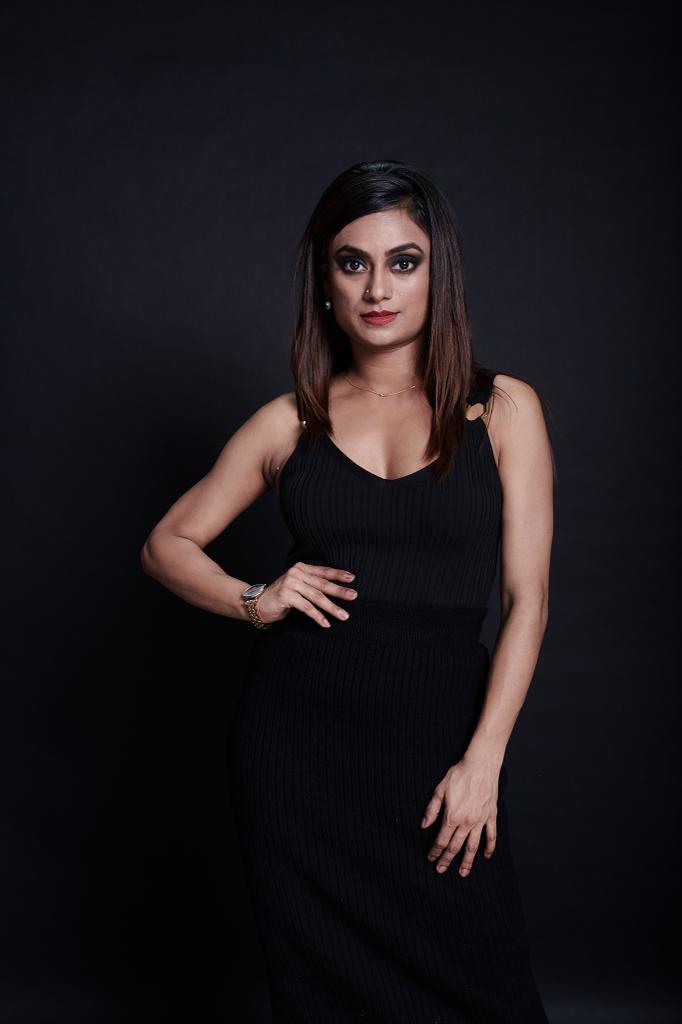
Dholida from Gangubai Kathiawadi is the most watched garba of the last decade and she choreographed it, along with Jhume Re Gori from the same film, Boom Padi for Madhuri Dixit in Maja Ma and Ghani Cool Chori in Rashmi Rocket. Her National Film Award came for Ghoomar from Padmaavat at the 66th National Film Awards, shared with Jyothi D. Tomar, a specialist in the Rajasthani folk form the number was built on. Her Filmfare Award for Best Choreography for Dholida came at the 68th Filmfare Awards. Four folk-rooted numbers in five years, and the two garbas are now the reference point for what a garba looks like on a Hindi screen.
Her route in had nothing to do with any of that. She was born into a Tamil Brahmin family in Matunga, did her Bharatanatyam arangetram at fourteen, took a master's in forensic science at London South Bank University, came home when her father fell ill and worked as an embryologist at a clinic. Dance India Dance season two in 2009 put her in front of Terence Lewis, she assisted Remo D'Souza on Balam Pichkari, Pinga and Deewani Mastani, and Sanjay Leela Bhansali gave her Ghoomar as her first independent song. She is not Gujarati, this page does not pretend she is, and the fact that the two defining garba choreographers of Hindi cinema are a Tamil Brahmin from Matunga and a woman from a Jaipur gharana dance dynasty is the most interesting thing on this page.
Photo: Harmeeteditor, CC BY-SA 4.0, via Wikimedia Commons.
15Parth Patel
The Navratri economy does not actually run on film choreographers. It runs on people who drill thousands of amateurs in the six weeks before the festival so that a ground full of strangers can move together, and almost none of them appear in any encyclopedia. Thangaat Garba is one of the outfits doing that at scale. Its own account describes the project as building India's garba movement and taking Indian culture abroad, names Parth Patel and Ankit Upadhyaya as founders, runs batch enrolment through a public form, and had 329,338 followers when it was scraped on 29 July 2026. Patel's own account, verified with a blue check, carried 58,502 followers and links to thangaatgarba.com.
He is here as the honest representative of a category, not as its only member. Garba teaching at scale is an Instagram-native trade with almost no documented record behind it, which means most of the people who shape how a hundred thousand people actually dance during Navratri cannot be verified to this site's standard and therefore cannot be listed. No public record consulted states where Patel is from, so this page makes no ancestry claim for him. He qualifies on the garba, which is the entire subject of this section, and he is included because leaving the category out altogether would have been the less honest choice.
Instagram: @parthangaat (verified 2026-07-29).
What the numbers say
How long these dance institutions have been running, as of 2026
Years are calculated to 2026 from the founding years recorded on English Wikipedia. Three of the six schools are in Ahmedabad, which is the point of the chart. These are encyclopedia records rather than audited institutional data.
Questions people actually ask
Who choreographed the famous garba songs in Hindi films?
Vaibhavi Merchant choreographed Dholi Taaro Dhol Baaje in Hum Dil De Chuke Sanam and won a National Film Award for it. Kruti Mahesh choreographed Dholida and Jhume Re Gori in Gangubai Kathiawadi, Boom Padi in Maja Ma and Ghani Cool Chori in Rashmi Rocket. No source consulted here documents either of them as Gujarati.
Who is the most decorated Gujarati choreographer?
Kumudini Lakhia, who received the Padma Shri in 1987, the Padma Bhushan in 2010 and the Padma Vibhushan in 2025, along with the Sangeet Natak Akademi Award in 1982 and the Kalidas Samman. She founded the Kadamb School of Dance and Music in Ahmedabad in 1967 and choreographed Umrao Jaan in 1981.
Why are there so few Gujarati film choreographers on this list?
Because the record barely exists. Fourteen Gujarati feature film pages on English Wikipedia were checked for a named choreographer credit and only one carried one, Prince Gupta for the song Soni Gujarat Ni in Golkeri. Hellaro won a special mention for choreography at the 50th International Film Festival of India without its choreographer being named on the page.
Who choreographed the garba in Hellaro?
Samir Tanna and Arsh Tanna are widely credited with it, but the film's Wikipedia page does not name a choreographer and no Instagram account matching their names could be confirmed by scrape, so this page names them without listing them as verified entries.
Was Mrinalini Sarabhai Gujarati?
No. She was born in present day Kerala to a Tamil Brahmin father and a Malayali Nair mother, and she moved to Ahmedabad after marrying Vikram Sarabhai in 1942. She is included because she founded Darpana Academy of Performing Arts there in 1948 and effectively created Gujarat's professional dance infrastructure.
Sources and image credits
All photographs are free-licensed files from Wikimedia Commons, reused with the attribution each licence requires. No press agency or studio photographs are hosted on this site. Instagram content is linked or embedded from the official account, never re-hosted.
- English Wikipedia biographies of the choreographers and dancers listed, retrieved 29 July 2026
- English Wikipedia film and awards pages, including National Film Award for Best Choreography, retrieved 29 July 2026
- Wikimedia Commons file metadata for licence and photographer on every photograph used
- Live Instagram profile scrapes via Apify, 29 July 2026, for the three entries without a Commons photograph or with an Instagram-only record