Hindi television, not Hindi cinema, has been the largest single employer of Gujarati actors for forty years. Dilip Joshi has played Jethalal Champaklal Gada in Taarak Mehta Ka Ooltah Chashmah for 4,772 episodes since 2008, Darshan Jariwala played Chedilal Chaturvedi through 411 episodes of Saas Bina Sasural on Sony from 18 October 2010 to 6 September 2012, and Jamnadas Majethia's Hats Off Productions has commissioned Khichdi, Sarabhai vs Sarabhai, Baa Bahoo Aur Baby, the Wagle Ki Duniya revival and Pushpa Impossible, which had run 1,288 episodes by 18 July 2026.
Gujarati cinema gets the essays and Bollywood gets the awards, and neither of them is where most Gujarati actors have actually made a living. Hindi television is. It runs six nights a week, it never breaks for a season, and since the mid 1980s it has quietly absorbed most of the Gujarati commercial stage: the actors, the timing, the family unit as a plot engine, and eventually the producers too. A Gujarati actor with stage training and a working knowledge of comic rhythm has been employable on Indian television continuously for four decades, and no other medium in this country can say that.
This page counts episodes rather than fame, because episodes are what the job actually consists of. Nineteen people, sorted by how they got in: the stage generation television hired in the 1980s and 1990s, the Hats Off cluster that turned Gujarati play structure into a national sitcom house style, the Sony SAB daily shift that produced the longest running comic performance in Indian history, and the soap leads and current generation for whom a Hindi serial was the first real salary. Every name is verified against a public record and carries either a free-licensed photograph or a scraped, confirmed account.
The list at a glance
| Actor | Signature television role | Show, channel and run | Gujarati link |
|---|---|---|---|
| Sarita Joshi | Godavari Thakkar | Baa Bahoo Aur Baby, Star Plus, 560 episodes, 2005 to 2010 | Marathi family, four decades on the Gujarati stage |
| Satish Shah | 55 characters in 55 episodes | Yeh Jo Hai Zindagi, from 1984 | Father's family from Mandvi, Gujarat |
| Tiku Talsania | Serial regular from 1984 | Yeh Jo Hai Zindagi, later Uttaran | Freelance Gujarati theatre artist |
| Darshan Jariwala | Chedilal Chaturvedi | Saas Bina Sasural, Sony, 411 episodes, 2010 to 2012 | Son of Gujarati actress Leela Jariwala |
| Apara Mehta | Savita Mansukh Virani | Kyunki Saas Bhi Kabhi Bahu Thi, Star Plus, 2000 to 2006 | Born in Bhavnagar, Gujarat |
| Ketki Dave | Daksha Virani | Kyunki Saas Bhi Kabhi Bahu Thi and its 2025 sequel | Gujarati stage from the age of thirteen |
| Jamnadas Majethia | Producer and actor | Hats Off Productions, Khichdi to Pushpa Impossible | Born in Porbandar, two decades in Gujarati theatre |
| Deven Bhojani | Actor and director | Sarabhai vs Sarabhai, three best director awards | Gujarati, born and raised in Mumbai |
| Supriya Pathak | Hansa Parekh | Khichdi franchise, four productions, 2002 to 2018 | Daughter of Gujarati theatre doyenne Dina Pathak |
| Vandana Pathak | Jayshree Parekh, then Gaura | Khichdi, then Saath Nibhaana Saathiya, 2,182 episodes | Raised in Ahmedabad, daughter of Arvind Vaidya |
| Suchita Trivedi | Meenakshi Thakkar | Baa Bahoo Aur Baby, Star Plus, 560 episodes | Gujarati stage and five Gujarati films |
| Dilip Joshi | Jethalal Champaklal Gada | Taarak Mehta Ka Ooltah Chashmah, Sony SAB, 4,772 episodes | Gujarati stage and Hun Hunshi Hunshilal, 1992 |
| Disha Vakani | Daya Jethalal Gada | Taarak Mehta Ka Ooltah Chashmah, from 2008 | Born in Ahmedabad, daughter of Bhim Vakani |
| Deeksha Joshi | Deepti Parikh Patel | Pushpa Impossible, Sony SAB, from December 2025 | From Gujarat, Gujarati film lead since 2017 |
| Rupal Patel | Kokila Modi | Saath Nibhaana Saathiya, Star Plus, 2,182 episodes | Recorded as Gujarati, born in Bombay |
| Drashti Dhami | Madhubala and Geet | Colors and Star One, 2007 to 2018 | Born into a Gujarati family in Mumbai |
| Karishma Tanna | Indu, then Scoop | Kyunki from 2001, Netflix in 2023 | Born into a Gujarati family in Mumbai |
| Manasi Parekh | Gulaal, then Maya | Star Plus, Sumit Sambhal Lega, 108 episodes | Gujarati, born and brought up in Mumbai |
| Esha Kansara | Devki Shah Virani | Mukti Bandhan, 153 episodes, 2011 | Born in Ahmedabad |
How this list was built
Inclusion required two things: a documented career in Indian television, and a Gujarati connection stated in a public record. The connection was allowed to come from heritage or from stage work, and this page says which one applies in each case rather than blurring them. Sarita Joshi was born into a Marathi family in Pune and is here on four decades of Gujarati theatre and the Sangeet Natak Akademi's 1988 award for acting in Gujarati. Jamnadas Majethia was born in Porbandar into a Sindhi Hindu family and is here on two decades of Gujarati theatre. Vandana Pathak was born into a Maharashtrian family and raised in Ahmedabad by the Gujarati theatre actor Arvind Vaidya. For Dilip Joshi, English Wikipedia records only that he was born in Mumbai and states no family origin at all, so this page makes no birthplace or ancestry claim for him; his place here rests on the commercial Gujarati stage, the Indian National Theatre Best Actor award and top billing in the 1992 Gujarati film Hun Hunshi Hunshilal. Applying the same test in reverse removed two names that lists like this usually include: Asrani is documented as Sindhi and born in Jaipur, with no Gujarat link in the record consulted, and no source consulted documents Gujarati ancestry for Aruna Irani. Both were dropped. Where an article contradicts itself, the disputed fact is left out; Apara Mehta's own biography names two different Doordarshan stations for her first job, so this page names neither. Episode counts, first and last broadcast dates and channel names are taken from English Wikipedia infoboxes with their stated as-of dates carried over. Nobody was included without either a Wikimedia Commons photograph checked for licence and photographer or an Instagram account confirmed by a live Apify scrape on 29 July 2026 where the display name plus the biography corroborated the identity.
The stage generation television hired
Indian television needed trained ensemble actors in the 1980s and 1990s and the Gujarati commercial theatre had a surplus of them. Everyone below came from a stage where a full house was the only feedback, then spent decades on a medium where nobody claps.
1Sarita Joshi

Television found her when she was already past sixty. Her screen debut was the 1980s series Titliyan directed by Nadira Babbar, then Zee TV's Hasratein in the 1990s, and then in 2005 Hats Off Productions built Baa Bahoo Aur Baby around her. She played Godavari Labhshankar Thakkar for 560 episodes on Star Plus until 2010, opposite Arvind Vaidya, and the show did the thing Indian television almost never does with an older woman, which is to hand her the plot rather than the moral commentary. After that she worked steadily and without a gap: Chand Chupa Badal Mein for Rajan Shahi, Meri Aashiqui Tumse Hi in 2015, Bakula Bua Ka Bhoot on &TV in 2017, Silsila Badalte Rishton Ka in 2018, Hamari Bahu Silk in 2019, the Anupamaa prequel Anupama: Namaste America in 2022, and Radha Limaye in Sony SAB's Pushpa Impossible.
Her heritage is Marathi and her career is Gujarati, and this page keeps both facts on the table. She was born into a middle class Marathi family in Pune to a barrister father and a mother from Goa, grew up in Vadodara, went on stage at nine because the family needed money, and got her first lead at sixteen. She joined Indian National Theatre Gujarati, met the director Pravin Joshi there and married him, and spent the next four decades as one of the two or three most important actors on the Gujarati commercial stage. The Sangeet Natak Akademi gave her its award for acting in Gujarati in 1988, which is a state academy naming her the language's actor. Her daughters are Ketki Dave and Purbi Joshi, so three of the nineteen people on this page come out of the same house.
Photo: Government of India, GODL-India, via Wikimedia Commons.
2Satish Shah

Count the episodes and the shape of a television career appears. Yeh Jo Hai Zindagi is recorded at 67 episodes across three seasons from 1984, and inside that run he played 55 different characters in 55 of them, a new man built and thrown away every week. Ghar Jamai gave him 80 episodes in 1997. All The Best, opposite Swaroop Sampat on DD2, gave him 109. Filmy Chakkar on Zee TV in 1995 gave him 50 as Prakash, opposite Ratna Pathak Shah, and the pairing was repeated years later when Hats Off cast the two of them as Indravadan and Maya in Sarabhai vs Sarabhai from 2004. That show ran only 80 episodes across two seasons and stretched from 2004 to 2017, and it won him the ITA Award and the Indian Telly Award for Best Actor in a Comic Role.
His father's family was from Mandvi in Kutch, he grew up in Mumbai, and he took formal training at the Film and Television Institute of India, graduating in 1976. That combination, a Gujarati trade family and a film school certificate, was rare in the 1980s and it shows in the work: he treated a weekly sketch serial as a technical exercise rather than as filler between films. He co-judged Comedy Circus with Archana Puran Singh in 2008 and was appointed to the FTII society in 2015. He died of cardiac arrest in Mumbai on 25 October 2025, and the cast of Sarabhai vs Sarabhai sang the show's title song at his cremation. The Padma Shri is recorded against his name for 2026.
Photo: Ministry of Information and Broadcasting, GODL-India, via Wikimedia Commons.
3Tiku Talsania

He entered television in the same 1984 intake as Satish Shah, on Yeh Jo Hai Zindagi, and then worked the entire 1980s and 1990s serial circuit: Fikr Ne Kaha, Yeh Duniyan Gazab Ki, Zamana Badal Gaya, Ek Se Badkar Ek. Much later came Uttaran and Sony SAB's Sajan Re Phir Jhooth Mat Bolo. His own biography records that as film work thinned he shifted his primary focus back to serials, which is the sentence that explains this whole page. For a Gujarati character actor in Bombay, films were the visible income and television was the reliable one, and almost everyone in this list made the same arithmetic.
The stage never left the schedule. He worked as a freelance artist in Gujarati theatre productions right through the film years, which is the standard arrangement for his generation: the plays kept the instrument tuned and the serials paid the rent. His surname comes from Talsana, the ancestral village, and the trade has continued into the next generation, with his daughter Shikha Talsania acting and his son Rohaan Talsania composing. He is on this page for the serial years rather than for Andaz Apna Apna, because the serial years are the part nobody counts.
Photo: Bollywood Hungama, CC BY 3.0, via Wikimedia Commons.
4Darshan Jariwala

Saas Bina Sasural ran on Sony Entertainment Television from 18 October 2010 to 6 September 2012, 411 episodes produced by Optimystix, and he played Chedilal Chaturvedi at the head of it. The premise was a household with no mother-in-law in it, which quietly deleted the single most reliable engine in Indian soap opera and forced the writing onto a widowed patriarch and six men. It worked for two years, and it made his face familiar to millions of Hindi viewers who could not have told you his name. That is the ordinary condition of the character actor on Indian television and he has never pretended otherwise.
His Gujarati television is older and, in Gujarat, better remembered. He played the fifteenth century saint poet in the serial Narsinh Mehta, and that is still the credit older Gujarati viewers reach for first. His mother was the veteran Gujarati actress Leela Jariwala, and in 1980 he married Apara Mehta, who is four entries below on this page for a very different soap opera. The two of them have since separated and appeared together on Sony's reality show Maa Exchange, which is a strange but accurate footnote on how completely this trade absorbs its own families.
Photo: Chirag Thakkar, CC BY-SA 4.0, via Wikimedia Commons.
5Apara Mehta

She was hosting a children's programme on Doordarshan at fifteen, which is an unusually early television start for anyone of her generation. Her biography names two different Doordarshan stations for that first job, so this page names neither. Her first major break was Ek Mahal Ho Sapno Ka in 1999 as Paro, and then Ekta Kapoor cast her as Savita Mansukh Virani in Kyunki Saas Bhi Kabhi Bahu Thi, the mother-in-law of the lead. Kyunki ran 1,833 episodes on Star Plus between 2000 and 2008 and set the grammar every Indian soap has used since, and she was inside it from 2000 to 2006.
What followed is the working actor's version of a filmography: Saat Phere in 2006 as Kukki Kaaki, Parrivaar in 2007, Hamari Saas Leela on Colors in 2011, Sajan Re Jhoot Mat Bolo from 2009 to 2012 as Damini Devi Diwan, Golmaal Hai Bhai Sab Golmaal Hai on SAB in 2012, Firangi Bahu, Qayamat Ki Raat in 2018, Yeh Rishta Kya Kehlata Hai in 2021, Choti Sarrdaarni in 2021 and Maddam Sir in 2022. She was born in Bhavnagar, the only child of her parents, learned classical music and Kathak young, married into a theatre family in 1980 and has done more than 150 plays since 1981. The Gujarati film Bachubhai came in 2023, more than forty years after the stage work started.
Photo: Bollywood Hungama, CC BY 3.0, via Wikimedia Commons.
6Ketki Dave
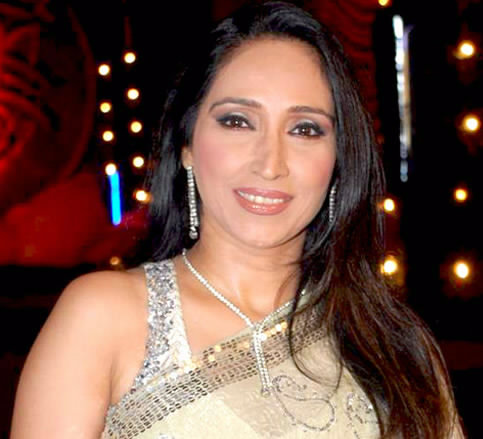
Her television record is a study in how a supporting character outlives the show that made it. She started on screen in 1984 in Sai Paranjpye's Ados Pados, got real recognition on Zee TV's Hasratein in 1996, played Dr Madhavi Dholakiya in Star Plus's Sanjivani, and then took Daksha Virani in Kyunki Saas Bhi Kabhi Bahu Thi. She left the show in 2001, came back in 2007, left again in 2008, and in 2025 was brought back to play the same woman in Kyunki Saas Bhi Kabhi Bahu Thi 2. Twenty five years and three exits, and the producers still could not replace her.
The reality format then did what it does to television actors, which is turn them into contestants. She danced on Nach Baliye 2 in 2006 with her husband Rasik Dave and went out first, and she entered the second season of Bigg Boss in 2008 and was evicted on day 26 for lack of votes. Neither is a career highlight and both are part of the modern television economy, where a familiar face is an asset a channel will monetise in any format available. She is the daughter of Sarita Joshi and the theatre director Pravin Joshi, she and Rasik Dave ran the theatre company Mudra, and her daughter Riddhi acts on stage.
Photo: Bollywood Hungama, CC BY 3.0, via Wikimedia Commons.
The Hats Off years
One production house turned Gujarati play structure into a national sitcom grammar and then commissioned several thousand episodes of it. Almost every Gujarati comic actor of a certain age has an entry on its call sheet.
7Jamnadas Majethia

Add up what his production house has commissioned and the employer in this story becomes visible. Khichdi ran 98 episodes on Star Plus from 10 September 2002 to 20 July 2004, Instant Khichdi added 38 in 2005, the 2018 Khichdi revival added 23, and Sarabhai vs Sarabhai added 80 across two seasons between 2004 and 2017. Baa Bahoo Aur Baby ran 560. The Wagle Ki Duniya revival ran 1,362 episodes on Sony SAB from 8 February 2021 to 9 August 2025. Pushpa Impossible, which he created, stood at 1,288 episodes on 18 July 2026 and was still going. That is several thousand shooting days, and a very large share of them were worked by the people on this page.
He was born in Porbandar into a Sindhi Hindu family, spent two decades in Gujarati theatre before television, and he is on this list on the strength of the second fact rather than an ancestry claim. It matters because the house style he built with the writer Aatish Kapadia is Gujarati stage comedy transposed into a studio: long scenes, small rooms, family units, and jokes that need a beat rather than a cut. He acted as well as produced, and was nominated for the Apsara Award for Best Actor in a Comic Role in 2011 for Himanshu Seth in Khichdi: The Movie. In 2013 he opened HatsOff Actors Studios, which is the logical last step for a man who kept needing this specific kind of actor.
Photo: Bollywood Hungama, CC BY 3.0, via Wikimedia Commons.
8Deven Bhojani

He is the one person here who used television as a film school exit rather than an entry. He studied film direction at the University of Southern California, which is a route that normally ends in a features career, and then spent it on Indian serials. The logic is not sentimental. Nowhere else in India does a director get to shoot eighty episodes of the same household with the same actors and adjust the comic rhythm week by week until it is exact. His three best director awards for Sarabhai vs Sarabhai, the ITA, the Indian Telly and the Apsara, were won on that kind of accumulation rather than on a single showpiece.
The acting came first and came from an unlikely door. He made his television debut in 1987 in Shankar Nag's Malgudi Days, an adaptation of R. K. Narayan, which is not where you expect a Gujarati stage comic to begin, and he built years of comic and supporting parts from there. His own biography still lists him as best known for his Gujarati plays before it lists anything on camera, and he is a Gujarati born and raised in Mumbai, which is the most common profile in this entire list. The Bombay Gujarati who never lived in Gujarat is not an edge case in Hindi television. He is the default.
Photo: Jhonfarhman, CC BY-SA 4.0, via Wikimedia Commons.
9Supriya Pathak
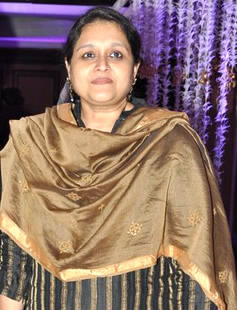
Her television career starts a good fifteen years before the role everyone quotes. She was in Idhar Udhar in the 1980s, one of the first Indian sitcoms built around two working women sharing a flat, at a point when the form barely existed here. Then came Hansa Parekh, and the striking thing about that part is not its fame but its persistence across formats: 98 episodes of Khichdi on Star Plus from 2002, 38 episodes of Instant Khichdi in 2005, 23 episodes of the 2018 revival, and two feature films. Playing one comic character across sixteen years and four separate commissions is a discipline problem more than a talent problem, and almost nobody manages it without the performance drifting.
She has three Filmfare Awards and a Filmfare OTT Award, and she works in Gujarati as well as Hindi. The lineage is the Gujarati theatre itself: her mother was Dina Pathak, who directed and acted in Gujarati theatre for six decades and whose Bhavai-style production Mena Gurjari entered the repertoire, and her sister is Ratna Pathak Shah. Television, not cinema, is where that inheritance is most visible, because television is the only medium that gives a comic actor enough repetitions for restraint to become the point.
Photo: Bollywood Hungama, CC BY 3.0, via Wikimedia Commons.
10Vandana Pathak

Her first television job was Meenakshi Mathur in Hum Paanch in 1995, and for the next fifteen years she was cast almost exclusively as the comic wife, most durably as Jayshree Parekh in Khichdi and Instant Khichdi. Then Saath Nibhaana Saathiya arrived on Star Plus in 2010 and gave her Gaura, an outright antagonist, in a show that ran 2,182 episodes until 2017. Moving from sitcom to prime time soap villain is not a small adjustment. The comic register wants speed and the soap register wants stillness, and very few actors on Indian television have made that switch in mid career and been believed in both.
She was born into a Maharashtrian family and brought up in Ahmedabad, and the Gujarati theatre came from her father, the actor and director Arvind Vaidya, who worked in Gujarati stage, film and television and was given the Padma Shri in January 2026. Her own record is Gujarati by training rather than by ancestry, which is a distinction this page keeps making because Hindi television keeps producing it. She is here for the range across formats rather than for any one part, and the range is documented across three decades of continuous work.
Photo: Bollywood Hungama, CC BY 3.0, via Wikimedia Commons.
11Suchita Trivedi

She has been in front of a camera since she was six, starting with the short film Ek Sawaal Munni Ka directed by Balwant Dullat and then as a child artist in Woh Saat Din in 1983. Child actors in India usually vanish at fifteen and reappear, if ever, in films. She went the other way and aged into television, and Baa Bahoo Aur Baby gave her Meenakshi Thakkar for 560 episodes between 2005 and 2010. The part won her the Indian Telly Award for Best Actress in a Comic Role twice and put her in nomination twice more, in a house-style ensemble where the comedy is distributed rather than owned.
The Gujarati work is comparatively recent and it did not replace the Hindi television, it sat next to it: the stage play Ishwar Ni Exchange Offer in 2005, then the films Ventilator in 2018, The Great Gujarati Matrimony in 2024, Umbarro in 2025 and Paatki in 2026. She has also worked in serious Hindi cinema, including Mission Kashmir in 2000 and Nandita Das's Firaaq in 2008. The pattern across her career is the pattern of this whole page: a Gujarati actor for whom a Hindi serial was the day job and everything else was built on top of it.
Photo: Bollywood Hungama, CC BY 3.0, via Wikimedia Commons.
The Sony SAB daily shift
A Gujarati shopkeeper written for a Hindi-speaking country turned into the longest running sitcom in India, and the channel that carries it also carries the production house from the section above.
12Dilip Joshi

Taarak Mehta Ka Ooltah Chashmah began on 28 July 2008 and stood at 4,772 episodes on 26 July 2026, still running, on Sony SAB. He has been Jethalal Champaklal Gada for all of it. Strip away the affection and look at the labour: that is eighteen years of a single character, delivered several nights a week, with no seasonal break to reset. No film actor in India works that schedule and no film role demands that kind of consistency, because a film gives you forty shooting days to find a man and a daily serial gives you the rest of your life. He has five Telly Awards and three ITA Awards from the run.
On his Gujarati standing this page is deliberately careful. English Wikipedia records that he was born in Mumbai and gives no family origin at all, so no birthplace or ancestry claim is made here. What is documented is the work: he began on the commercial Gujarati stage as a backstage artist earning around fifty rupees a role, won the Indian National Theatre Best Actor award while he was still studying, and holds top billing in Sanjiv Shah's 1992 Gujarati political satire Hun Hunshi Hunshilal, alongside Renuka Shahane, Manoj Joshi, Mohan Gokhale and Arvind Vaidya. That is a stage record and a Gujarati language film record, and it is enough.
Photo: Bollywood Hungama, CC BY 3.0, via Wikimedia Commons.
13Disha Vakani

Her father Bhim Vakani was a Gujarati theatre figure and put her on stage as a child artist, and she then took a degree in dramatic arts from Gujarat College in Ahmedabad and worked the commercial Gujarati plays: Kamal Patel v/s Dhamal Patel, Baa Retire Thai Che, Lali Lila. Hindi cinema used her in period ensembles, Devdas in 2002, Mangal Pandey: The Rising and Jodhaa Akbar in 2008, and then in 2008 SAB TV cast her as Daya Jethalal Gada. Her brother Mayur Vakani plays her on-screen brother Sundar, which is a small piece of Ahmedabad stage casting sitting inside India's longest running sitcom.
She is also the most famous absence on Indian television. She went on maternity leave in September 2017 and has not returned to the show, and the character has not been recast. A daily serial that has run past 4,700 episodes has simply carried an empty chair for the better part of a decade rather than replace her, which is a strange kind of tribute and a reminder of how completely one performance can become a property. The show remains on air. So does the vacancy.
Photo: Bollywood Hungama, CC BY 3.0, via Wikimedia Commons.
14Deeksha Joshi
Her Hindi television debut is a specific and underrated piece of craft. Since December 2025 she has played Deepti Parikh Patel in Sony SAB's Pushpa Impossible, a character she did not originate and inherited from Garima Parihar in a show that had already passed a thousand episodes. Walking into a running daily serial means matching an existing performance closely enough that the audience keeps watching, then slowly making it yours without anyone noticing the seam. Films never ask an actor to do this. Television asks somebody to do it almost every year, and it is one of the few genuinely medium-specific skills in the business.
She arrived there from Gujarati cinema rather than from the Hindi television circuit, which is the newer of the two routes on this page. She read English Literature at St. Xavier's College in Ahmedabad, debuted in 2017 in Shubh Aarambh, and built a run through Karsandas Pay & Use, Sharato Lagu, Dhunki, Luv Ni Love Storys and Prem Prakaran before making her Hindi film debut in Jayeshbhai Jordaar. She also co-founded the production company Eight Winds. The show she has joined is produced by Hats Off, which puts her in the same building as most of the older names on this list.
Instagram: @deekshajoshiofficial (verified 2026-07-29).
Soap leads and the current generation
Prime time soap is where the biggest audiences and the longest runs are, and where Gujarati actors have led rather than supported. For the youngest names here, a Hindi serial was the first real salary and Gujarati cinema came afterwards.
15Rupal Patel

Nineteen years of near misses came before the part. Her Wikipedia article files the period from 1991 to 2009 under career struggles, and the credits back it up: small roles for Shyam Benegal in Antarnaad, Suraj Ka Satvan Ghoda, Mammo and Samar, then Lakhi in Star Plus's Shagun in 2001, Aashalata in Sau Dada Sasuna in 2002, episodes of Crime Patrol, and Vrinda in Jaane Kya Baat Hui on Colors in 2009 after a long gap. Then in 2010 she was cast as Kokila Modi in Saath Nibhaana Saathiya, which ran 2,182 episodes until 2017 and made her one of the most recognised matriarchs on Indian television.
What followed shows how the industry monetises a face once it has one: Usha in Zee TV's Manmohini in 2019, Meenakshi Rajvansh in Yeh Rishtey Hain Pyaar Ke from March 2019 to October 2020, then a return as Kokila for 31 introductory episodes of Saath Nibhaana Saathiya 2, and Mithila Modi in Tera Mera Saath Rahe. She was born in Bombay, is recorded as Gujarati, trained at the National School of Drama and holds a commerce degree, and she runs a theatre group called Panorama Art Theatres that stages children's plays. That is a serious training pedigree spent almost entirely on daily soap, and she has never treated it as a compromise.
Photo: Willowbl00, CC BY-SA 4.0, via Wikimedia Commons.
16Drashti Dhami
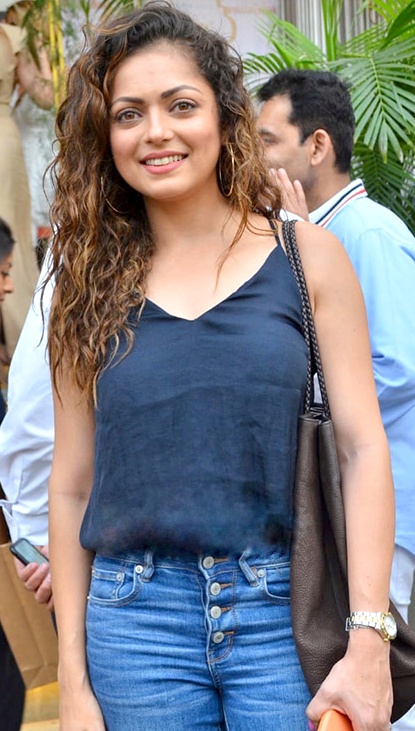
She is the purest television career on this page, in the sense that she never used the medium as a staging post for anything else. She was a dance instructor before she modelled, moved through music videos and advertisements, and made her acting debut in Star One's Dill Mill Gayye as Dr Muskaan Chadda from 2007. Geet Hui Sabse Parayi followed in 2010, Madhubala Ek Ishq Ek Junoon on Colors from 2012 to 2014, Ek Tha Raja Ek Thi Rani on Zee from 2015, Pardes Mein Hai Mera Dil on Star Plus from 2016, and Silsila Badalte Rishton Ka on Colors in 2018 as a woman living through domestic violence. She also won Jhalak Dikhhla Jaa 6 in 2013 with the choreographer Salman Yusuff Khan.
She was born in Mumbai into a Gujarati family and has said in interviews that taking a music video offer required permission from about ten family members, with a cousin arguing her case. It is a small anecdote and it explains a great deal about why so many Gujarati names on Indian television came through theatre families rather than off the street: the trade was already inside the house, or it was a fight. She has since moved into streaming, playing Khanzada Begum in The Empire in 2021 and Ira Jaykar in the ZEE5 thriller Duranga.
Photo: Bollywood Hungama, CC BY 3.0, via Wikimedia Commons.
17Karishma Tanna

Her first job was Indu in Kyunki Saas Bhi Kabhi Bahu Thi in 2001, which means she has been working continuously in Hindi television for twenty five years. The middle of that career is a full inventory of what the medium actually pays for: Kkoi Dil Mein Hai, Ek Ladki Anjaani Si, Comedy Circus from 2007, Zara Nachke Dikha, India's Magic Star, Zor Ka Jhatka, Rani Pari in the children's show Baal Veer, Maskeeni in Naagarjuna Ek Yoddha, a cameo in Naagin 3, and the lead in Ekta Kapoor's Qayamat Ki Raat. She was runner-up on Bigg Boss 8 in 2014 and won Fear Factor: Khatron Ke Khiladi 10 in 2020.
Then Hansal Mehta cast her in Scoop on Netflix in 2023, where she plays an accused Gujarati crime reporter, and the same actor the industry had filed under reality television got the best notices of her career. That reversal is worth naming, because the reality circuit is generally treated as the end of a serious actor's road rather than a detour on it. She was born in Mumbai into a Gujarati family and studied at Sydenham College. She also has a Hindi film record that includes Grand Masti and Rajkumar Hirani's Sanju.
Photo: Bollywood Hungama, CC BY 3.0, via Wikimedia Commons.
18Manasi Parekh

The most interesting line on her television record is Sumit Sambhal Lega, the Star Plus adaptation of the American sitcom Everybody Loves Raymond, which ran 108 episodes from 31 August 2015 to 4 January 2016. She played Maya. Indian television has attempted very few licensed sitcom adaptations and almost none of them survived, because the American multi-camera joke rhythm does not transfer to a six-nights-a-week Indian schedule. It is an unusual credit and a hard one, and it sits alongside her Star Plus prime time run as Gulaal in Zindagi Ka Har Rang...Gulaal.
Before both of those she came through the reality and youth television circuit: one of eight finalists on Channel V's Popstars in 2003, an acting debut in Kitni Mast Hai Zindagi in 2004, a breakthrough on Star One's India Calling in 2005, a win on Zee TV's Star Ya Rockstar, plus Remote Control on 9X and Laughter Ke Phatke on Star One. She is a Gujarati born and brought up in Mumbai, married to the singer Parthiv Gohil, and she later won the National Film Award for Best Actress at the 70th National Film Awards for Kutch Express. The Hindi television years were the decade that paid for the film career.
Photo: Bollywood Hungama, CC BY 3.0, via Wikimedia Commons.
19Esha Kansara

She moved to Mumbai from Ahmedabad in 2010 and was leading a Hindi serial within a year. Mukti Bandhan, adapted from Harkisan Mehta's Gujarati novel and produced by Shobhna Desai Productions, ran 153 episodes from 10 January to 29 September 2011, and she played Devki Shah Virani, the daughter-in-law at the centre of it. After that came Kritika in Ek Nanad Ki Khushiyon Ki Chaabi...Meri Bhabhi, Radha in the 26-episode sitcom My Name Ijj Lakkhan opposite Shreyas Talpade with Archana Puran Singh and Parmeet Sethi, the police officer Misri Pandey in Maddam Sir on SAB, and Amrita in Zindagi Mere Ghar Aana in 2021.
That is a decade of Hindi television before Gujarati cinema was able to pay her properly, which is the sequence almost every young Gujarati actor of her generation has followed. She trained in Bharatanatyam from six, performed her arangetram at fourteen and reached the top hundred on Dance India Dance while still at school, then read commerce and arts at Mithibai College. Her Gujarati film run started in 2017 with Duniyadaari and has continued through Midnights with Menka, Vandha Vilas, Mijaaj, Prem Prakaran, 3 Ekka, Builder Boys and Fakt Purusho Maate.
Photo: Bollywood Hungama, CC BY 3.0, via Wikimedia Commons.
What the numbers say
Episodes delivered by shows carrying the actors on this page
Counts are the episode totals recorded on English Wikipedia, carrying their own as-of dates: 4,772 for Taarak Mehta Ka Ooltah Chashmah as of 26 July 2026 and 1,288 for Pushpa Impossible as of 18 July 2026. Both shows are still in production, so those two figures will already be higher. These are broadcaster and encyclopedia records, not audited data.
Questions people actually ask
Which Gujarati actor has been on Indian television the longest in one role?
Dilip Joshi, who has played Jethalal Champaklal Gada in Taarak Mehta Ka Ooltah Chashmah since the show began on 28 July 2008. English Wikipedia recorded the show at 4,772 episodes on 26 July 2026 and it is still in production.
Why is Hindi television more important than Bollywood for Gujarati actors?
Volume and continuity. A film gives an actor a few weeks of work, while a daily serial can run for years without a seasonal break, and Indian television has commissioned that kind of work continuously since the mid 1980s. Several people on this page have single credits running past 500 episodes.
Is Taarak Mehta Ka Ooltah Chashmah a Gujarati show?
It is a Hindi show with Gujarati roots. It is based on the humour column Duniya Ne Undha Chasma by the Gujarati writer Tarak Mehta, and its central family is Gujarati, but it is produced in Hindi by Neela Film Productions for Sony SAB and was created by Asit Kumarr Modi.
Which production house has hired the most Gujarati actors for Hindi television?
Hats Off Productions, run by Jamnadas Majethia with the writer Aatish Kapadia. Its commissions include Khichdi, Instant Khichdi, Sarabhai vs Sarabhai, Baa Bahoo Aur Baby, the Wagle Ki Duniya revival that ran 1,362 episodes to August 2025, and Pushpa Impossible, which stood at 1,288 episodes on 18 July 2026.
Why are some famous names missing from this list?
Because the test was a documented Gujarati connection, by heritage or by stage work, and two frequently listed names failed it. Asrani is documented as Sindhi and born in Jaipur, and no source consulted documents Gujarati ancestry for Aruna Irani. Both were dropped rather than assumed.
Sources and image credits
All photographs are free-licensed files from Wikimedia Commons, reused with the attribution each licence requires. No press agency or studio photographs are hosted on this site. Instagram content is linked or embedded from the official account, never re-hosted.
- English Wikipedia biographies of the nineteen actors, retrieved 29 July 2026
- English Wikipedia television series articles for episode counts, broadcast dates and channels, retrieved 29 July 2026
- Wikimedia Commons file metadata for licence and photographer on every photograph used
- Live Instagram profile scrape via Apify, 29 July 2026, for the one entry without a Commons photograph